Bitchin

‘Bitchin’. Nope, not great or wicked. Just two middle age men actually bitchin for 13 hours. Nothing cool to see here. Nothing cool at all…

Bitchin is pretty much all me and Ged did whilst we ran the Ultra X Spring Series 100km. It led to a lot of laughter, passed a lot of time, and confirmed how similar we are. Nothing was safe from the sting of our words. None of it was really justified either, nonetheless that is how we rolled in our latest ultra marathon adventure.

I was probably already in a sub conscious bitchin mode leading up to the race where, due to my own lack of research and preparation, I realised I couldn’t get to the start line in time for the 06:00 start. The Race Directors were accommodating though and Ged and his mum stepped in to save my embarrassments with a lift down. Mini crisis adverted.

The start line was a very subdued place at 06:00 in the morning. With a small field of 100km runners we were split into the two allocated starting groups, given a count down and sent off in groups of about 30 people. Nattering away as we ran out of the recreational ground towards the road, our bitchin began. We couldn’t understand why everyone was running so fast already. Amateurs we thought, they’ll all bonk soon enough. We were pumping out a 10 hour 100 km pace for no reason at all. Many, many hours later we apologetically retracted this statement when we had passed maybe 2 or 3 people from that group only. They clearly had their plans and strategies like we had ours!

Pre race smiles

Running on, we were very much aware that the 3 biggest hills and climbs of the race were in this first 13 miles (which we’d complete again as the last 13 miles as we’d loop back in the opposite direction for the second half of the race), yet being full of energy and excitement, we didn’t notice these hills and barely felt them as we ran down (and up) steadily with fresh morning legs.

We did then get lost after a few miles, but we were not alone. Coming down off a trail descent we joined a country lane where the course markings vanished. Left, right or straight down were the choices. Some runners were coming back from the right and more joined us from behind (the second group of 100km runners who set off after us). With confused looks we all headed left and a few moments later across a cattle grid and straight down, then we all stopped as differing opinions on whether this was correct or if we should have followed the road rather than cross the cattle grid became clear. One runner (who I later realised was Scott Jenkins) was adamant we were right and Ged and I soon stuck with him. A few hundred meters later we then found some course markings once more. What had happened here we do not know! Yep, we bitched about the markings.

Early on, enjoying the ideal morning conditions

Back on track, it wasn’t long before we hit the first indication of the bogs and mud we’d encounter this day. It was nothing major but soon we were splashing through waterlogged fields and fully submerging our feet in the cooling water. At this point one of my shoes came off in the sticky mud. I managed to recover it before loosing it completely, but needed to stop to get it back on. As I sat on a log to readjust, my whole core started cramping and I couldn’t reach my feet, much to Ged’s delight. What a state to be in so soon!

We carried on as the surface became progressively more muddy and we were sliding all over the place as we approached the first aid station. We pretty much ran straight through as it was only 11 km in and didn’t need anything so early on. Ged’s mum was here, as she was throughout the day at each aid station to cheer us on.

The next section was full of the epic views of the Serpent Trail, exactly as I recalled it from when I ran the Serpent Trail 100km event way back in 2018! A beautiful landscape of thousands of trees with roaming views of the South Downs peaking through in between. Every now and again the forest would drop away to reveal the bareness of the hilly summits and reveal the scenic views in all their glory. Before long we were up running along some mountain bike tracks (which I vividly recalled from 2018) and into the second aid station. Here we stopped briefly and chatted to the volunteers including updating them on the sections were markings were missing/sparse and we’d gone wrong.

Soggy feet as we track towards halfway

From here to the third aid station was all a blur to me. I did slowly recall bits of it later in the day when we were back tracking along it. But, at the time, I must have switched off and been too engrossed in the bitchin to really notice it and take it in. Closing in on that third aid station we noted we were roughly a 1/3 of the way into the race. Which was good, because the legs started to feel like they’d done some running by now!

The volunteers at this next aid station were full of energy and we exchanged a few jokes and laughs with them. They lifted our spirits as we set back out for the last section back to the start/halfway/finish line point. This next section was an adventure for sure. The longest and trickiest part of the route I thought. There were a few sections that were very muddy. One short down hill section followed by two muddy climbs. Zigzagging down that first section we started to wonder at which point we’d be passed by the lead 100km runners coming back towards us or the 50km runners coming from behind and over taking us. Both seemed a real possibility as we started the 10km countdown to half way.

The up hill mud sections demanded a bit more effort from the legs as the mud started to sap our energy and we looked for the best line to climb along. Halfway up that second climb the first few runners leading the 100km started picking us off. Great effort, probably about 10km and over an hour ahead of us. The first runner was flying along and had a substantial lead on 2nd and 3rd at this point. As we started levelling out into some of the fields and road sections for the final approach to the 50km mark we started passing a number of the half marathon runners. We weren’t sure where they came from nor what point the courses joined up. Either way it gave us a buzz as we powered on.

Half way was upon us. I took a strategic stop here whilst Ged was reunited with his family. Quite possibly one of my fastest mid-race turnarounds where I was in and out in just over ten minutes with some fresh clothes and refuelled ready to go again. Unprecedented for me as I do love a good sit down and chin wag at half way, usually needing to be coaxed back out on to the course…

Coming into the finish, time to turn around and do it all again

The energy for the second half was high. As we ran we were now passing loads of runners from the 50km race and the rest of the pack in the 100km one too. As always, the vast majority of runners responded positively to a hello and offered up encouragement to us also. You can’t beat that buzz. Ged and I talked about this for quite sometime. It can make or break a race for some people. A smile can change your emotions, a “well done” or “Great effort” can pull you out of a dark place. BUT, you have to do it for yourself. So often you see people completely absorbed in the moment and struggling. If you can’t muster a smile or a grunt, you won’t find a way out and will continue to suffer. You need to make the corners of your own mouth move. If you’re reading this, try it! Smile, you’ll instantly feel better about everything.

We decided to play a little game and started repeating to the next runners what previous runners had said to us. My personal favourites were “You look fabulous”, “Brilliant, Brilliant” and “top work chaps” which was unfortunately repeated to some females. Hey ho, that was the game. Quite possibly thought, what made me laugh most was how I kept mishearing what Ged was saying. Every time he said “Well done” to someone, I heard “yeah whatever”. It was a perfect response for our bitchin mood and I really wish he was saying that. I’d love to know what reaction that would create if someone said it to you mid race!

It was time for the muddy sections once more and we couldn’t have been in a better place for them. High with energy, certain of what lay ahead, running down hill, seeing the pain and torture on the faces of those climbing it for the first time and sticking to the best line like we did earlier… we just went for it. We didn’t hold back and splashed on straight through, straight down. Practically hurdling our way downhill as the mud reached our knees in places. We were absolutely loving it. We couldn’t give a shit if we fell (it would have been soft!) or who we splashed with mud along the way. There was no better way to get through it. Wet and muddy was inevitable, we knew that, those climbing hadn’t yet come to accept the same fate. It was all too brief though as we completed each section so quickly. How neither of us face planted into the floor we’ll never know.

Along the way we passed many familiar faces like Ellis and Charlie doing the 50km. Each one lifting us up and giving us a buzz. We felt like heroes as we continued playing our game as, surprisingly, we kept meeting more and more runners all the way back to the third (now fifth) aid station. A huge cheer from the volunteers welcomed us back in as we all picked up where we left them many hours earlier with the jokes. I had to take a minute here, sitting on a tree stump next to a speaker pumping out classics hits, to empty my shoes of all the junk I’d be collecting along the way.

From here I couldn’t remember for the life of me what lay ahead on those trails I’d previously blocked out. We were both struggling to remember each section and the pace began to drop off as we walked pretty much every hill from this point back. The legs, specifically my ankles, were beginning to let their feelings known to me. Rightly so, the aches and pains were settling in.

We couldn’t have been far from the next aid station when the ‘heavens opened’. What started as a soft trickle of rain soon turned into an almighty downpour of hail. It was a little refreshing as we discussed whether we were going to stop and layer up. We opted not too. All around us were clear skies. It looked like a passing storm and neither of us fancied ‘boiling like a chicken’ in a waterproof jacket. We stuck it out and a short while later the summer sun briefly repaid our faith. It was a glorious evening now.

Into the second aid station we did a quick stop and refuel, acknowledging from here it was a mere 25km to go. We knew this was the point of the ultra where it would be come a slog. Time to dig deep for what was left. We set back out, running once more through the mountain bike tracks and the now very muddy and sloppy trails. They had been churned up by hundreds of runners and were now far less appealing to run than they were earlier in the day.

Beaming with BDE

We briefly passed some photographers gathering some drone footage on a hill through the forest tracks before we came slip sliding into the final aid station where the volunteers outnumbered us 5 to 1. Grabbing some cheese and onion crisps I received some odd looks from the volunteers when I excitedly asked if the lumps of cheese were lumps of butter. Disappointed, I stuffed cheese and Haribo into my gob. A strange combo I probably wouldn’t repeat again. I really wanted butter now!!

The last 11 km back to the event village was slow and arduous. I was in pain. My dodgy ankle was screaming with every step. Nothing to do except keep moving and make steady progress. From here we knew the course was basically 3 descents and 3 climbs. Lots of hiking ahead with gravity powering the running in between. We ploughed on, gradually making up some ground on a guy in front of us whilst simultaneously holding off two more who were gaining on us. Grin and bare it.

Clearly bitchin’ about something

Ged kept me going. He kept me distracted from the pains. Kept the bitchin’ coming even now many hours later. Occasionally we’d break rank to retract and excuse a bitch that escaped our mouths and which wasn’t justified. Mostly he kept the energy level there, despite it all we were having fun. And that was one of the moments of realisation of the day – we were having fun. You create your own fun and despite it all, we fucking love this. This is exactly the type of challenge we revel in… Earlier on, as is inevitable, we’d been discussing ultra running. Our experiences both shared and individual, what drove us and what dragged us through. It is here we talked about an effect that we came to call ‘BDE’ – Big Dick Energy.

BDE, we decided, was a mental state we work ourselves into during ultra marathons. A point of sheer confidence and arrogance. An unwavering sense of belief in ourselves and our abilities. A selfish expectation of deserving something, being better than everything and when nothing gets in your way of getting what you want. BDE was that invisible force that propels you onwards in the adventure whilst keeping you away from the darkness the mind can so easily slip into. You make that BDE, whatever it is that can shift you into this unreasoning state of focus, you take it. Right now I was seeping BDE from all my pores, radiating it like a jacket potato ready to explode in a microwave. To anyone I passed I was peacocking the smile and laughter that inevitably draws comments like “you don’t look like you’ve just run an ultra marathon”. I’d take those comments, absorb them and convert them into more BDE, a self sustaining aura fuelling the determination to get to the end. No one would know the pain and suffering inside.

We joked and referenced BDE endlessly through the second 50km. This was the experience of having ‘been there, got the tee shirt’. We knew what we were doing and that only comes with trying, failing, succeeding and repeating. I’ve said it many times before, running is hard. No run is ever “easy”. It’s the perception you create to get the run done that changes. BDE.

We hit that last climb. Out on the road now we were powering up. Me fast hiking, Ged shuffling part run part walk. We were laughing all the way to the end. We crossed that finish line surround by Ged’s family who themselves completed another ultra of their own chasing us around the course for 14 hours. Another 100km done. Another medal for the box of pain.

I’ll remember this day for three main things. Firstly, the vocalisation of BDE. Secondly, the amount of mud (it was far muddier than I expected). I don’t think I’ve emptied my shoes as frequently in a race as I did in this one. Three times I stopped to empty the shoes, once I had to stop because a mound of mud had formed under the ball of my foot. It was completely distorting the fit of my shoes, almost like I had a hard insert between my sole and sock. It was so bad I had to scrape all the mud out with my fingers and drag my sock on the grass like I’d stepped in shit. A new experience for sure. The third thing I’ll remember the run for was the bitching. We bitched about everything you can imagine. It was like we had this faux anger at every and anything we could think of. It passed the time so well and was equally therapeutic as it was pathetic if you’d heard us moaning. At one point we even bitched about colours and why something red wasn’t blue because we happened to think blue was a better colour choice. Anything we could moan about we did, and it made me smile so much.

As always though, none of these memories would exist without the excellent company. It truly does make these adventures. Cheers to Ged, he’s a top ‘chap’ and it had been far, far too long since we last ran a race like this together back in 2018!!

The Longworth family support
Finish line. Again

North Downs Ridge 50km

It was somehow already the beginning of May and I found myself heading back down to the ever too familiar trails of the North Downs Way for the Freedom Racing North Downs Ridge 50k. This race was one of the ones that was cancelled earlier in the year and one that, in some ways, contradicted my Modus Operandi for races – which is to only do events that I really want to do (despite how obvious that may sound!). It’s the route you see. I’ve run It so many times (and you’ve read me type it so many times…) and this particular section of the North Downs Way which includes my least favourite part of the trail (purely because it’s so damn runnable!). It is because of the organiser though that I signed up. This was to be my third Freedom Racing event after the Serpent Trail and the Hurtwood and I’ve enjoyed each one immensely. FR are a small, family centred events company which I’m happy to support. So, off I went.

Tom, the Race Director, had adopted the now very familiar flexible start line approach for this event. I opted for the ‘faster’ time slot and arrived for 8am with a rough 5.5 hr finish in my mind (justifying starting in this group rather than the later group).

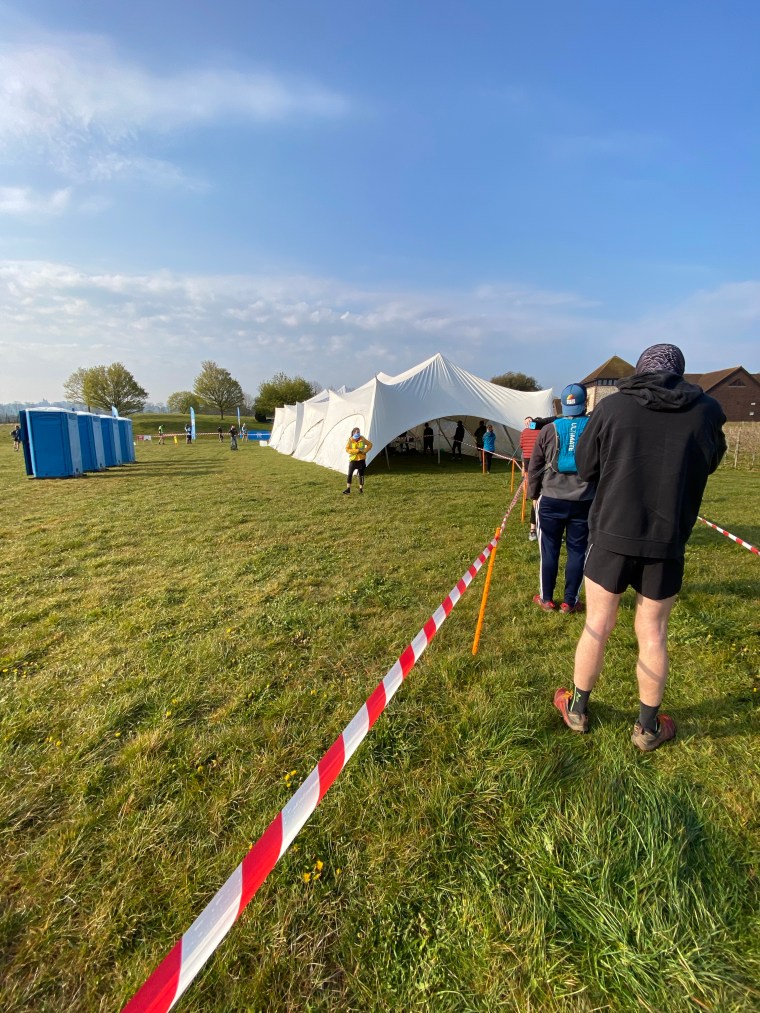
The start was easy. I walked from Dorking station to the event HQ at Denbies Vineyard. When I arrived it was straight into a short queue for registration. Bib and dabber collected, I went to the toilet and changed quickly in the field, dropped my bag off and then walked into the starting pen. I was the only one. No queuing. I dib-dabbed in and off I trotted.

The short queue at registration

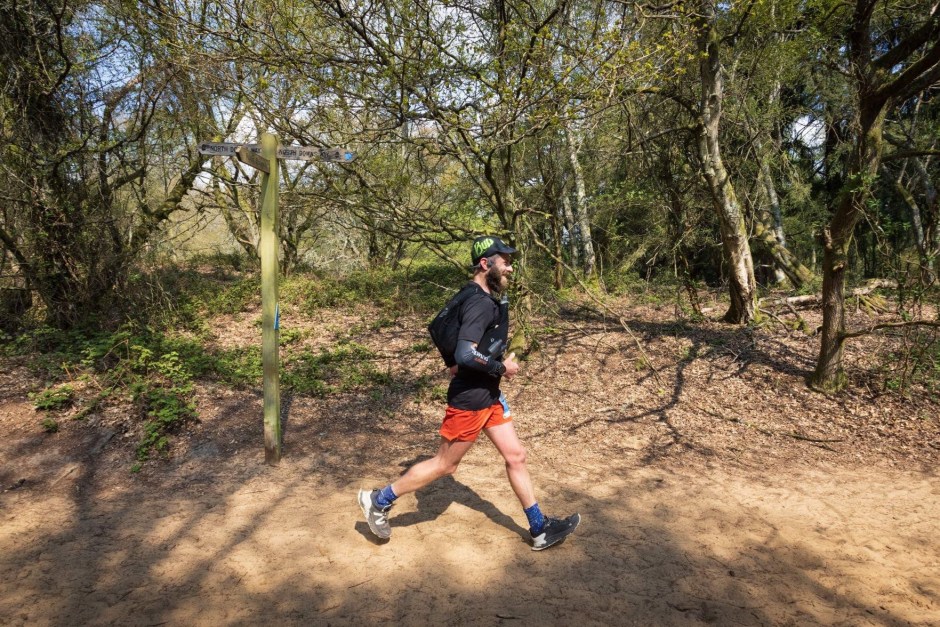
The route starts with a short stretch and climb out of the Vineyard as you join the tarmac path of the first climb to the church at Ranmore. I wouldn’t normally run this but I was fresh and eager so I plodded on upwards. Passing the few walkers as I reached the top, I continued in the gentle pace I’d settled into with my heart full of joy of another adventure underway.

I mentioned a rough 5.5 hr finish time I had in mind, but really I had no real aims for the day and a sub 6 hour finish would, as always, be a good day out for a 50k for me. As a fairly hilly route with an out and back set up I’d be happy with that. Immediately after starting out though, I devised a game to keep the brain occupied – I’d keep a count of the people I passed and the people who passed me. I’d try and remain with a positive count by the end of the race. A small challenge but one with great potential for distracting the mind throughout the run. As I’d started behind the ‘slower’ group but at the start of the ‘faster’ group, I assumed it would be a comparable count each way. I added the rule that being ‘passed’ involved people overtaking me, people running in the opposite direction as me before I turned around (at about mile 12.5) and again people I saw coming the other way on the final loop. So potentially some runners could hit my count 3 times.

The view at Ranmore

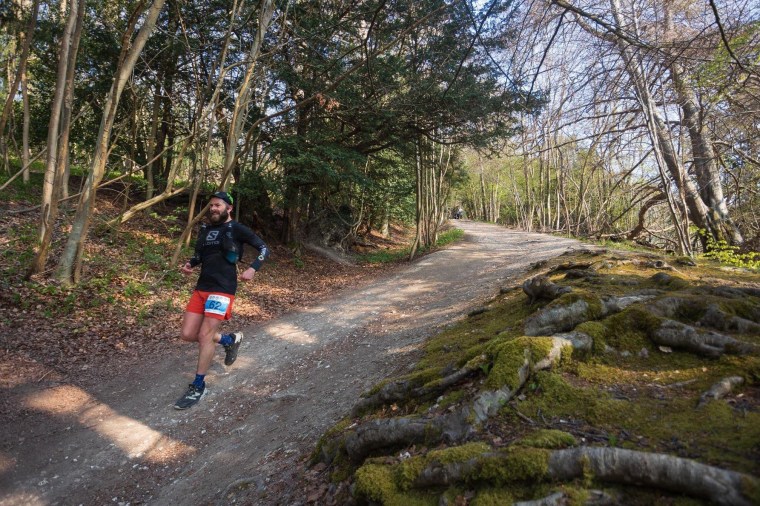
It started good. The numbers were positive despite a few speedsters soaring passed (all in carbon road shoes I noted, the trails were very dry…) and it was steady progress. None of the hills here and until the sandy climb to St. Martha’s were steep enough to consider walking so I just kept plodding along. I skipped through the first aid station as it was only about 5 miles in. I had enough food and water to last a while and knew it would help avoid it becoming too busy as the first ones always do.

Those first 12 miles then wizzed by and and a few familiar smiling faces helped add a little atmosphere and buzz to the day. I was heading down the descent from at St. Martha’s to the next aid station, where we’d turn around, and my number count was going haywire. I was around 50 and suddenly struggled to keep count as I passed runners and runners came towards and passed me. I was suddenly around 20 by now.

I then almost stepped on some Goodr sunglasses and stopped to pick them up, checking with each runner coming passed if they’d dropped them. I had better luck as I announced my arrival at the aid station with a loud “anyone drop their glasses?” to which thankfully someone realised they had indeed dropped them. Chatting to the lady I completely lost count of who came and went in the aid station. So I stopped my game and pigged out on sausage rolls, flapjacks and frazzles. Delightful. Fully stocked I headed back out, jogging the climb to St Martha’s once more.

On the return leg, more familiar faces were there with big hi fives from Meg and Daisy and a fleeting hello to Frank at the top of the hill. Back down the sandy path I went. Beaming in the sunny, warm mid morning sunshine.

Running back to the next aid station and onto Denbies again was all very unmemorable. I just kept steady, holding the pace and realising that I was actually holding pace for a solid effort at a sub 5hr 50k. I don’t think I’d ever gone sub 5 before. Other than a marathon distance and 100 miles, I’ve no idea what any of my PBs actually are. But now I had a new game to play, a new way to occupy my mind for the last ten or so miles. I just needed to keep on steady and hold the pace…

I briefly stopped to refill some water at Denbies and carried on for the final loop. This section, as we’d head towards the village of Westhumble, was new to me. Straight away we were met with a long ol’ road incline which warranted a walk. No point busting a gut here. It was much longer than I expected and glancing at the watch I noted that the elevation gain ticked over 700m. I wasn’t expecting that much elevation for the day either, but it made me feel strong, given how little walking I’d done and how comfortable I felt.

Soon I was back on trails and it was delightful to experience a few miles of new trails to explore. The whole loop was deceivingly uphill which I tried to hold my pace on. By the time I’d completed the loop and was heading back down the road section I saw that I’d done another 100m of elevation gain. Not bad. Not bad at all.

Back through the vineyard

Crossing back over the NDW it was now down into Denbies for the final straight through some of the vineyard and across the finish line. Dib dab done. I stopped the watch and I was a few mins under 5 hours. Tidy. I’ll have some of that.

Medal hunter

I dropped the timing chip off. Collected my bag and checked the train times. With one in 20 mins I knew I had time for a quick change of clothes and a fast hike to the station. I stopped to get a picture next to the Freedom Racing trailer and a rapid chat with Tom the RD, thanking him for another excellent adventure before I trundled off.

Another day, another race. Another sense of achievement. Job done.

Your Community Needs You

Volunteering at the Centurion Running NDW100 in 2019

Let’s talk about volunteering…. I’ve done a fair bit of volunteering at running events in the past few years. It is something I enjoy and really do like giving back and supporting events, particularly those that I have run in or would like to participate in. Race volunteering can be quite a complex thing. Where do you start? How do you get involved, what will I be expected to do, need to bring etc. So I thought I’d share my thoughts and experiences on volunteering at running events.

Why Should I Volunteer?

Race volunteering, Let’s be honest up front, it isn’t a selfless act. There are many, many benefits in it for the individual. Most race organisers offer an incentive in some form to encourage volunteers. It may be a free tee shirt, a free race entry for the following year, vouchers or kit from sponsoring partners as well as many other freebies in the form of food and sponsored gifts. Some of the larger, international races also provide accommodation for volunteers, particularly for stage races where volunteers work multiple consecutive days. Besides these obvious tangible benefits, there are also the less obvious benefits like networking. You get to make connections with key people in the industry and form friendships with other runners and volunteers you’ll frequently meet at events. These can lead to all sorts of future opportunities, but, more importantly, friendships. Also, it is fun and a nice thing to do.

That being said, whilst we may offer our time to volunteer because we want to take advantage and for example, participate in the event the following year, these incentives might not always outweigh the commitment. A race entry for example might be anywhere from £50 to £200 quid for a UK trail ultra. That’s a small price to pay to enter an event and normally exceptional value for money. Volunteering isn’t always free. Typically you’d give up a whole day, maybe 8 hours or more of your time to support (to gain a spot in an event through volunteering, there will usually be a minimum commitment of volunteer hours required). You’ll spend possibly hours travelling to and from the event and that costs too. So if you really want to do a race, volunteering isn’t normally the most cost effective way to do it. Although, for popular events with limited places, a guaranteed entry for volunteers could be a significantly worthwhile investment of your time rather than playing with the race lottery.

Most importantly though, race directors and organisers need volunteers. We want so much for these events to be available to us, and they don’t happen without a huge amount of work behind the scenes to make them a reality. Race Directors often rely on small armies of volunteers to support them and make sure the events run as smoothly as they do. If you want events to continue to happen, to continue to be affordable and viable to run, give back and help out where you can.

After running the SVP100 3 times, in 2020 I finally earned the ‘yellow’ Volunteer tee.

How Do I get involved?

Simple, contact the race organiser. Most race organisers will have a specific section on their website or even a dedicated email address to contact if you would like to help out. Drop them a message or get in touch with them via their social media pages or in person if you’re at the event. Most organisers are desperate for help and will welcome your offer with open arms. Be patient though, there is a lot going on when organising events so it may take them a while to respond and take you up on your offer or they may direct you to someone else to speak to. Don’t be put off if that is the case. Many events have community groups and Facebook pages where you can also get involved and make contact with the organisers too.

I’d highly recommend getting in touch with Maverick Race, Centurion Running and the SVP100Ultra as great events to volunteer and support at…

What about pre event day?

Leading up to an event you can expect to be contacted by someone from the organisation to give you some instructions. They’ll ask for your key contact details and any information to help them support you (e.g. dietary requirements if they are providing food for the day) and details that could help them arrange all the volunteers. For instance if you can drive, if there are preferred roles you’d like to support with, if you are first aid trained or able to provide additional support during the day. Besides all that though, you need to be prepared yourself and think about how you will be ready to support on the day. Things to think about are:

  • Figure out where you need to be and when – Do you know what is expected of you and when?
  • How are you going to get to the event – This is likely to mean getting to the race at least an hour before the race registration begins and before runners start arriving.
  • What do you need to take with you – Have you the right clothes for the day, do you have water and food supplies to see you through?
  • Make sure you know who to ask for when you arrive. Don’t be offended when it’s assumed you are an eager runner who has turned up early!

What might I end up doing?

Types of roles and responsibilities you can expect to get involved with could include any or all of the following, depending on the scale of the event. Obviously this isn’t a comprehensive list of roles, but if you are a first time volunteer you’ll probably end up doing something like this, so don’t expect to be managing and coordinating other volunteers, acting as a deputy race director or MC-ing and event!

  • Set up and support at an event village – Race villages don’t set themselves up. Tents and marquees need constructing. Fences, flags and tape need laying out. Tables and layouts need arranging. Kits, race numbers, medals and all sorts of stuff need setting out. At one event I volunteered at we even had to construct the winners trophies and ensure all the engraving was placed on the correct trophies!
  • Course Marking – Most events will have signs and/or tape to help direct runners and keep them on the correct route. You may be able to get involved with walking/running the route and either setting out the course markings or checking they are still all in tact!
  • Parking – someone needs to coordinate the runners when they arrive at an event by car. Humans persistently demonstrate that we can’t be relied upon to park responsibly!
  • Registration – This is a hugely varied role from welcoming runners, to checking people are who they say they are, that they have paid to run the event, that they have their bib numbers and any other race items required (like pins, trackers). It could be that you are providing critical safety instructions, providing runners with their race packs like t-shirts or other gifts. In some events you might also be tasked with checking people have the required and mandatory kit with them.
  • Directing runners and supporters (e.g. where to go, what to do) – Races are exciting right? We all turn up with butterflies in our stomach, see people we know and ultimately don’t focus on what we need to do or where we need to go. How many times at an event have you asked where the toilets are, where the drop bag is or which way to the start line even? You might be that person providing the critical directions needed!
  • Drop bag stands – we’ve all experienced the carnage of a badly managed drop bag zone. It isn’t an easy task to take in bags from runners, ensure they are correctly labelled, stored in the right place and sent to the right checkpoint (if it is for a mid-race drop bag!). This can be incredibly stressful but vital to the efficient flow of runners at an event. We’ve all seen the crowds of runners pushing towards drop bag zones throwing bags over people queuing. You want to avoid it ending up that way!
  • Checkpoints and aid stations – most races will have, at minimum, a water stop. Ensuring these are set up before the first runner and adequately stocked so all runners, right through so that not only the last runner but also the course sweepers are able to get water and fuel they need to carry on. 
  • Shopping. Speaking of checkpoints and aid stations. Where do you think all the food and drink comes from? Someone, somewhere, will have to go shopping and buy it all! If you are tasked with this you will most likely be given a shopping list with the types of things and quantity to buy. You also won’t be expected to pay for it out of your own pocket and will be told how to reclaim the expenses, so don’t worry if you do end up being sent to Tesco to buy 200lts of coke, 50 oranges and all the jaffa cakes you can find!
  • Marshal points directing runners – Ever got lost on a race because you took a wrong turn? Yep, me too. Most events will put marshals at key points to ensure runners don’t get lost. Be the human signpost. Keep everyone accounted for! Being a Marshal may even mean manually accounting for runners and ensuring no one is missing. You’ll have to be alert!
  • Marshalling road crossings – Likewise, you might end up standing at a road crossing. Most of the time you won’t be expected to stop traffic (on quieter country roads I do tend to do this if I have enough visibility of the road, the runners approaching the crossing and feel it is safe to do so) but you will be expected to stop the runners. When runners are in the ‘zone’ we do tend to be quite ignorant of what is going on around us. We didn’t see the warning signs put out 100m from the crossing warning us of the danger ahead, we were too busy listening to Tina Turner pumping out “Walking on broken glass” to hear the HGV roaring up the road. Sometimes even we are just too damn exhausted and spaced out to realise the impending danger. Marshalling a road crossing is all about being the eyes and ears for the runners and ensuring that they don’t unknowingly (or sometimes intentionally) dash out onto a busy road! 
  • Event finish line – medals, directing etc. This is like the registration in reverse. You might still be ensuring every runner gets their allotted items (medals, appropriate sized t-shirts etc), directing them away from the finish line, getting their photos, drinks and generally telling them where to go. You may also need to deal with that runner who has pushed themselves a little too hard or has taken an unexpected turn for the worse. You need to be on the ball at the finish line to spot those signs of a runner in need of a helping hand!
  • Drop bag collection – remember the prophesied carnage from earlier in the day…. Hopefully you’ll help to avoid that. At the same time though, recognise that this can be a time consuming role. Ever walked into a hall to find one bag amongst a few hundred? Even when it is meticulously laid out, it might be that one bag that is put in the wrong place. That one bag that has the name/number tag no longer attached. Ever seen a number ‘1’ that looks like a number ‘7’? Yep that can lead to confusion too! Or what about when you can’t find the bag and you ask a runner to describe it and they tell you it is ‘Green’ only it turns out the zip is the green bit and the rest of it is blue. Ever seen how many North Face Basecamp duffle bags are found at a trail race? Dozens of them, guaranteed, especially the yellow ones! It can take time to find the right bag, even under ideal circumstances. You also need to ensure you are giving the right bag to the right person. 
  • Course Sweeping – Safety of runners is paramount and the role of a sweeper is to follow (not closely!) the last runners and ensure the trails are swept of all event markings, litter and that all runners are accounted for and not left out on the route! This is a fantastic way to run some or all of an event whilst volunteering!
  • Pack up and closure of events – When you think it’s all finished, you remember the boxes you took out of the van, or the marquee you fought to construct in the wind… yep, they need to be put away. The rubbish needs to be picked up. It doesn’t finish until it looks like the event  never happened in the first place!

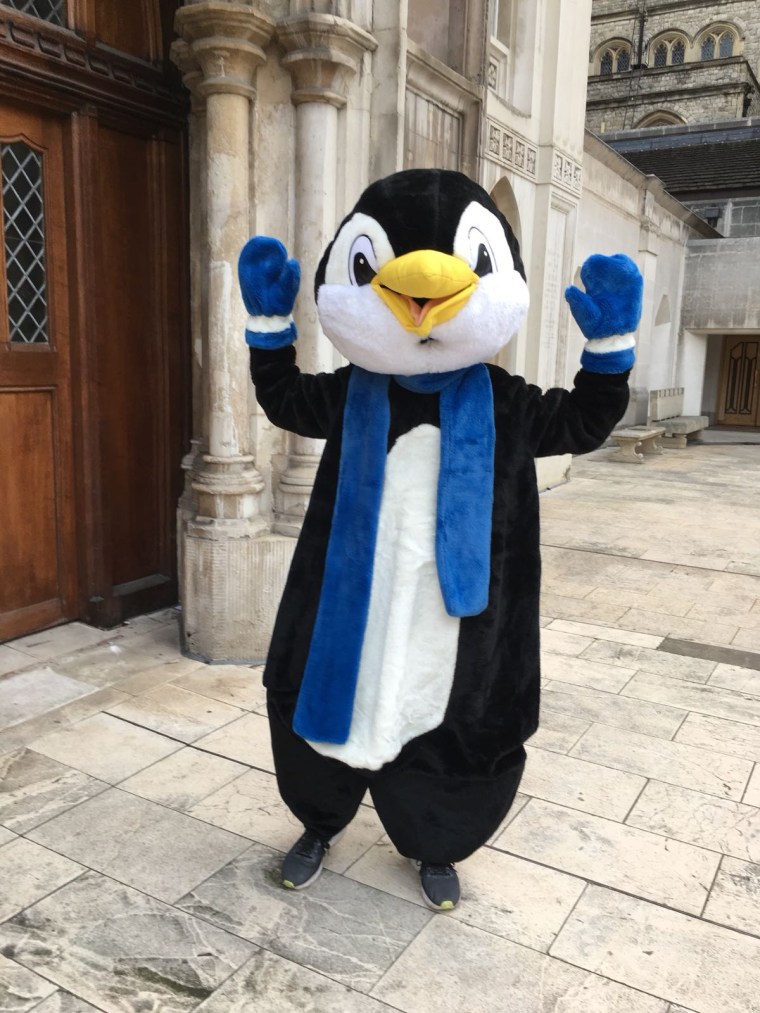
I’ve done most of these roles myself through volunteering. Some memorable times include being on Water and and Tailwind (hydration drink) duty at a checkpoint in the middle of the Centurion Running NDW100, to running up and down stairs to collect drop bags for runners at the SVP100 finish line, to standing alone in the woods in the pouring rain marshalling road crossings and course sweeping and collection for Maverick Races to even spending 8 hours dancing inside a giant penguin costume at the London Winter Run. The role of a volunteer is a varied one.

The 2018 Winter Run. I was kept warm as a dancing penguin. I fucking hate dancing!

What to expect

  • Larger events, like a mass participation road event, you’ll tend to rock up at a set time, meet a team leader, be given instructions and get on with it, leaving at a set time
  • At a smaller event, you may meet the entire team of volunteers and be involved in a little of everything
  • Be prepared to go the extra distance. You can’t expect the race directors and team to pander to you and your needs. It may be that you need to figure out a way to get to your volunteer spot in the middle of nowhere. Local transport, run, walk if you can. Don’t be put off if you can’t get a lift to where you need to get to!
  • Hanging around alone. You have a responsibility to ensure the safety of runners. That might mean you are waiting for hours before you first see a runner and are on point for a long time after the last runner goes past. Be prepared for loneliness, but stay alert.
  • Be prepared to travel – races won’t be on your doorstep. It is your responsibility to manage your time and ensure you are where you need to be when you should be!
  • Be patient. No doubt you’ll have plenty of questions before volunteering and even after (when will I get my free stuff?!), but be patient. The race directors will be fielding endless amounts of questions from participants, other volunteers, locals and the community surrounding the event as well as authorities giving the race the permit to proceed. You won’t be forgotten about, be patient whilst the questions are prioritised and addressed.
  • Most races you’ll volunteer at will be experienced. They’ll have plans and processes in place for coordinating and managing the volunteers. You’ll be told what to do and given what you need in good time. Don’t panic if you’ve not been given detailed instructions weeks before the race!

What to do

  • Get involved. Offer help, ask what you can do. It might just be unloading boxes from a van, but it needs doing. Take the initiative and don’t just stand about like a lemon waiting to be instructed.
  • Do it with passion, do it with interest. Standing around at the side of the road or in the middle of a wet field might sound dull but you can make it interesting. Dance, sing, clap and cheer. Be stupid. Make people laugh, bring some enjoyment to what you are doing and it will rub off on others.
  • Entertain and support. As a runner you’ll know what it’s like to be on the receiving end of a big smile and someone encouraging you on. This is your opportunity to give back
  • Be prepared. It can be long and tiring volunteering. Take food, take plenty of water, take warm and appropriate clothing. 
  • Gain some knowledge about the event. Passers by will want to talk to you and find out what you are doing. Make sure you know how to give them information and share the word about the event. 
  • Be prepared to support runners. We always want to know where we are, how far left to go, where is the water etc. Make sure you have the key information to hand. No one enjoys it when they are told there is ‘only 1 mile to go’ but that 1 mile turns out to be 3 miles.
  • Explore your surroundings, this I think is particularly more relevant for trail events. Go past your checkpoint, explore just before it. Know where runners are coming from and where they are going and what hazards they can expect to encounter. You can help them prepare then.
  • Make sure you know who to contact in an emergency. This could be in the case of an injury to a runner, an angry local who has a complaint or your own personal situation should it arise. 
  • Be yourself, bring your character
Getting my thirst on with Centurion Running & Tailwind

Some things to think about

  • Understand the commitment you are making. That free tee shirt sounds great, but do you really want to help and are you committed? I’ve already mentioned the stresses leading up to organising a race. The last thing organisers need is a volunteer pulling out last minute because they’ve changed their mind. Obviously sometimes life means you have to pull out, but don’t pull out because you’ve changed your mind or underestimated the responsibility you’ve volunteered for.
  • Be prepared. Events are prepared to deal with the inevitable injuries to a runner, but they are not prepared for the avoidable situation where a volunteer has caught pneumonia because they didn’t bring a jacket, or they didn’t bring water and are dehydrated etc.
  • Make sure you can get there on time and can get home afterwards. It isn’t a race director’s responsibility to coordinate you or help you when you realise you missed the last train home because you weren’t prepared.
  • Be helpful. Don’t be rude, don’t try and dominate or change the processes in place. If you have feedback, save it and provide it directly to the event organiser, maybe after the event, as a suggestion for future consideration. You are there to help runners, be patient with them. It is inevitable they will ask questions you’ve heard a 100 times already that day, or be frustrated that the course was 10 meters longer than they thought. Remember you are representing the event and the organisers. Be helpful where you can.
  • Be thankful. Build those relationships for next time you volunteer or participate in the event.

SO…

Whatever your reason, volunteering is incredibly fulfilling. Don’t be put off, don’t feel guilty that you are doing it for the wrong reasons such as the personal incentives. Don’t be afraid of being uncomfortable. Races rely on the support and volunteers to make them happen. Behind every race is an army of people getting involved. Many of these you will never see on race day. I’ve volunteered because I want that race entry (thanks Centurion Running!) or a particular tee shirt (yep, I wanted the yellow SVP100 tee in my collection!) or a voucher to buy some trainers (Cheers Maverick Race!) I could afford to just buy anyway. But, despite all this, for each event I’ve volunteered at, I’ve gained knowledge, experience, thanks and memories that go far beyond just running. Be part of the community you love so much, get involved!

Marshalling road crossings with the Maverick Race hi-vis

Beachy Head Marathon

It is the 24th October 2020. I’m running the Beachy Head Marathon along England’s South East coast starting and finishing in Eastbourne. As I am running, I’m also reflecting on my trail-running journey as, back on the 30th December 2017, this is the route I ran when I tagged along for my first social/group run. In some ways, this is where my journey began.

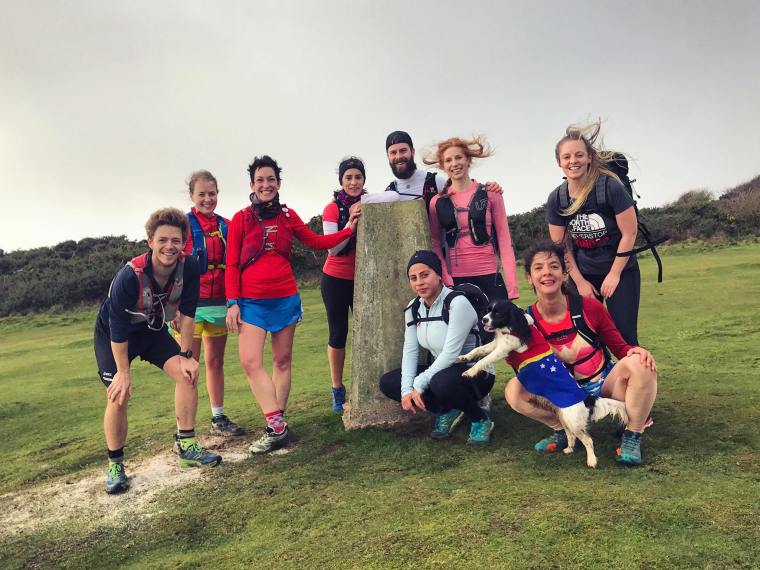
It was after the Never Stop London Christmas party when Jana told me that her and some friends would be going for a group run after Christmas and that I should join. So I did. I joined them on the way down to Eastbourne and, little did I know back then, we ran the Beachy Head Marathon route. The intention was to do the whole thing, all 26 miles of it. But, as we reached Exceat, after 20 miles, with it then becoming very dark, we decided to skip the last few miles along the Seven Sisters and jumped on a bus back to Eastbourne and then home.

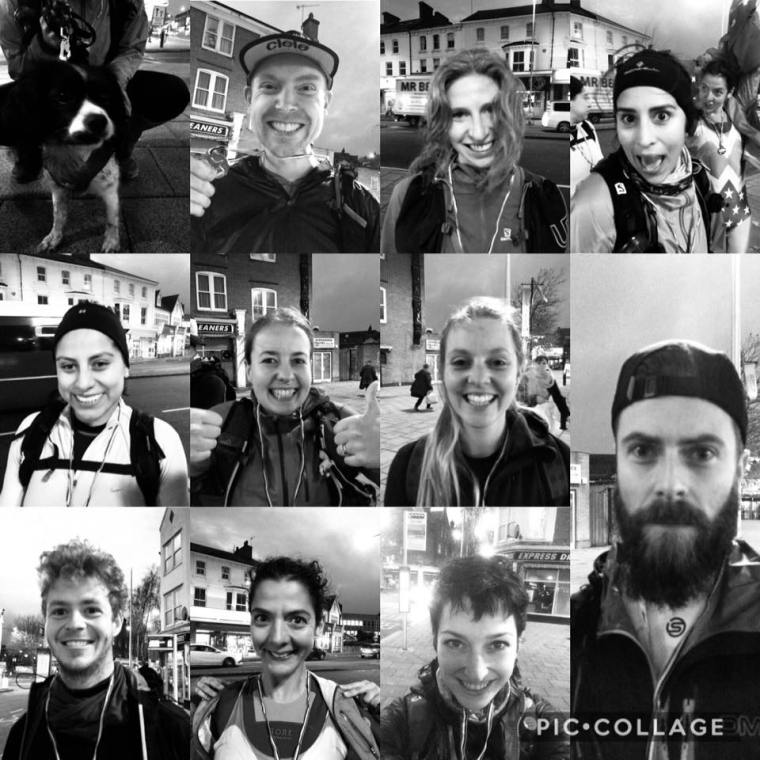
My first time running with Cool Cats and meeting this lot

That day was a baptism for me on the trails. Whilst I had completed 3 trail runs in 2017, all were at events. This was my first social run, the first time being unsupported without checkpoints and it ended up being the beginning of something special (I didn’t realise this at the time). I remember it was tough. I had the essential kit but I was probably not quite prepared for the day and the elements ahead. I remember early on I slid in the mud and landed side-on in a muddy puddle. I recall the open hillside tracks with the rain and the wind battering our faces – we couldn’t hear each other talking and ran a lot of it in apparent silence. It was the first time I’d met many of those I ran with that day and it was the first of many, many, runs with them and the mighty Gwyn (Susana’s dog). On the bus back to Eastbourne Susana gave us all a medal she’d made. I’m fortunate to call many of them friends now. I loved it all. Now, almost 3 years later, I was back on the Beachy Head route, for the Beachy Head Marathon in its 40th year. My trail running journey continues!

I knew a few people running the route that day. I didn’t expect to see any of them with the social distancing restrictions put in place. To my surprise though, just a few minutes in I ran into Megan who I travelled Borneo with. We caught up as we ran probably about half of the route together. It was great to see here again and especially nice after seeing some of the others from Borneo a few weeks earlier.

Rather than the usual ramblings of how the run went, instead I’ve summarised what the Beachy Head Marathon is and what you can expect if you decide to take on this fantastic event (which you should!)….

What is the Beachy Head Marathon?

It is a trail marathon which means it follows a mostly off road route. It has been taking place every year since 1981 and is a very popular event attracting runners from all over the UK. 

The marathon is a strange sort of loop shape (kinda looks like an animal of some sort), starting and finishing on the edge of Eastbourne. Mostly it follows the South Downs Way as you first run towards the village of Jevington, and then continue on through and past Alfriston. When you reach the lookout point at Bo Beep Carpark, you begin to track back towards Eastbourne passing through Litlington and down to the coast via Westdean and Exceat. Once you leave Exceat you follow the undulating coastal trails of the Seven Sisters all the way to the Birling Gap and finally up to ‘Beachy Head’ and back to where it all began. 

What to expect.

  • Firstly the start. It is uphill. If you’ve ever been to Eastbourne and the end of the South Downs Way, you’ll know. The cliffs drop off and the Downs very quickly become the seafront. This is where Beachy Head starts. Immediately after crossing the line you begin the first of many, many climbs. There is no shame in walking the start!
  • There are plenty of long and open hillside trails with endless views from the South Downs. With plenty of climbs along the route you’ll reach some spectacular view points of the rolling hills. These are mostly unobstructed and you see the hills fall away and rise again in the distance.
  • Wind and rain. With little shelter from the elements and an October event date, expect plenty of rain leading up to and during the event. Running along the open hill tops and next to the coast means it is very likely you’ll encounter some high winds. This year we had a slight deviation on the route due to the forecast gale force winds.
  • The rain inevitably leads to mud. Plenty of mud. The trails will become caked in mud. If getting your trainers dirty isn’t your thing, then don’t sign up. Trail shoes are a wise choice if you want to stand some chance of remaining on your feet throughout.
  • With a number of road crossings, big participant numbers and the multiple aid stations along the route, you can expect to encounter a lot of volunteers and marshals who are all fantastic and encouraging. It isn’t supported in the way road events are, but you won’t be missing the whoops and cheers as there is plenty of encouragement and support available along the way.
  • Speaking of aid stations, besides the usual water, sweets and chocolates, the Beachy Head Marathon provides an extra delight along the route with sausage rolls available approximately halfway round. By Lord is it a good one! Vegan options are available if that is your thing.
  • Steps. Whilst most of the climbing is done along trail paths, at two points you will climb a hill by using the large steps built into the hillside. In particular, the last climb before you reach Exceat, where the steps will torment your tired legs. As you descend back down into Exceat you are rewarded for your efforts with wonderful views of the meandering Cuckmere River as it meets the English Channel.
  • With legs still aching from the fast downhills and the steps to Exceat, it’s not over quite yet as you reach the Seven Sisters for the last 6 miles of the course. Here you run along the undulating cliff top trails as you make your way to the Birling Gap. If your legs weren’t hurting by now, then the last climb out of the Birling Gap back to Eastbourne might just be runnable!
  • Remember that big climb the race started with? That is your final challenge as you must now attempt to run down it without falling under the steepness of the path and the momentum you build as you descend. Try not to fall because there will be photographers waiting to capture your stumble in all its glory,
  • Throughout the course there are photographers doing a wonderful job of capturing the highs and lows of the event. With your head down concentrating on the trails, it’s likely the photographers will see you before you see them!
  • Once you finish, besides the standard medal and water for all finishers, you also get another local delight with a pasty (meat or vegan) for all the finishers. You won’t be needing a pub meal after this one!
  • If you can manage it, and your legs still work, you can enjoy a leisurely hobble along the seafront and into Eastbourne. A perfect way to finish the adventure!

In short, it is a good one. Whether you’re a first time marathoner, first time trail runner or seasoned addict, get the Beachy Head Marathon on your to do list and have some fun!

walking along the seafront with Megan after the race