The Event
Tors Des Geants (Roughly translating to “Tour of the Giants”) is a series of races in the Valle d’Aosta (Aosta Valley) in Italy, just East of Mont Blanc. TOR330 is the most famous and renown race in the event which has many other distances including the formidable TOR Des Glaciers (450km) and Trot Dret (130km). I entered the lottery for TOR330, not because I had a burning desire or that it was a bucket list race (as it is for many), but because Matt had been in my ear reminiscing of when he did the race in 2023 and he also entered, hoping to go back. After 3 lottery draws I was drawn for one of the remaining 20 spots in the race, Matt wasn’t fortunate in the lottery. I signed up. It was kind of an opportune year where I could escape almost guilt free for such a run. Who knows what commitments life will bring in the future.
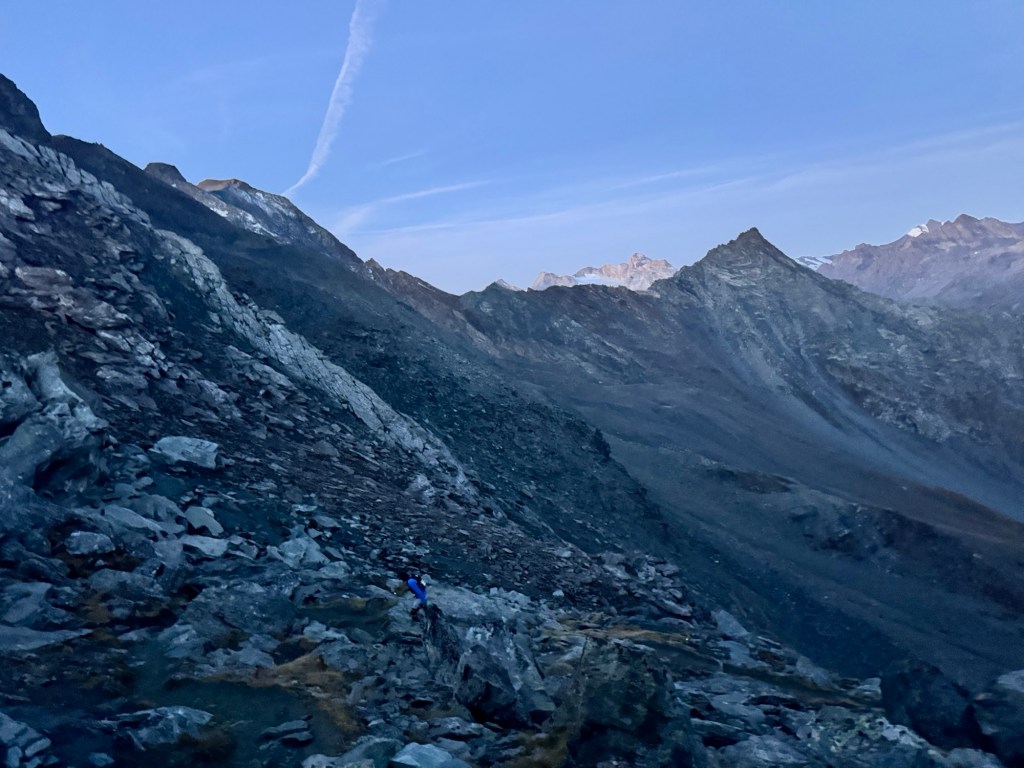
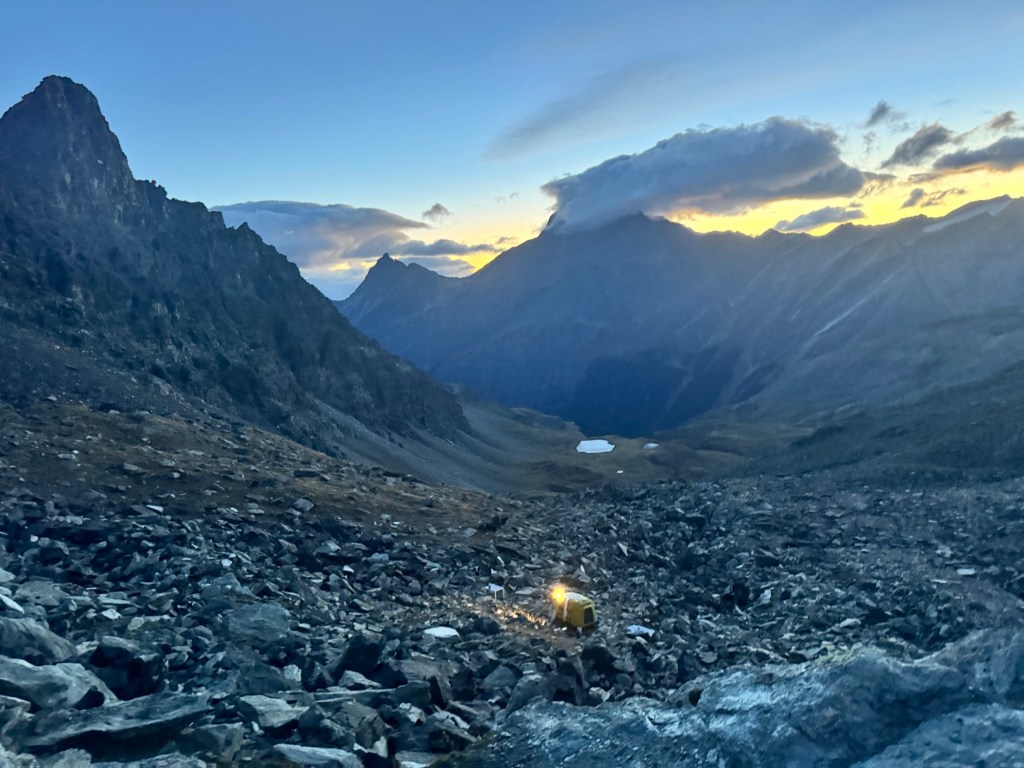
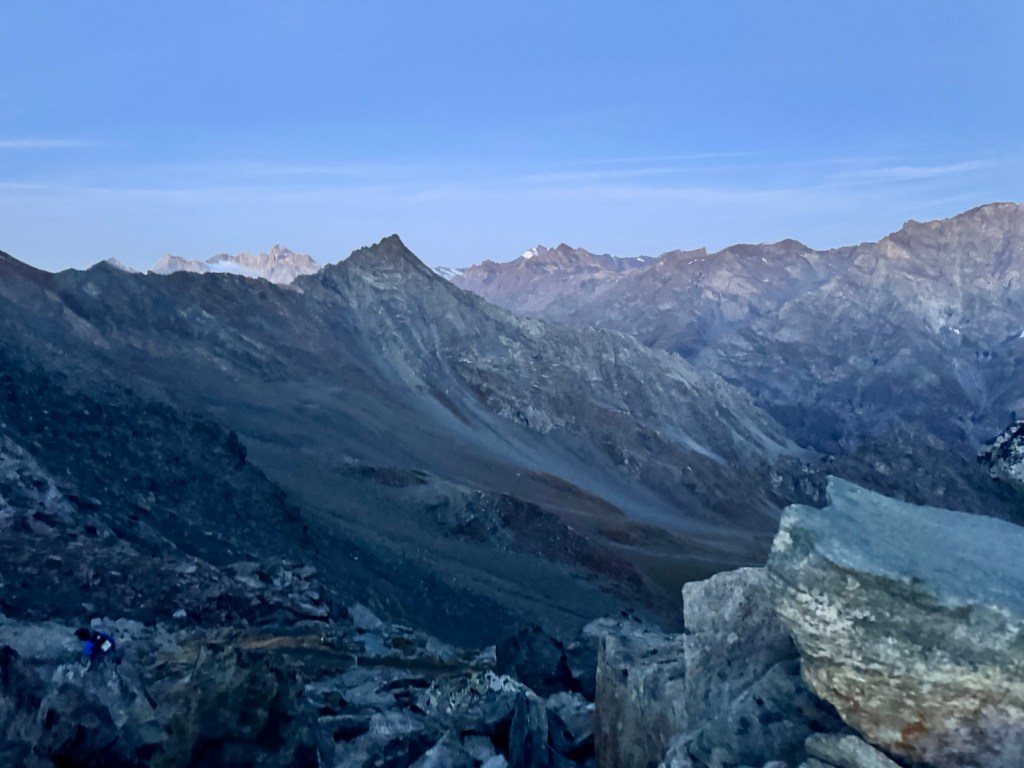
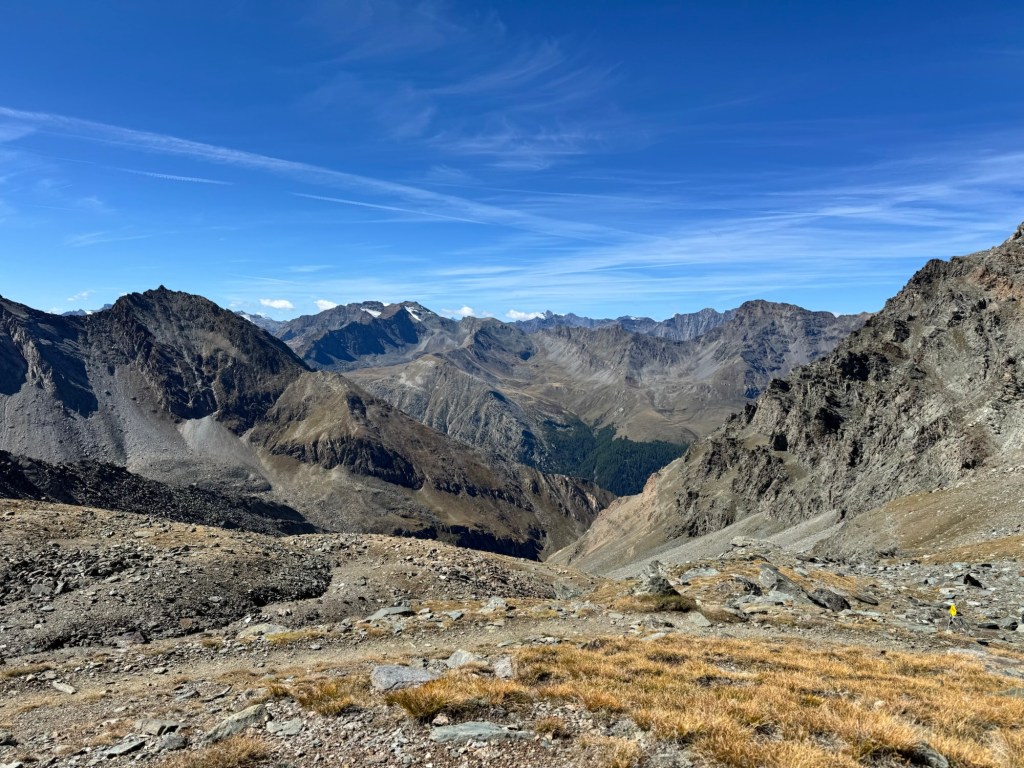
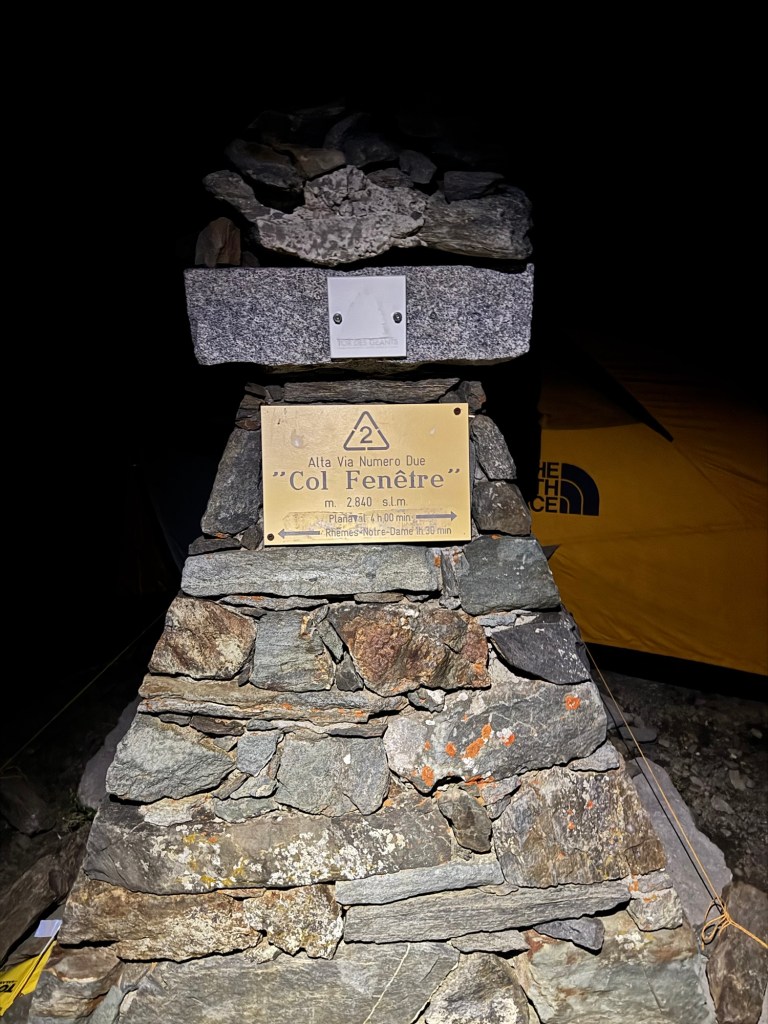
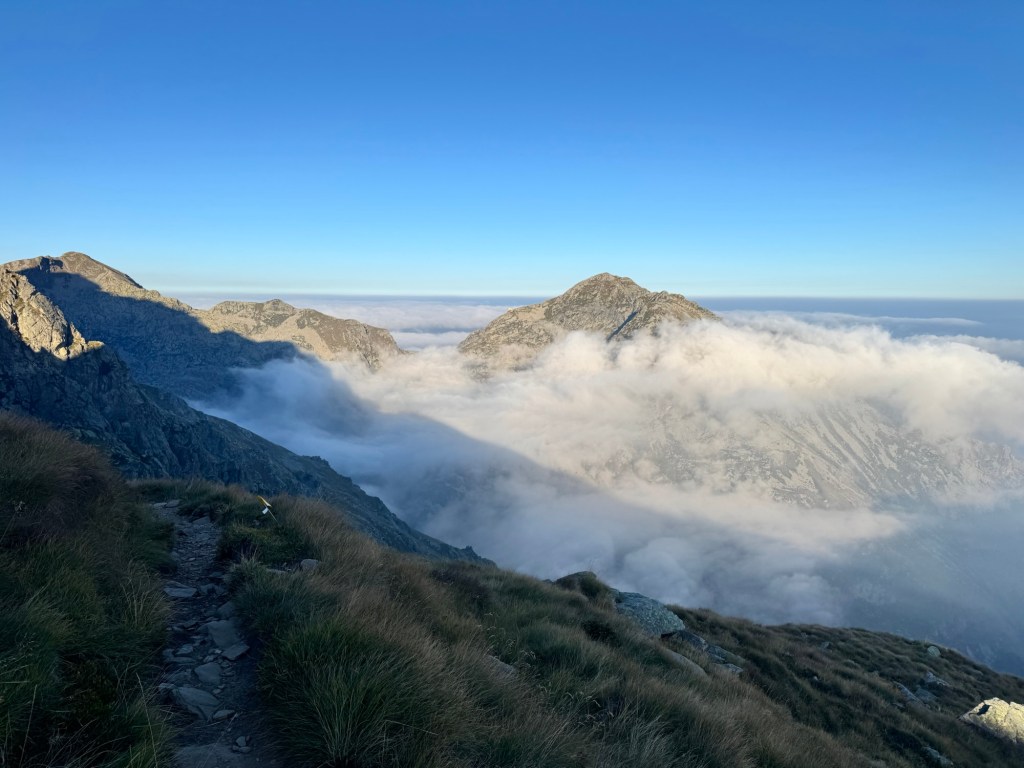
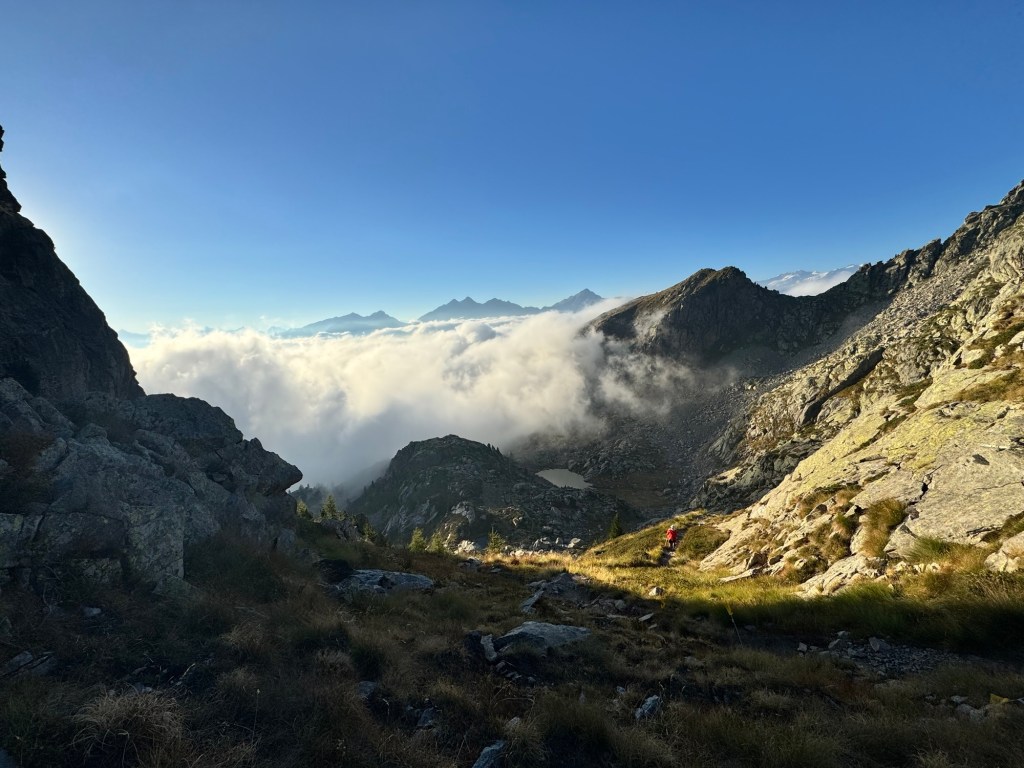
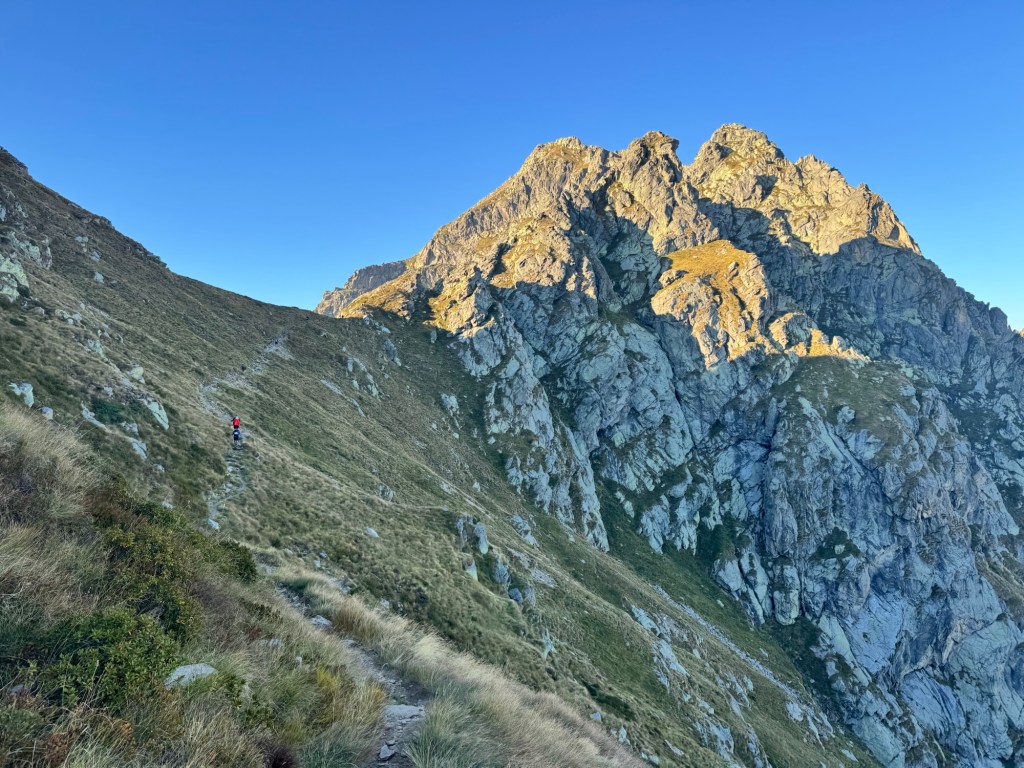
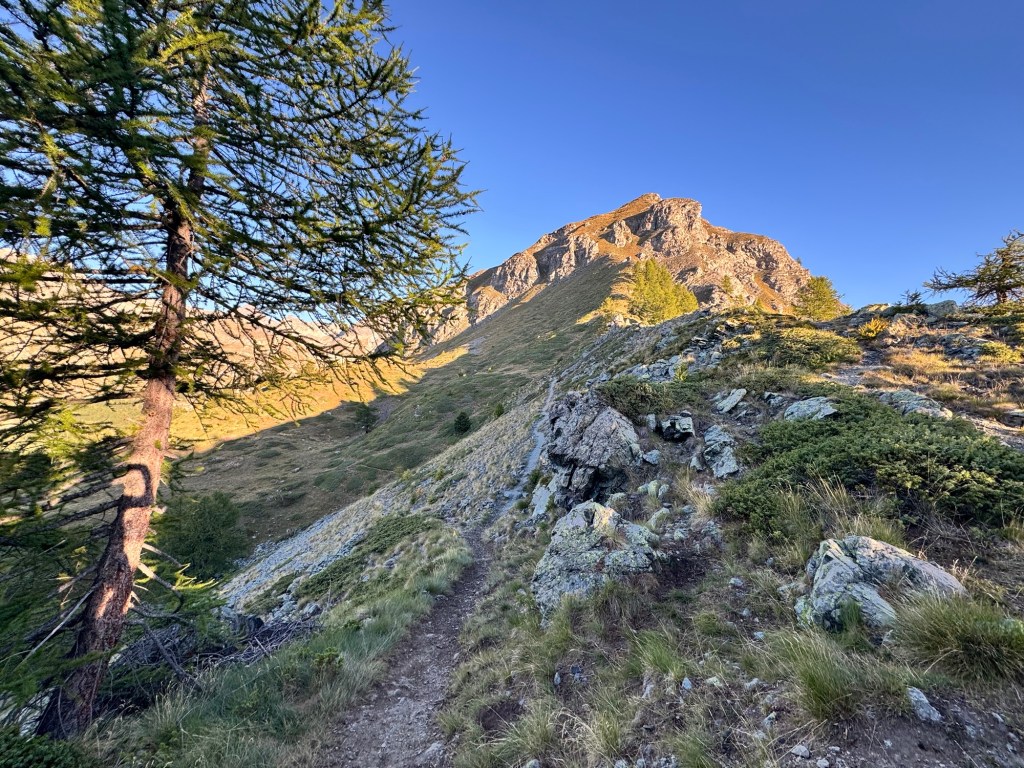
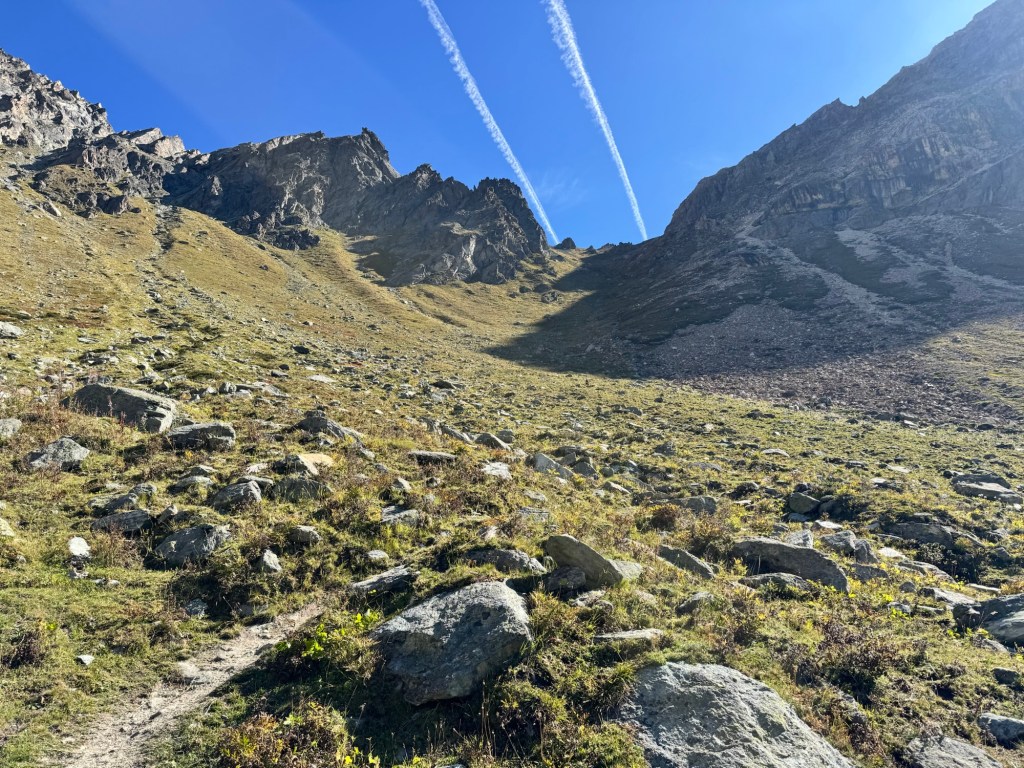
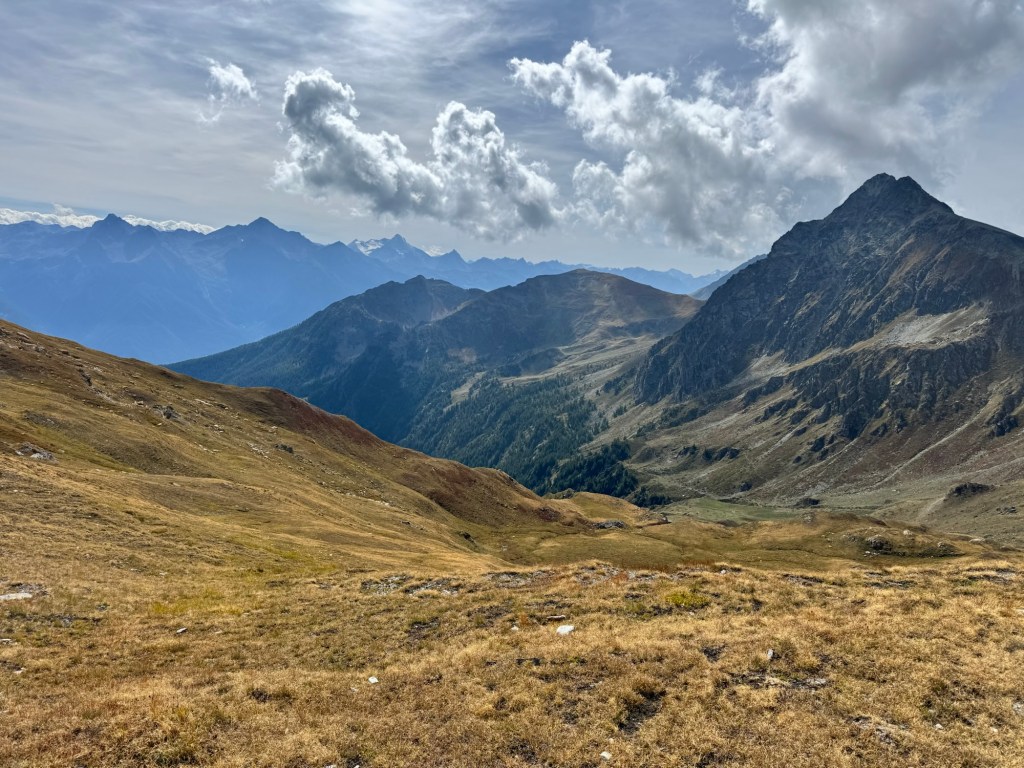
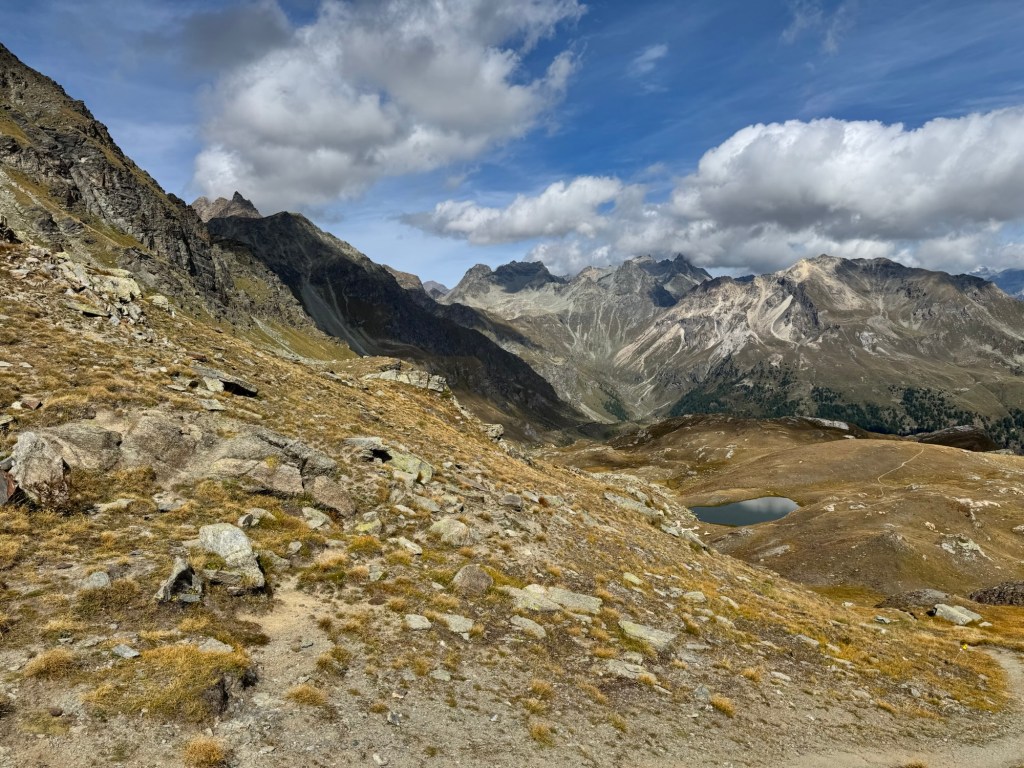
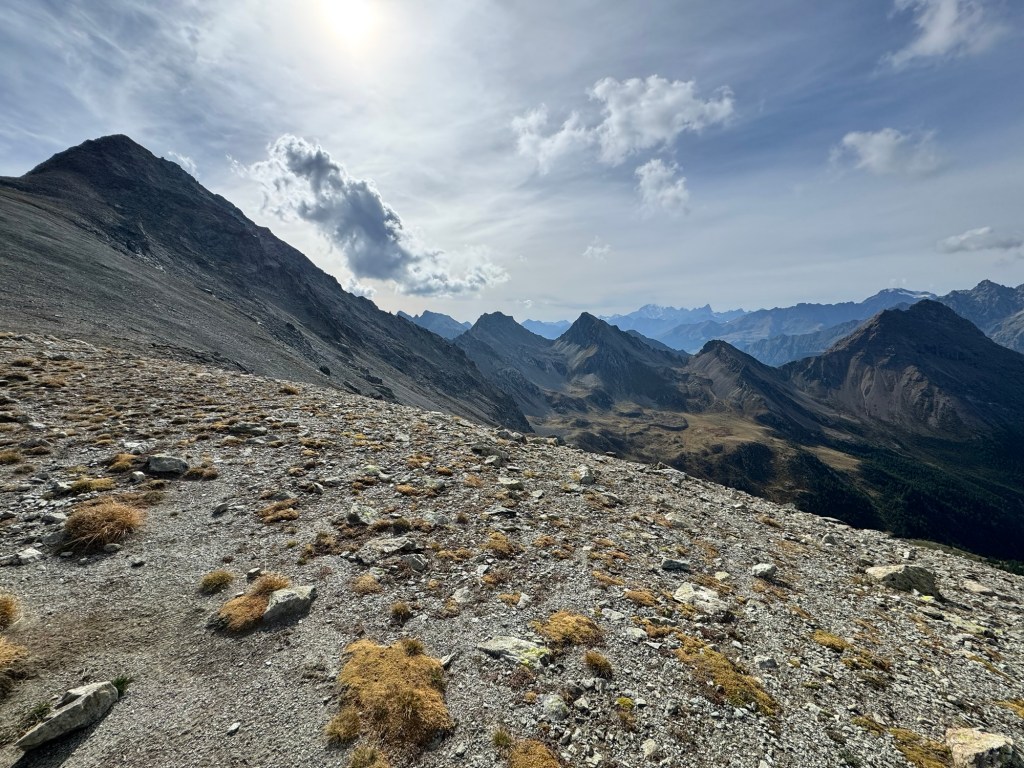
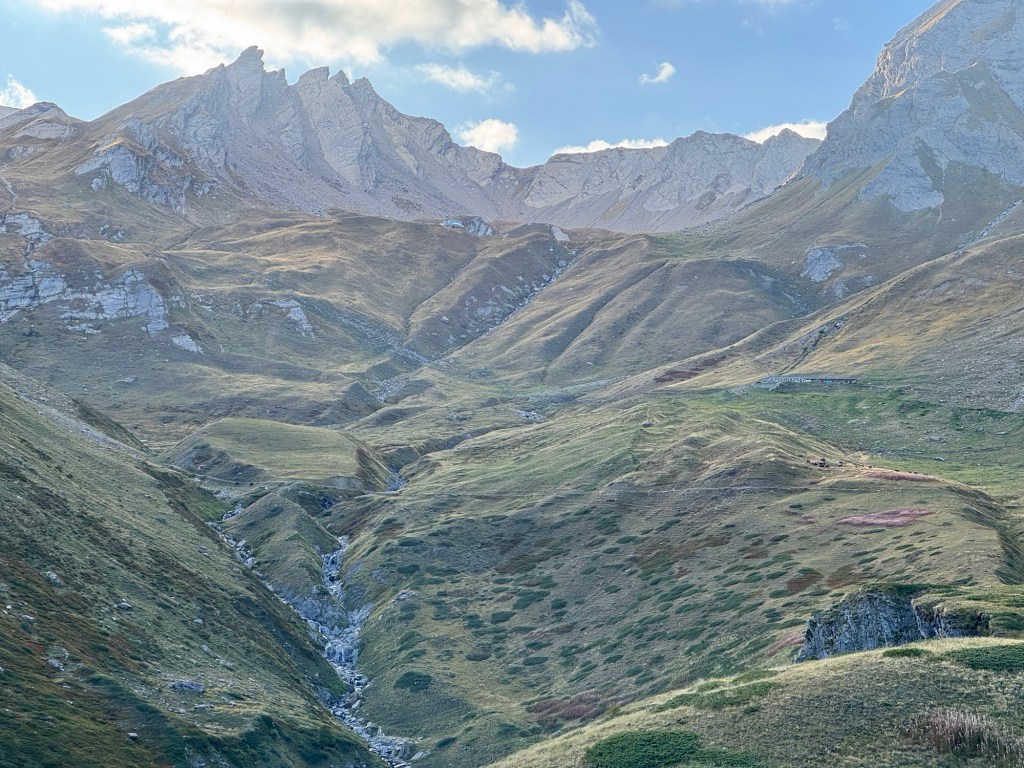
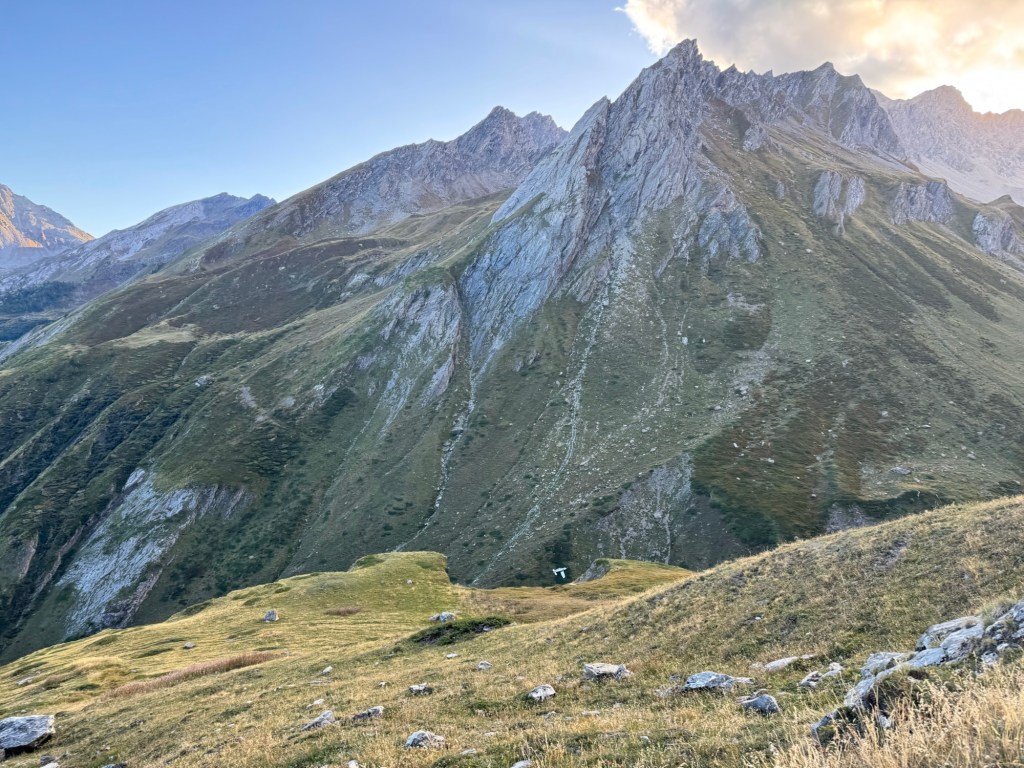
The race has a sort of mystery about it, 200 miles and greater than 25,000m of elevation in some remote, wild and raw mountain ranges. The route involves passing through the Gran Paradiso and Mont Avic national parks, pretty much just ascending and descending the 25 mountains, very little else in between – for the most part, you just go up and down on repeat. On the TOR330 though you don’t climb to the summits, you navigate to the Cols (passes) in between, and use the saddles to pass between them.
The event is also built around tourism in the valley, all the major towns are bought in and support the race, its like a week long festival everywhere you go. You pass through many of the regions villages along the way with the larger towns acting as the major checkpoints and the route weaves you through cobbled streets around many of the towns on your adventure. Everyone is invested in the race for the week. It has a real international draw and a strong community of long time sufferers. You’ll be amazed how many people you meet who are there year on year repeating the journey around the valley.
The TOR330 race isn’t a stage race, you have 150 hours to complete the course and it is up to you how you manage that time, it is widely accepted that sleep management is more important than physical capability to keep going over such a long period of time. Each runner adopts and adapts their own plan and strategy and it is fascinating to talk with other runners about the different approaches. You just need to follow the course, meet the cut-offs and get back to Courmayeur within the time frame.
Registration
To sign up for TOR330 you need to enter a lottery early in the year. It is a little complicated to understand your chances as there are a number of different factors and weighting systems used to make it fair across applicants from different regions and nationalities. Unlike many events, they also don’t create a waitlist. There are approximately 1200 places available. Over a number of weeks these are all filled up from the lottery and that is final. There are two subsequent lotteries to fill any unclaimed places (i.e. those places offered from the previous lottery but not completed (paid for) within the allotted time. If after the third lottery places remain, they are sold on a first come first served basis. I was drawn in the final lottery that filled the remaining 20 places.
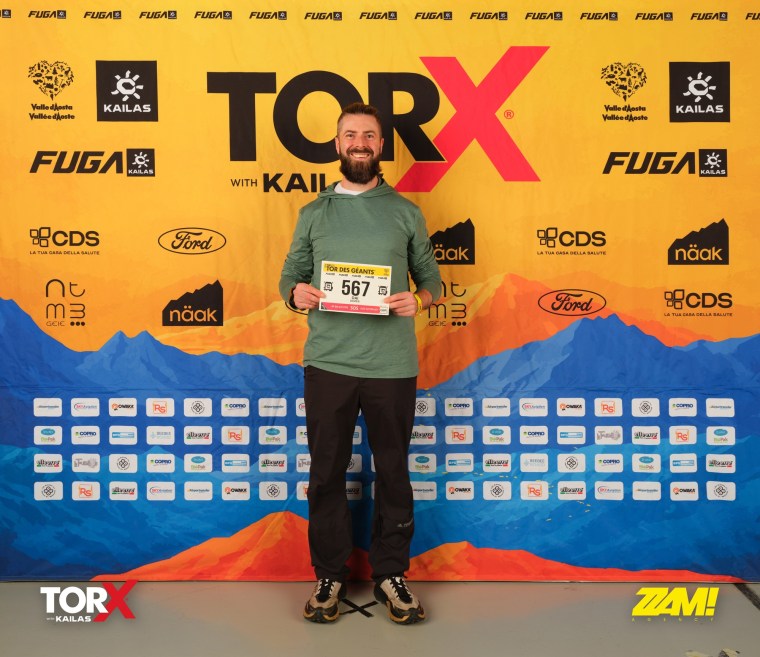
Upon arrival at Courmayeur, the bib collection is also rather complicated. In the Sports hall they offer a numbering system. When you get there, you take a ticket/number and then you can proceed to queue and register when your number is called. I don’t really understand it because the rest of the process is quick – you show ID, pick up a welcome bag (bib and t shirt etc.), get given your yellow drop bag, have a picture taken and leave. It takes but a few minutes. Yet, with the numbering system people wait and queue for hours. I went down early, before it opened on Saturday morning. On arrival I was surprised to find it was already open and loads of people were waiting. I took my number. I was 299. They were serving people in the 700s, seemingly from the night before. After a while the numbers updated into the low 300s. Mine seemed to have skipped. I walked to the front and showed my number/enquired. They told me the system wasn’t working and it was just a general queue, one out one in. Luckily I was already in the queue and it wasn’t long. It took me maybe 20 minutes to wait and register. I don’t understand the system at all!
The Route / Stages
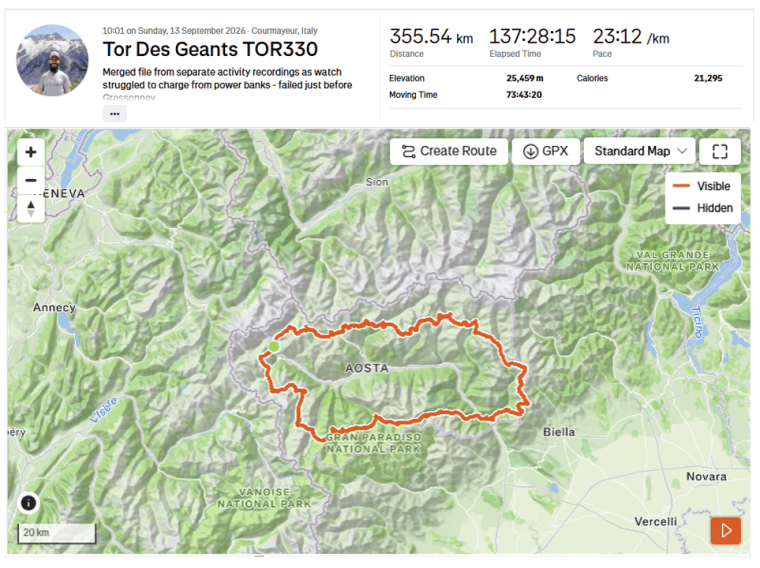
The TOR330 is actually closer to 350km, apparently this is well known too and I heard multiple rumours that the brand and reputation is one reason why it stays as the TOR330 along with the huge cost for replacing all the marketing materials (there is an enormous amount around the valley for the week!).
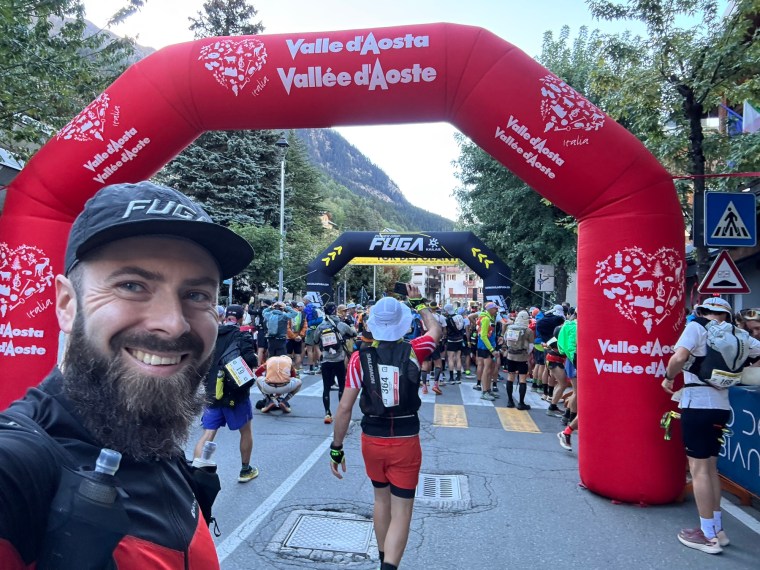
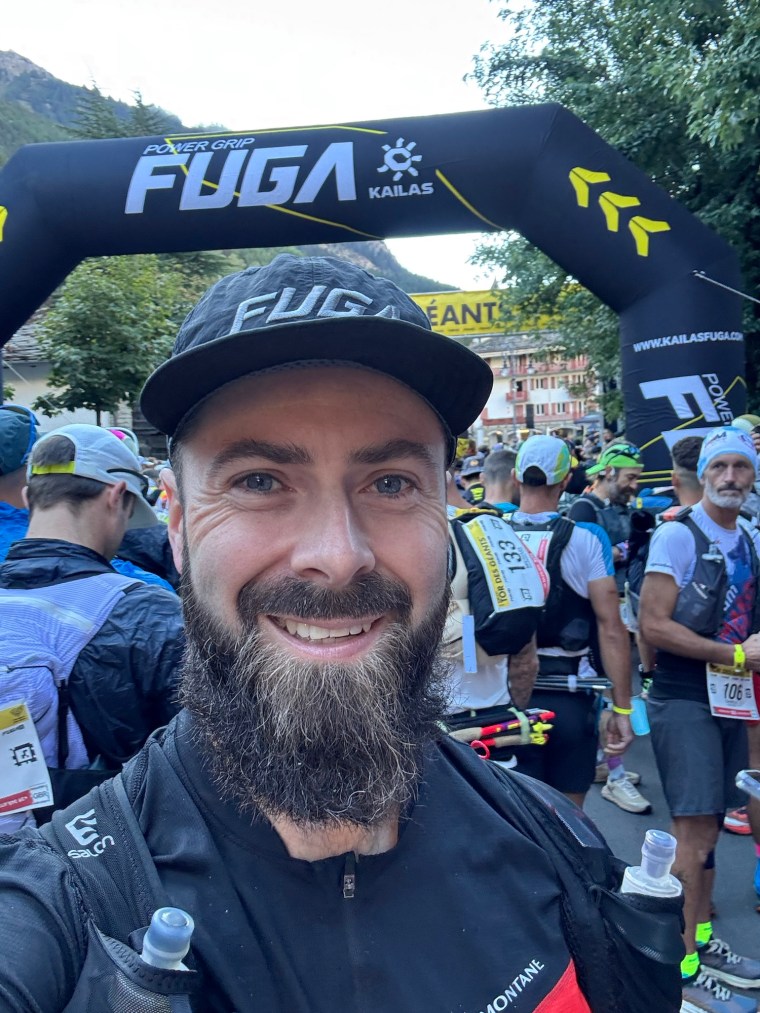
It is broken down into 7 stages, between each is a Life Base ( or “Base Vista”) which is like a super aid station. At Life bases you get access to your drop bag along (the iconic yellow TOR duffle bag) along with additional services like feet treatment, massages and greater sleeping arrangements. For a race of this magnitude it is broadly accepted that you break it into the stages and treat each as a race in itself. The stages are:
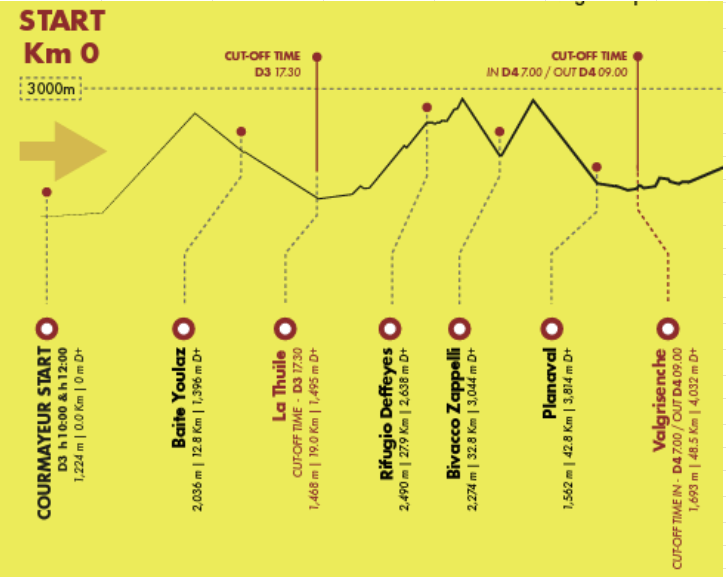
Stage 1: Courmayeur to Valgrisenche. Approximately 48.8km with 4,032m of Elevation gain
Stage 1 throws you in the deep end with a huge climb and descent early in the race along with two further steep climbs and descents over technical terrain. A real introduction of what lies ahead and is to come.
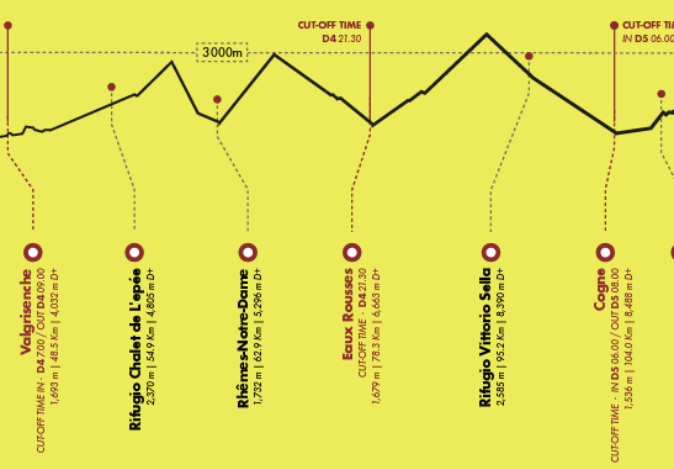
Stage 2: Valgrisenche to Cogne. Approximately 55.5km with 4,456m of Elevation gain
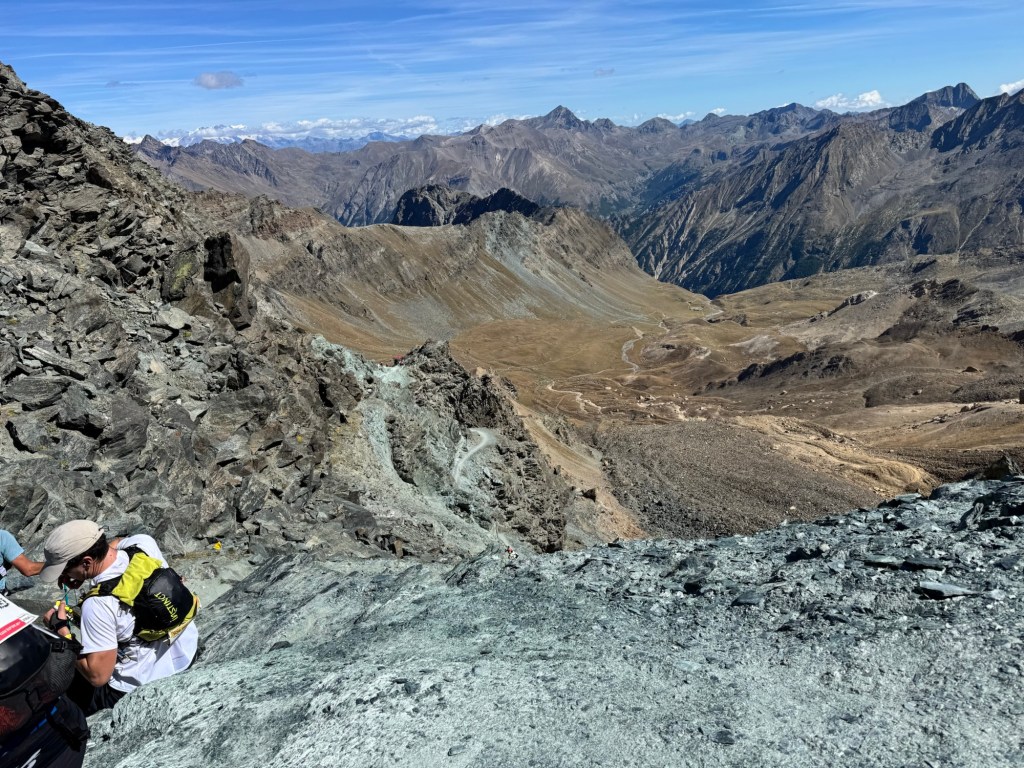
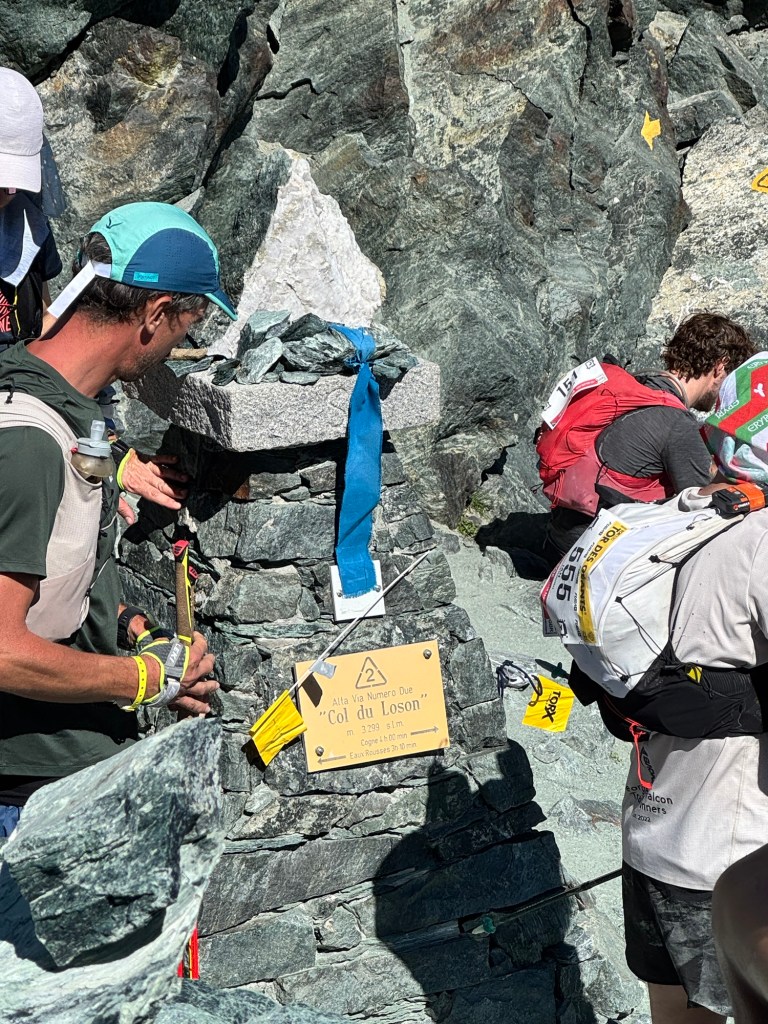
The second section is a whopper and involves climbing to two of the highest points on the route over 3,000m. A steep climb to Col Entrelor which has a very steep and technical descent, before a longer, ever enduring climb to Col Losson. A very tough stage that also involves a lot of steep, technical descending.
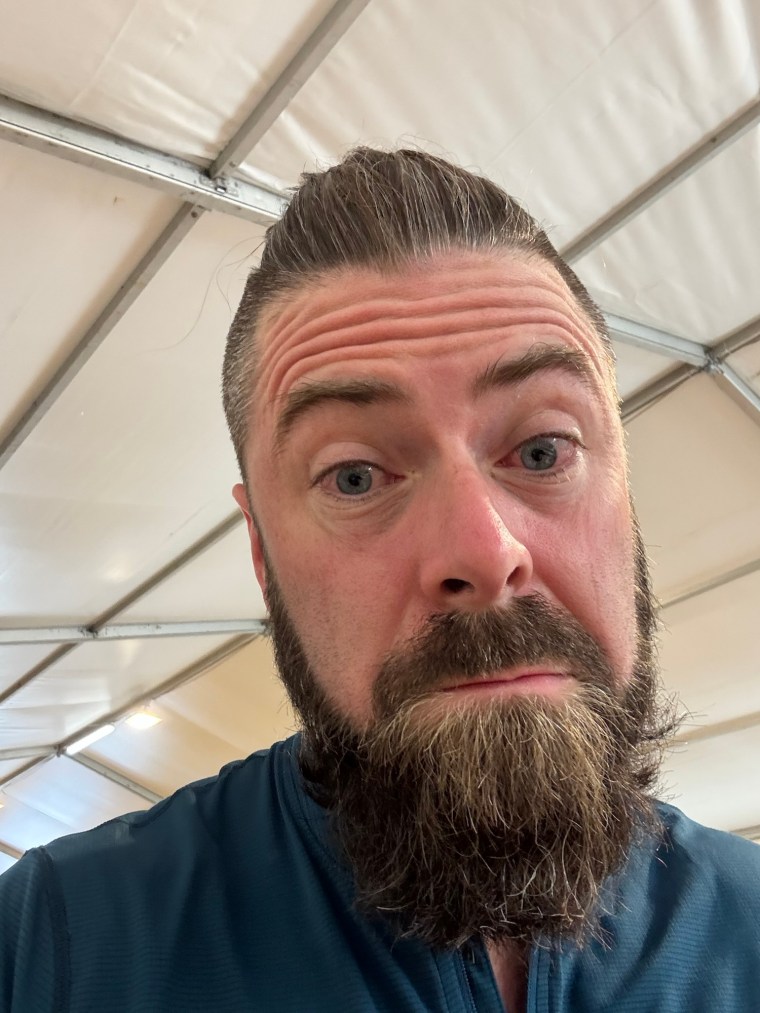
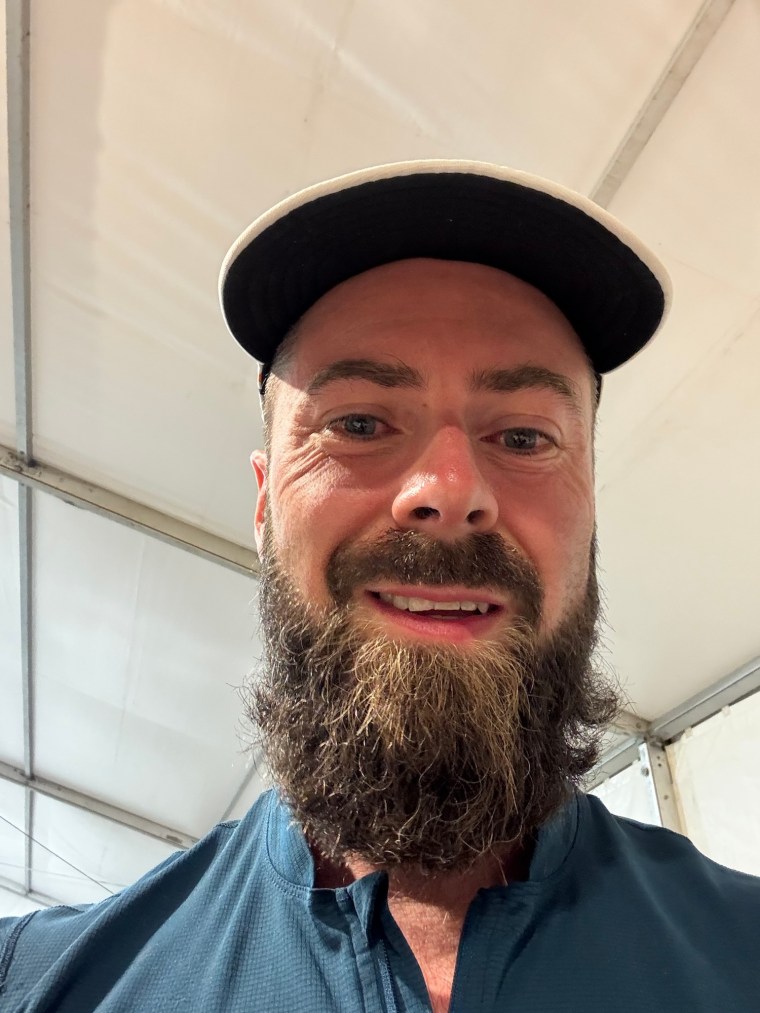
Stage 3: Cogne to Donnas. Approximately 45.8km with 2,183m of Elevation gain
A fairly straight forward section that involves one large climb and then a significant descent, along the technical mountain side down to Donnas. Along the way skirting the mountain and passing many rifugios. Into Donnas you run a few kms along the road, and again when leaving Donnas you continue for a few km down the main road.
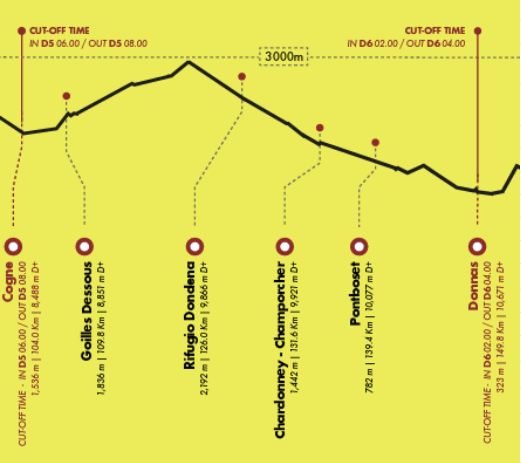
Stage 4: Donnas to Gressoney. Approximately 54km with 5,189m of Elevation gain
Recognised as the hardest individual stage of the route. This stage is long and has significant elevation gain and much more technical terrain than the rest of the route. There are big climbs to rifugios at higher altitude (like Rifugio Coda) and you spend plenty of time higher up navigating the mountain range around Barma until you descend to Niel, after which there is one long climb and descent to navigate before reaching Gressoney. The climb is full of false summits and the descent traverses lots of farmland and rolling green hills.
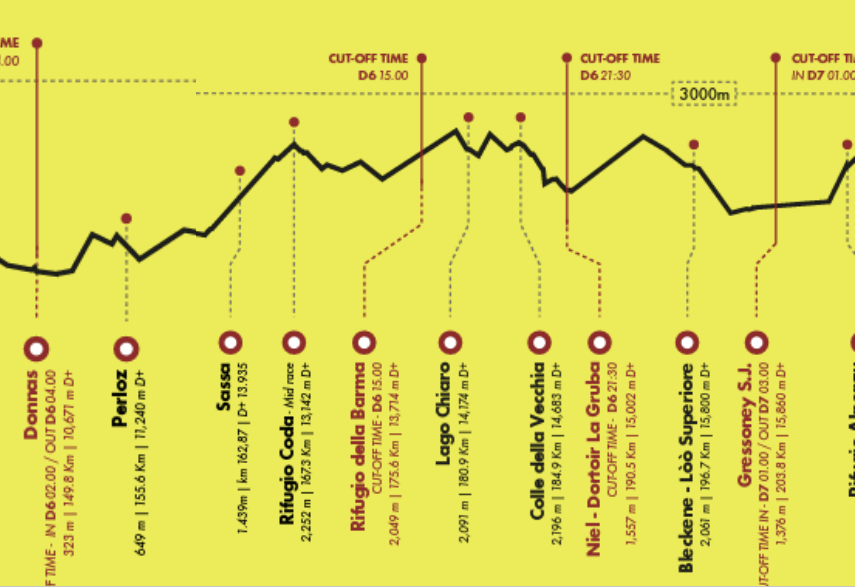
Stage 5: Gressoney to Valtournenche. Approximately 33.7km with 2,560m of Elevation gain
The shortest section of the route and, after everything that had passed in previous sections, probably the least technical and most runnable. This section involves a steady road section out of Gressoney before two big climbs and two big descents that are much more favourable underfoot.
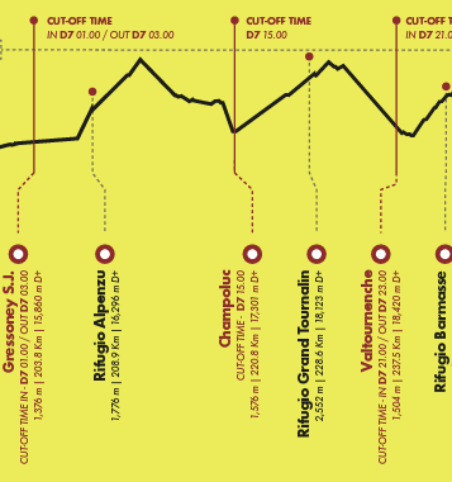
Stage 6: Valtournenche to Ollomont. Approximately 49km with 4,315m of Elevation gain
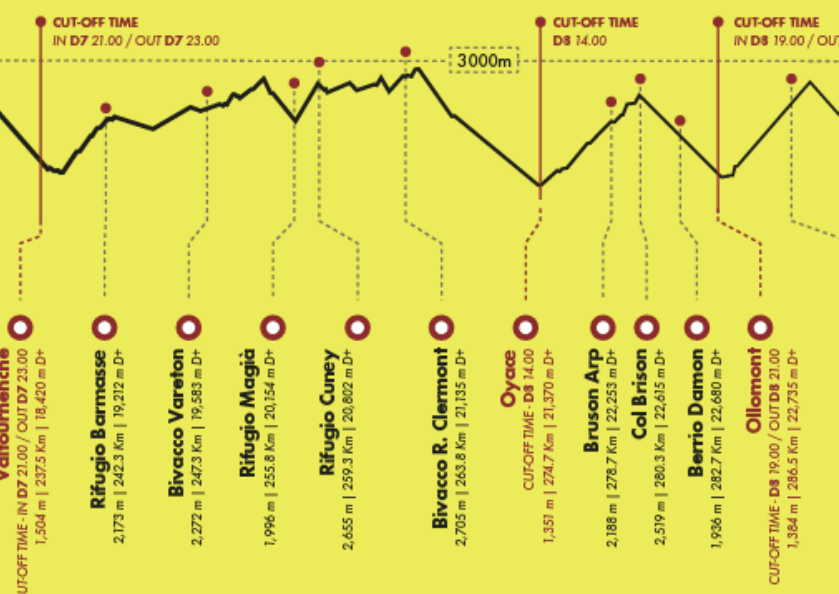
Another section that involves a long stretch where you stay up high on the mountains, navigating ridges and along the mountain sides in between the passes. It is technical and slow going and where I believe the distance of the race becomes distorted. The early part of the section involves climbing and descending to multiple Rifugios and temporary aid stations, before a huge, 1,600m descent into the picturesque town of Oyace. After which it is one further big climb and descent to Ollomont
Stage 7: Ollomont to Courmayeur. Approximately 50km with 3,447m of Elevation gain.
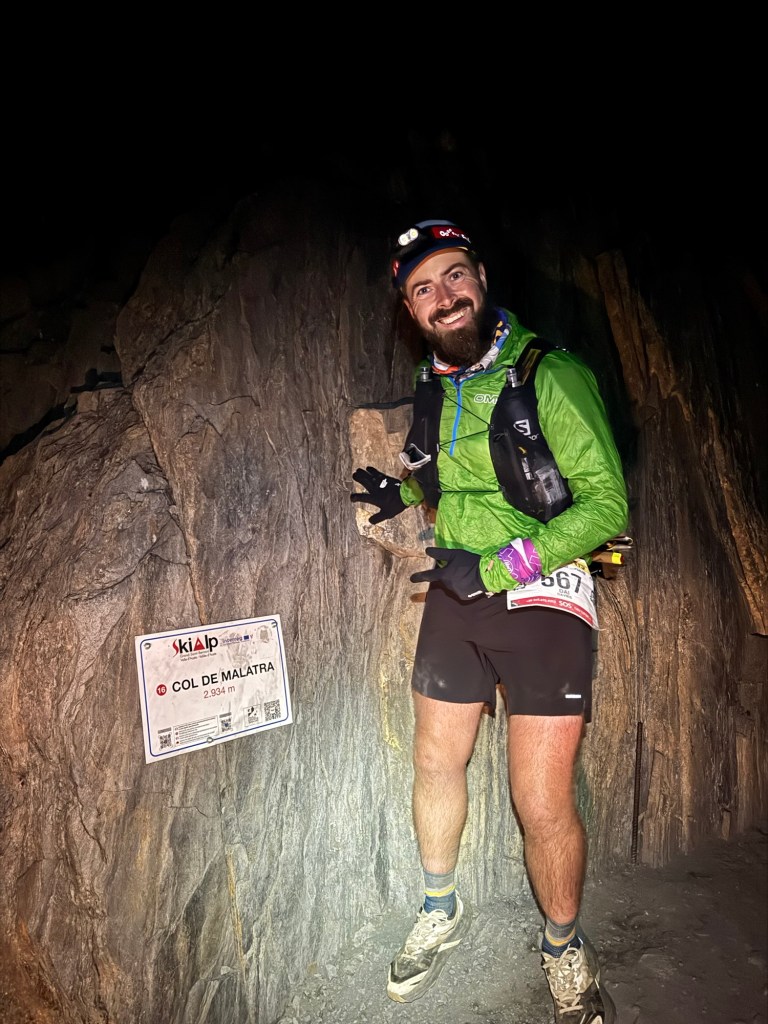
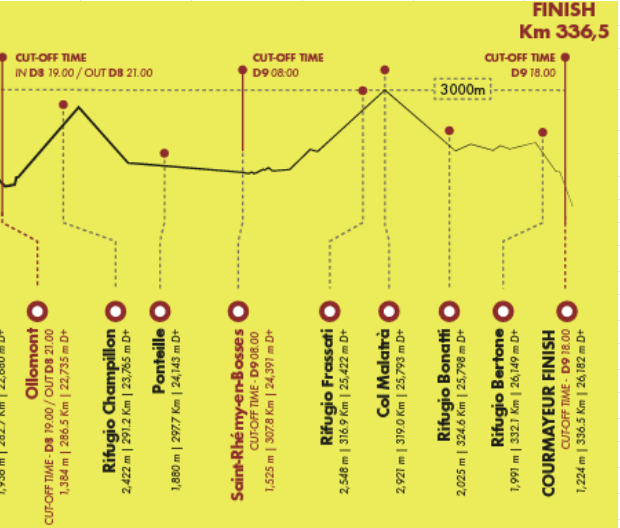
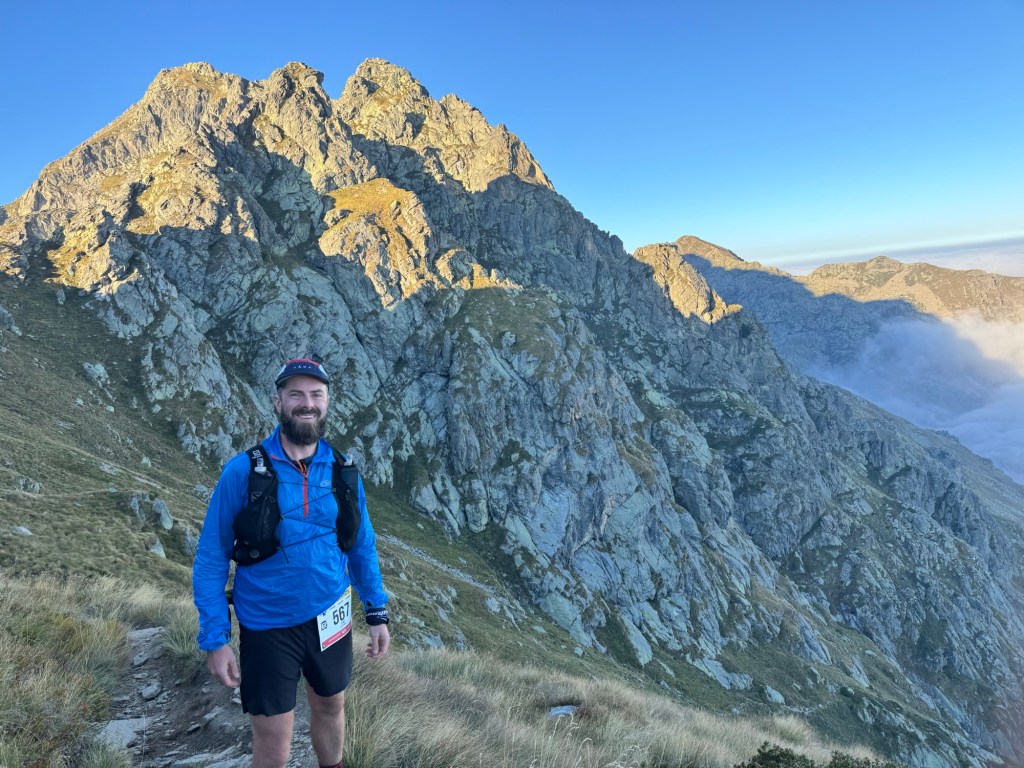
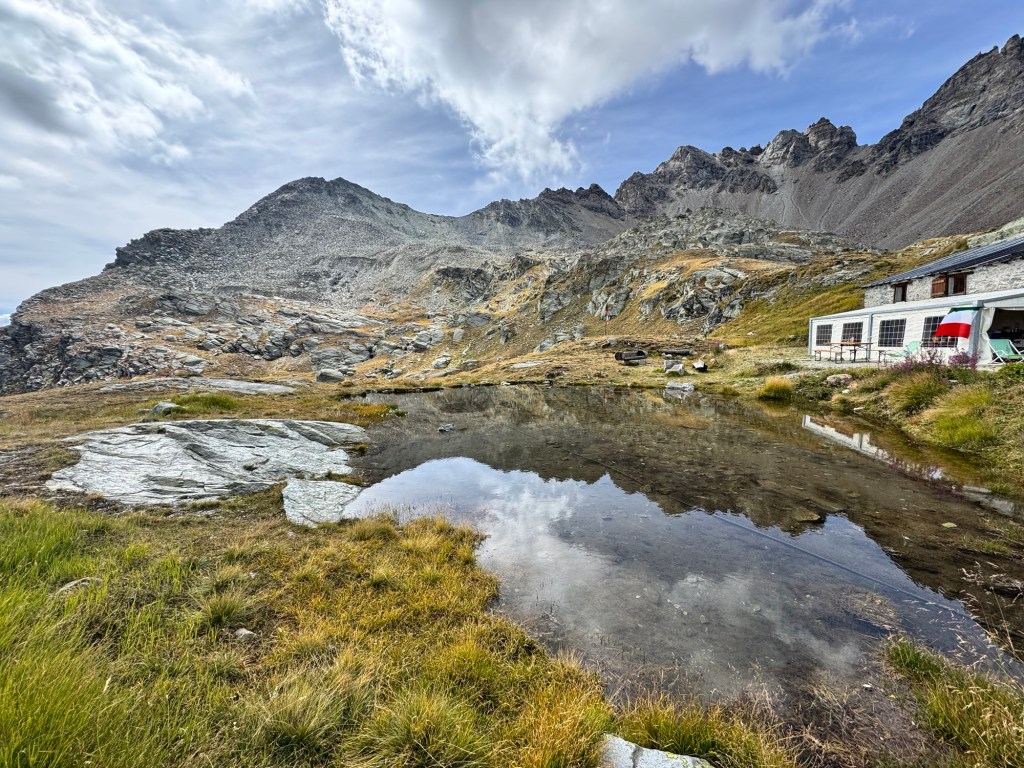
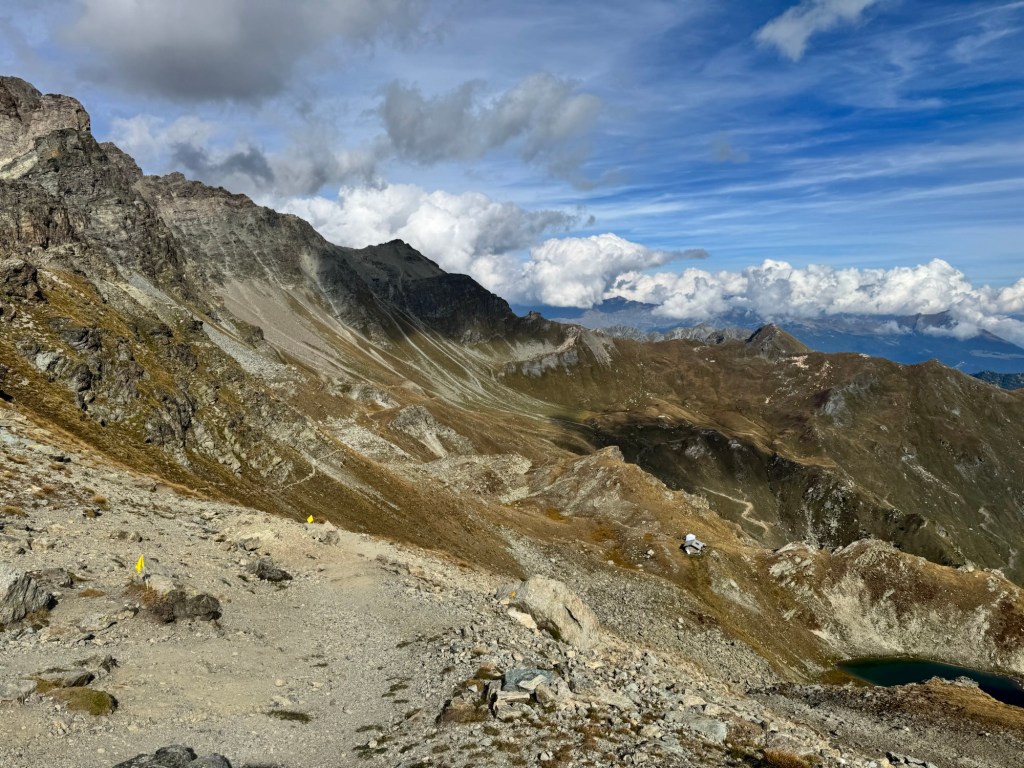
The final stage with two significant climbs and descents, before a final, technical descent into Courmayeur. The second climb being the most famous of the section as you climb steadily to the final mountain pass at Col. Malatra. This pass is the iconic image used on much of the race’s advertisement, recognising the moment runners complete the mountains and begin their journey to the finish. The climb to Malatra is steep, technical and involves numerous ropes climbs to scramble to the top.
How it went / Performance
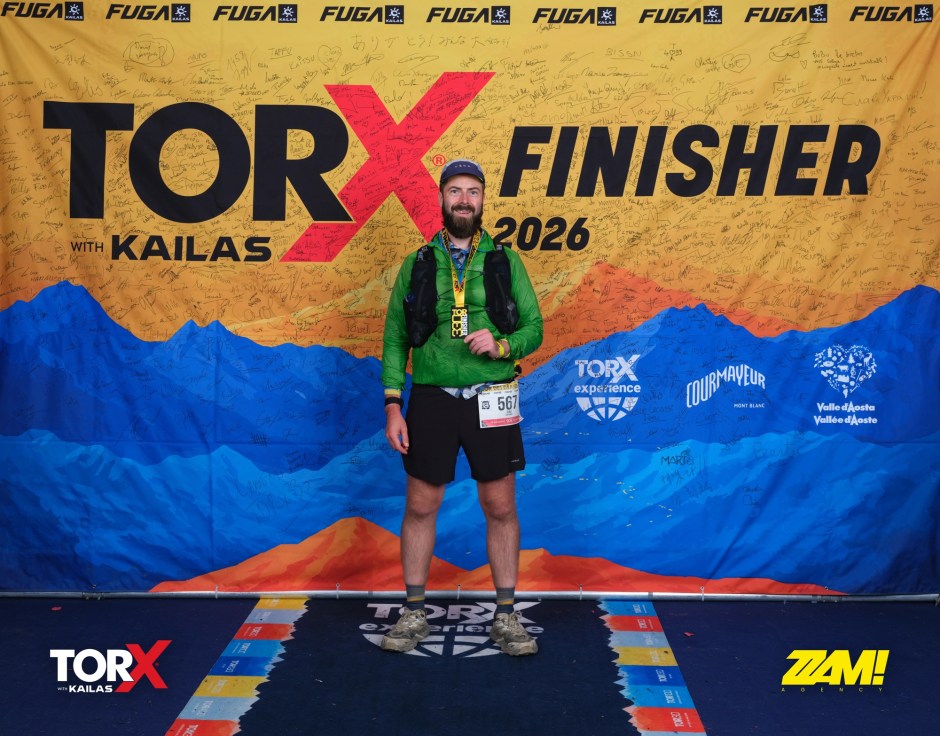
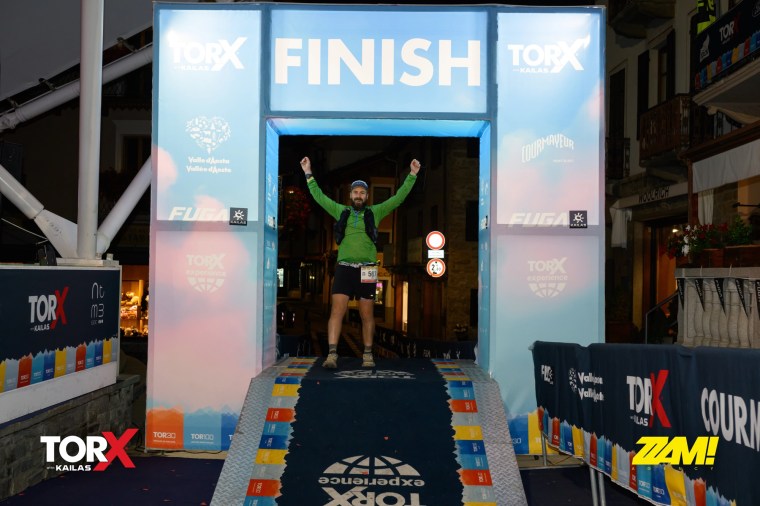
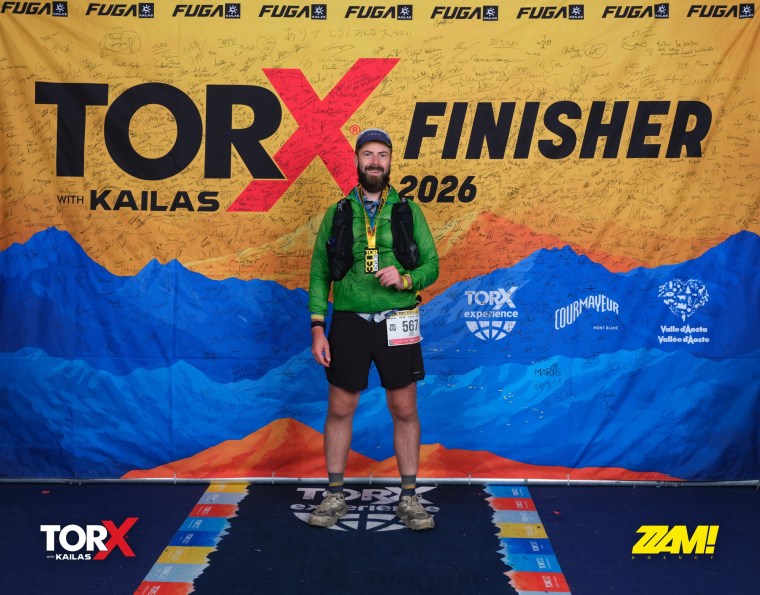
I went into the event with a 140 hour target. I finished in 137.5 hours. So, subjectively on the surface it went to plan, better even. The 140 hour target was just a fabricated time, one that, if things went badly, left me 10 hours of contingency. It didn’t mean anything to me, at the end of the day I just wanted to finish. I broke this time up in a plan in a spreadsheet and worked out rough timings per stage so that I had something to track against. At each life base I just looked at my current time against what I’d estimated.
The start line almost threw a complication into my race – there was a queue to use the public toilet and people started going round the back onto a grassy area. I followed and, tripped over a bit of re-bar sticking out of the ground. It caught me right on the ankle bone, cutting the skin and creating an immediate blue/purple bruise. It hurt. It hurt on the first few km and initial climb, thankfully though it didn’t cause any problems and I soon forgot about it.
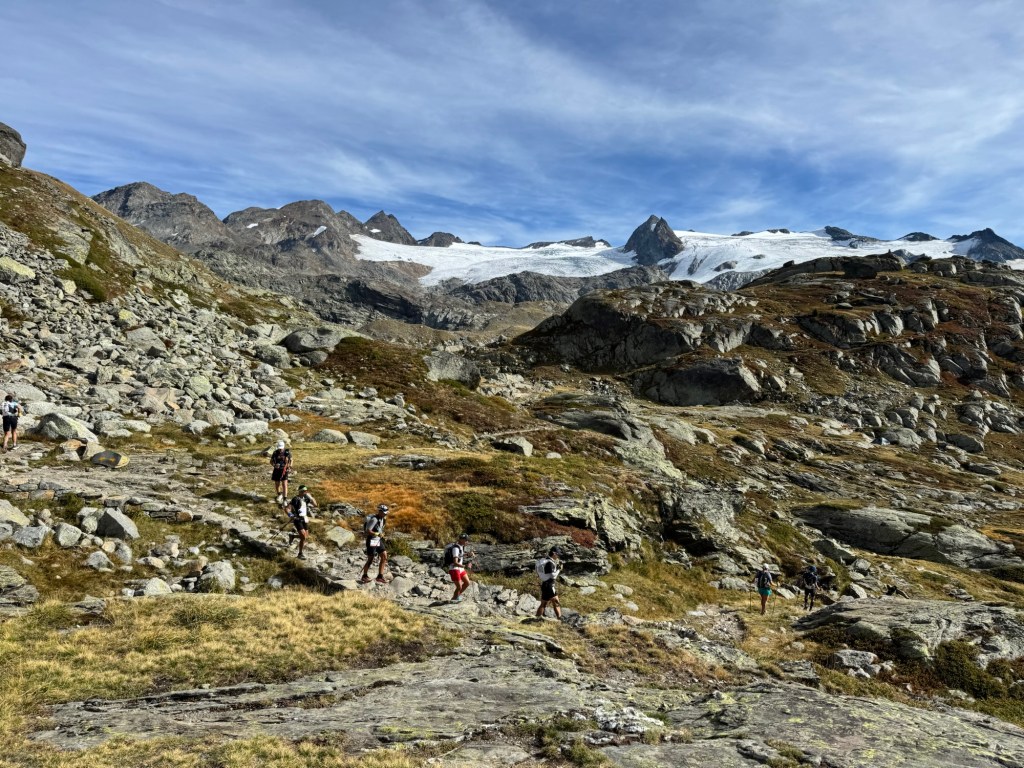
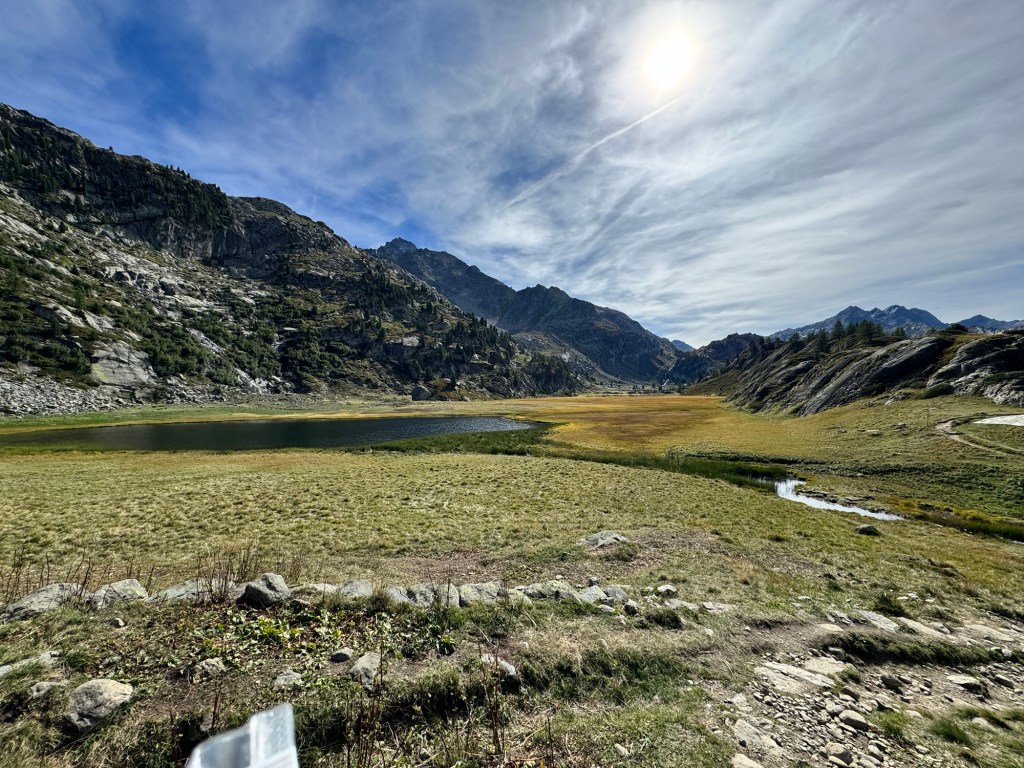
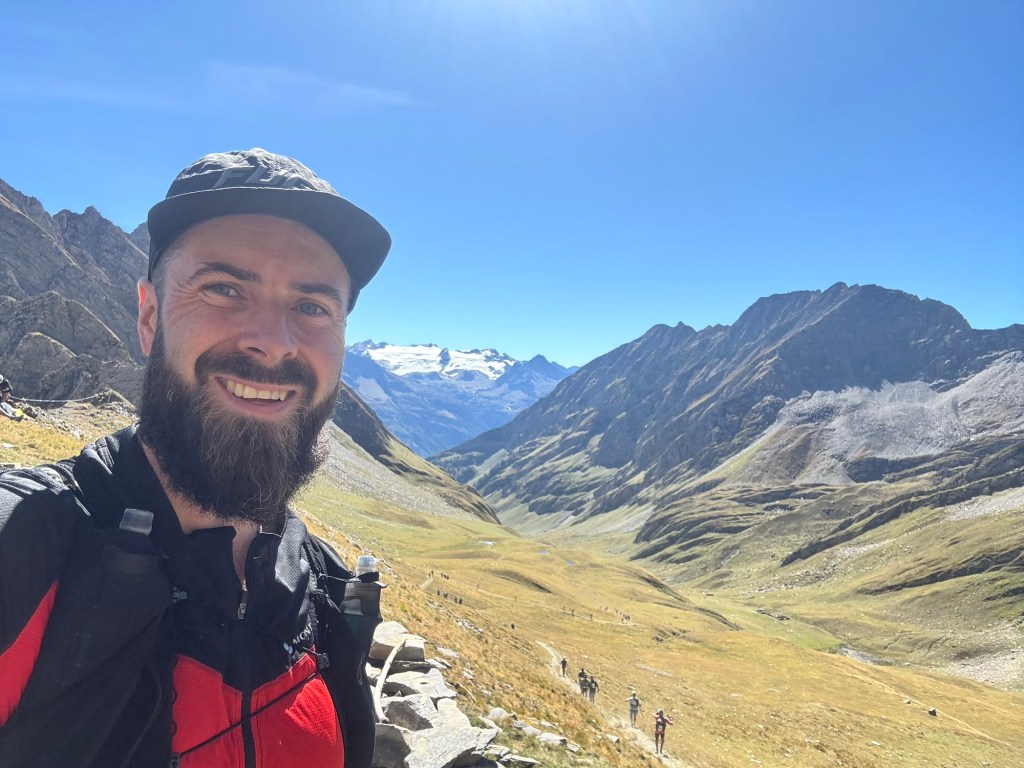
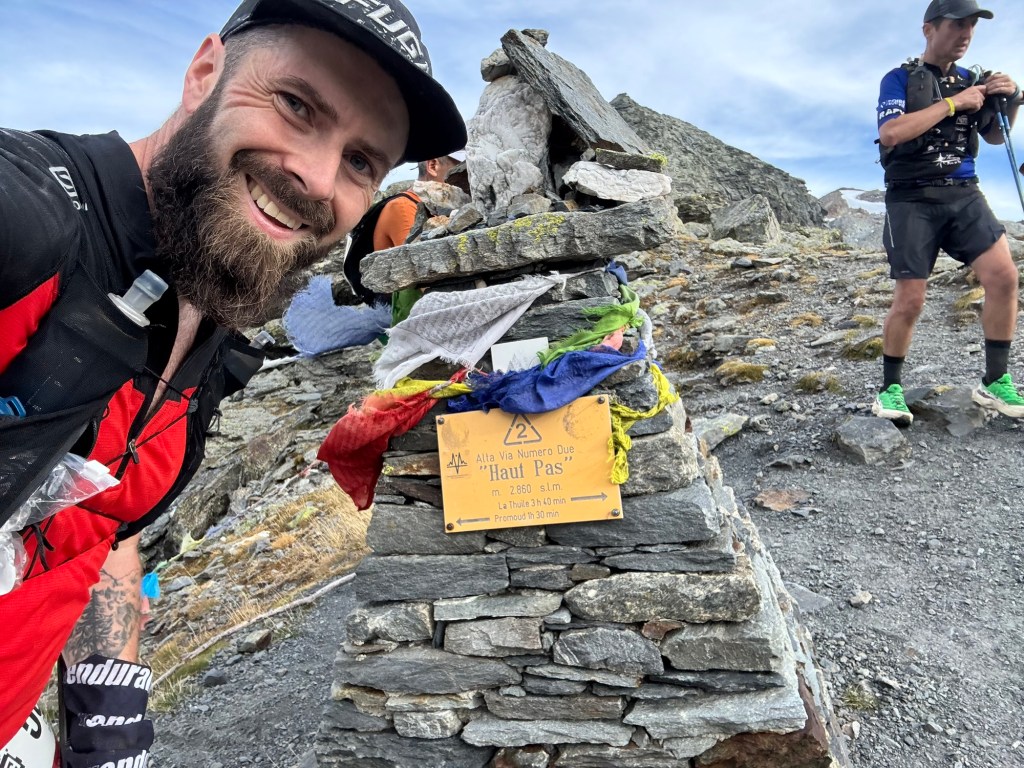
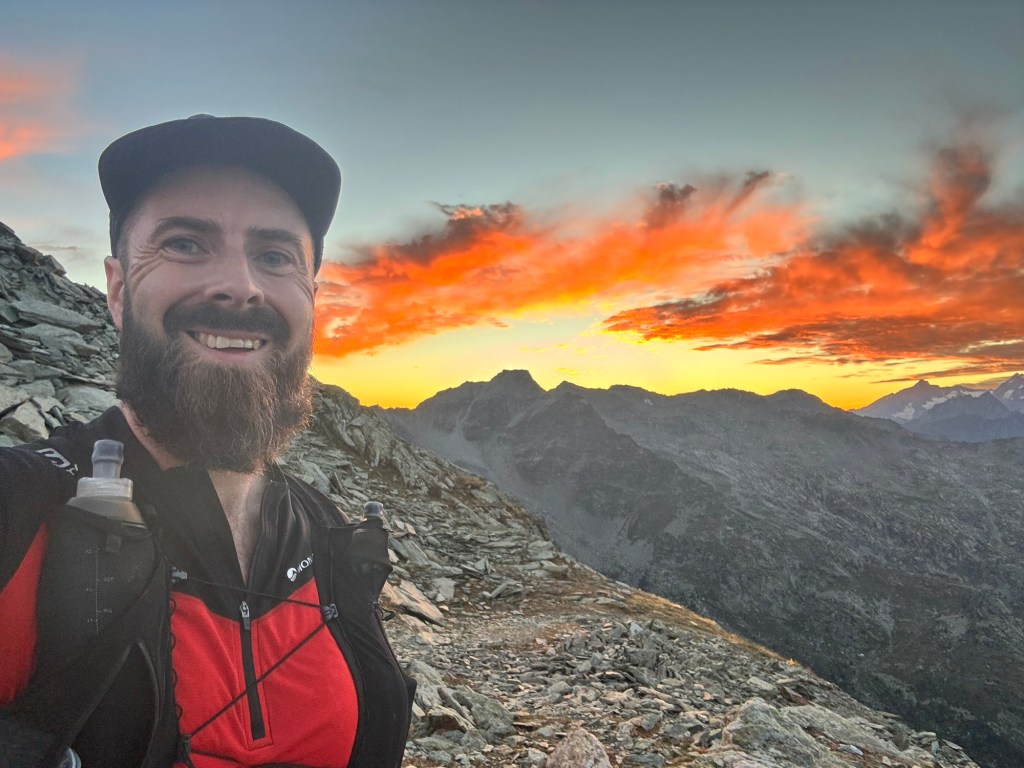
Early on I enjoyed some strong running, the two later descents in stage 1 I think I covered quickly and with ease. Chatting to runners and enjoying moving with some momentum and purpose. For the most part I was still full of excitement and happiness of being out on this adventure. It was too early to be experiencing anything other than pure joy of being in the mountains. I remember the first night being chaotic with runners being sick and sleeping on the side of the trails all over the place.
Stage 2, the second day was tough and tiring. Climbing in the early hours to Col Entrelor was a shock to the system, I finished the climb as daylight was breaking, I was thankful of this as the final ascent was very technical and the initial descent incredibly steep on short, fragile switchbacks. There was no rest after this and heat exhaustion made the Climb to Col Losson particularly tough. It was never ending and the higher you climbed the more technical it became. It was a very hot day with no shade and very difficult terrain to navigate. As the day drew on I had several pains and niggles that started to concern me.
Stage 3 was mostly covered at night which made it feel long and tiring. The Terrain, whilst involving less elevation and more descending was technical and hard to cover with any real momentum in the darkness. I felt good though and, after a long rest, the pains and niggles had subsided, I was feeling confident again. The descent into Donnas was probably the first time I really felt like I’d ‘finished’ a race/achieved something, which makes sense as I’d now covered the sort of distance I normally would in a long ultra trail event.
Stage 4 though was, as expected, very hard. The climb to Coda was hot and exhausting. I was cold throughout the night as a result of the wet clothing from sweat. I began talking to more people and sharing time navigating from Coda to Barma and then across the more technical terrain in the dark. The descent to Niel was long and difficult and along with the subsequent climb, this section was quite a lonely time in the race. But Gressoney was a major milestone I was very pleased to make it there. I was by now taking a lot longer rests at each aid station too, sitting and eating and probably even questioning my choices.
Stage 5 messed me up – it was shorter and less technical than other stages. There were 2 big climbs and descents, I moved quicker and more freely on the descents. I guess I was so focused on enjoying it as an individual stage that I’d forgotten about the bigger picture and the many days I still had to run for. By the time I was descending into Valtournenche, my left quad pinged. Trouble was on the cards. I tried to adapt what remained of the descent, altering my gait and technique to ease the pain and pressure on my left quad. It wasn’t a good sign and a little disappointing end to what had otherwise been a good section. On reflection though, this is where it all went wrong for me.
Stage 6 was surprisingly technical and long. Possibly here is where the distance delta appears. I was about 8 hours ahead of schedule starting this section, by the end I’d lost pretty much all the time I’d banked. Any dreams I had of finishing late Friday night had now evaporated. On the huge descent to Oyace I was struggling, my right quad then pinged and I was now hobbling down the rocky terrain at a snail pace, barely able to bend either of my legs. Surprisingly no one passed me as my descent slowed and only two runners overtook me as I walked into Oyace. At Oyace I sat for a while pondering my options, deep down knowing there was only one – get up and keep moving. Leaving Oyace I was in big difficulty. I was very slow on the climb to Col Brison and even slower on the long technical descent that followed. Luckily I was confused and arrived at Ollomont earlier than I expected after a long time descending – I was expecting another aid station about halfway to Ollomont which just didn’t exist (I was so confused as volunteers tried to hand me my drop bag and I kept questioning why they were giving it to me here).
Stage 7 was intriguing. Despite the pain and difficulty moving, there is a sense of optimism and belief that you finally experience, knowing it is the last section, the last day, that the finish line is within touching distance. The first climb and descent was slow going, but the section has less elevation per distance than many of the other stages and involves a lovely long ‘flattish; section to Bosses. I walked with intent and pace here and things felt good. Even after the long, steep and slow climb to Col Malatra I found a small second wind and was able to run a little of the long technical descent to Rifugio Bonatti. After the long balcony section towards Rifugio Bertone, which by the way is incredibly dull in the darkness of night, came the final descent to Courmayeur. Here I was screwed. I had felt I had plenty left to give, but just no mechanism to delivery it – My legs were in pain and I had real difficulty bending them both without wincing. The descent is so technical and covered in uneven rocks. It took me almost 2.5 hours to do the last 3 kms and 800m descent, sometimes on all fours going down the rocky descent. I looked up a few people who finished after me and whom closed the race, no one took anywhere close to the length of time it took me. It was a shocking performance. I also got lost coming into town and missed a turn which meant retracing a few hundred metres back on myself. That annoyed me.
In hindsight, feeling free and running a bit too much in stage 5 cost me dearly. I was too focused on the stages and forgot the big picture (2 more days to go!) and clearly injured myself (both quads) as a result. Maybe if I approached this section differently the final result would have been a lot different! But, going back to my opening remark here, I finished quicker than planned, so I can’t fault it too much, I pretty much did what I set out to do!
Life Bases
The life bases are essential to your adventure. But let’s make one thing very clear, they are absolute carnage. They are a welcome carnage but they are not relaxing places to recover and prepare for the next section. Particularly early on with the larger volume of runners making it to each life base, they are typically cramped, loud, hot and rushed. There is a pressure inside them – there is plenty to do in a short time – register for feet treatment, register for massages, shower, change, eat, prepare, sleep etc. and everyone is jostling to do these things on their own schedules.
The life bases vary in size and quality. Valgrisenche (first Life base) and Donnas (third) are small and very cramped. Cogne (the second) wasn’t much better actually. The TOR drop bags take up significant space and benches and tables are typically topped and tailed together, so much so you can barely move between them. You can expect to be hit and nudged with poles and bags constantly as people try to access space. At Cogne, volunteers were also telling you to move up/get closer, move your bags etc., as there were clearly space issues.
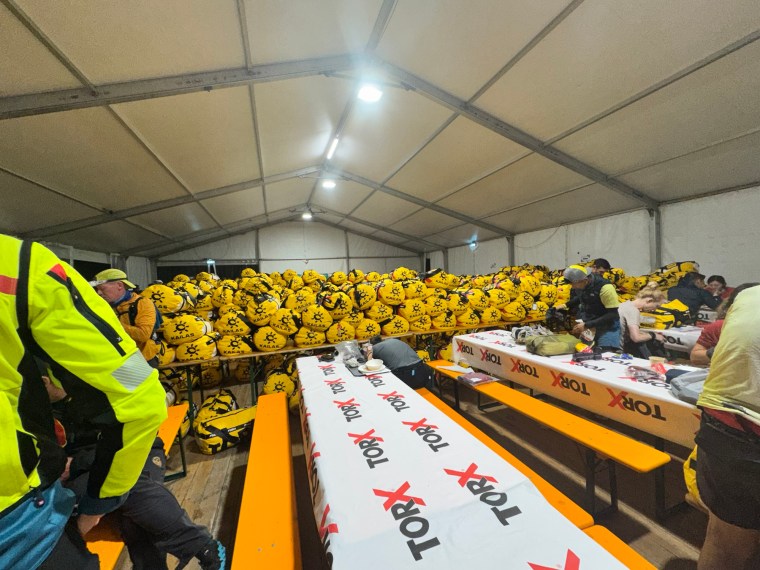
Gressoney was much more spacious, as was Valtonuench and Ollomont. But each had logistical challenges. Some like Gressoney were all in a big sports hall. Others like Valtournench and Ollomont were spread across indoor and outside space, and the logisitics of the set ups weren’t always ideal or optimal (there will be reasons why). At Ollomont for example, there was a huge food hall with plenty of tables and benches spread nicely in a heated tented area. But you have to go outside to another tent where there was feet and massage, then a changing area then the sleeping area. The sleeping area next to the noise of the massage and feet wasn’t ideal. But toilets and showers were then metres away in outside porta-cabins, nowhere near the changing area. It was early hours of the morning when I arrived. I needed a shower (as I wanted taping and massaging) so I just got naked and left my bag outside the porta-cabin. The showers were crap, barely worked and were ice cold. I washed as much as I could then got naked and changed outside in the cold. I was shivering. By this point there was a queue of runners waiting outside in the cold to shower. I spent a lot of time walking back and forth the different areas at Ollomont. A crew member (from another runner) showed me a sign that the volunteers had put up acknowledging issues at the aid station (there were other space issues for the runners with crew – these were typical kept segregated, a good thing, but were all crammed into a small space at Ollomont) – the sign basically said we know there are issues, but stop telling us about them, nothing can be done.
At the Life bases, you generally had to register your number on a wait list for feet treatment and massages, but this wasn’t always the case, a few times it was first come first served. So you have to be prepared to figure things out on the fly and adapt your plan and schedule of how you approach life bases and what you need to do there. I’d written down checklists on my phone but would still find myself scrambling and forgetting what needed doing. Then add in the runners who would push and shout and force their way in front of you for food or queues, pricks.
My core take away is to prepare yourself for the carnage at life bases. They definitely improve as the race progresses (and more people drop out and the participants spread out more) though. But don’t expect any time to have peace and quiet and collect your thoughts! It’s more relaxing out on the trails!
Gear
On the whole my gear and kit held up pretty well. My first issue was prior to the race when it became very clear that the drop bag was smaller than expected and I had to remove plenty of kit I’d plan to take. I could easily have filled the bag twice over. This only meant that I’d brought too much stuff though. So it was no problem, I still had way more than I needed and there was nothing to worry about.
Clothing – I changed full clothing at each life base. It was a lot to carry but the dry, fresh clothes were appreciated. After each stage I was soaked and wet through from the sweat, no way I’d want to continue for another day without changing and refreshing. Given the good weather we experienced, the warmer, thicker layers and accessories I never needed to use. My trusty OMM sonic smock windproofs came in handy during the night sections though along with arm sleeves and buffs.
Shoes – I covered most of the race, approximately 300km in the same pair of Hoka Speedgoat 7s. For 50km, the third stage, I switched to the Hoka Mafate 5s. They caused me to blister a little around the heels though so I stopped using them. The Speedgoats are absolutely wrecked. The sole and grip has been completely worn down from all the harsh technical terrain. They’d only been used for 100km before the event. The terrain is aggressively wild!
Poles – I used the Leki Ultralites throughout. I did mean to switch to the Black Diamond Carbon poles later on but completely forget at each aid station. They only reason I planned to switch was because I could see the poles bend and flex as my dodgy gait and technique put more pressure on the poles to lower myself over technical terrain when I was having difficulty descending.
Watch – I love my Coros Apex 2 Pro. I did however have some technical issues and, struggled to charge the watch from powerbanks. I plugged it in at the first aid station but it didn’t charge properly. I didn’t worry and continued on and tried again at the second life base, Cogne. Here it did charge, but I should have left it charging for longer. The same charging issue happened at the third life base and I didn’t have enough battery to get to Gressoney, the watch died a few kms from the Life Base. Oddly this meant it charged with no issues, super quickly at that life base. For the remainder of the race I was able to charge just about enough for each section. I don’t know why it wouldn’t charge. I put it down to a combination of dodgy charging cable, using a powerbank and charging mid activity. It was annoying and I had to fudge the two activities together afterwards to get a “complete loop”.
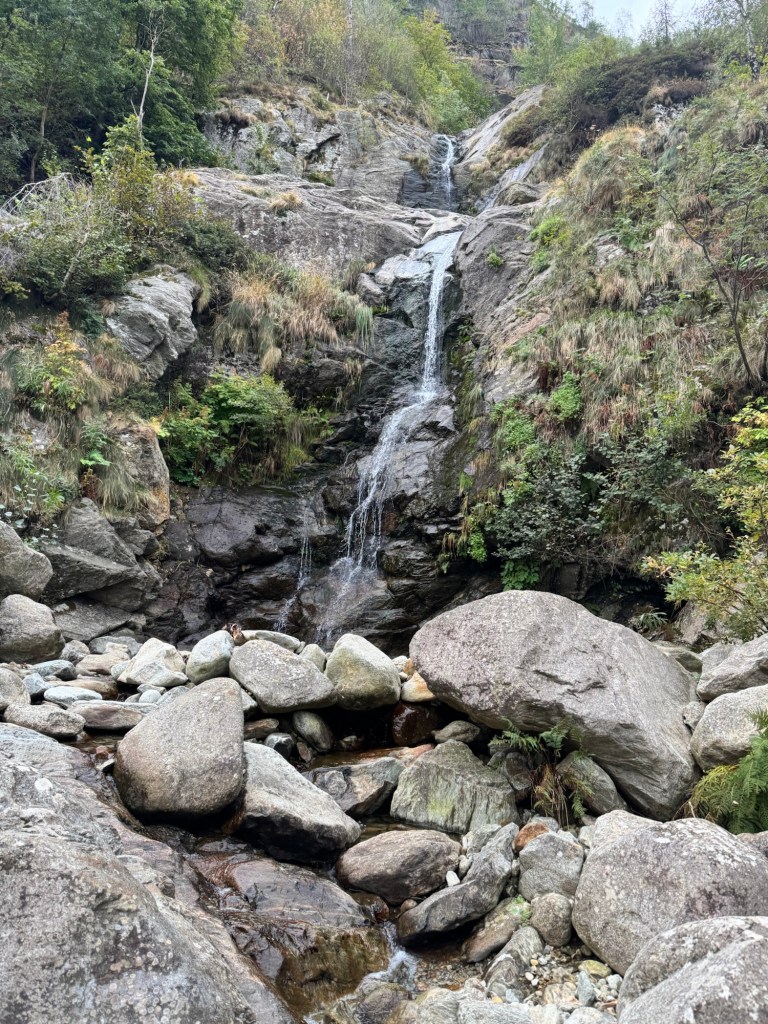
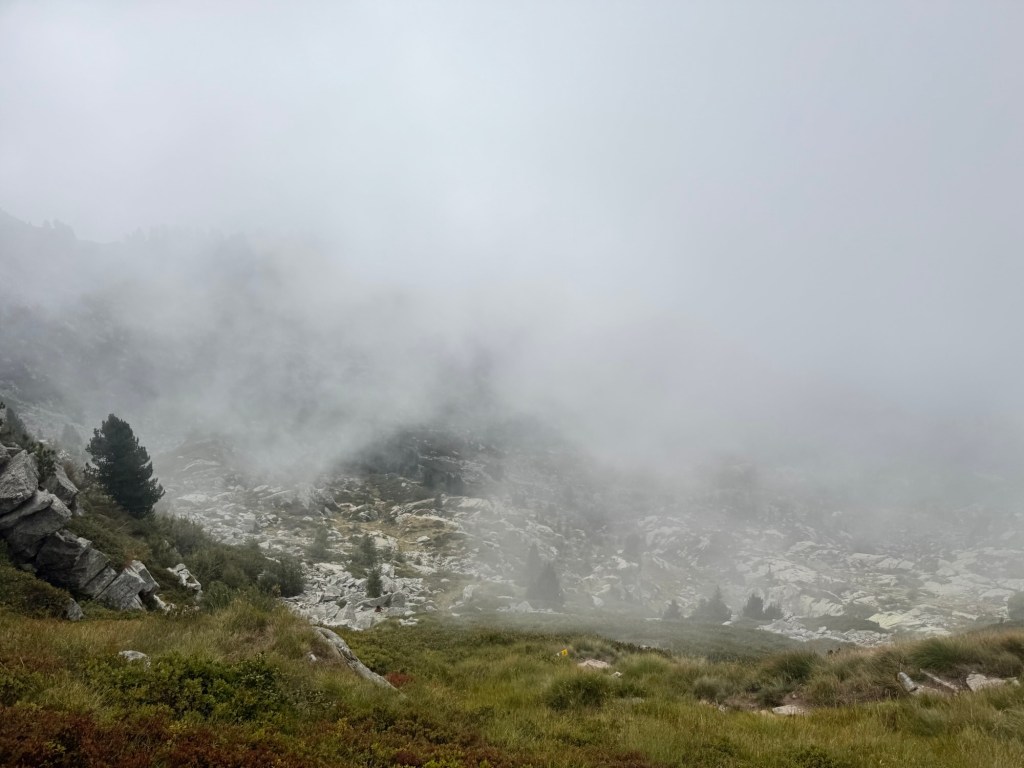
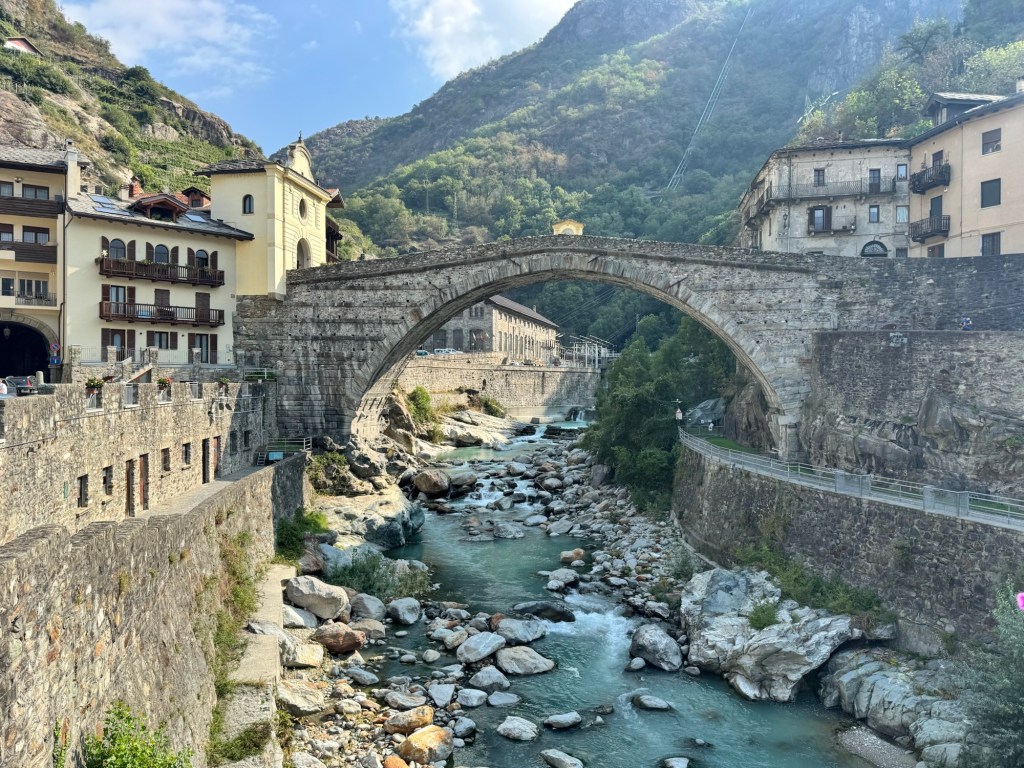
I did make one small, mistaken, blunder on the final day that I luckily got away with – I’d carried a thicker, thermal hooded jacket the whole way (mainly because I had no space in the drop bag and it packs down small). At Ollomont, given there was now a little space in the drop bag, I decided to take it out and store it in the drop bag. Mistakenly though I removed my waterproof jacket instead. I realised the mistake I’d made hours into the final day when it was too late. This was bad because, even though it wasn’t forecast to rain, the waterproof is mandatory. Thankfully there are no kit checks in the race and if needed, my windproof and the thermal jacket are water resistant, although they wouldn’t pass the mandatory requirements. This caused me a lot of stress as I thought about it over and over again on the last day. It could have been a costly mistake!
Looking back there isn’t anything I wish I’d taken or anything specific I think you need. Plenty of layers and warm clothes for colder weather for sure. In wetter and colder conditions I’m sure I’d get through even more kit!
Nutrition
Much to Matt’s amusement, I took way too much of my own food with me to Italy. I had completely over packed and overestimated how much specific nutrition I’d use. When packing the yellow drop bag I ‘dumped’ half of it before the race even began. I had cut it down to 14 bags of various goods, 2 per section. In the bags I included: PH Chews, Veloforte Chews, Rice crispie Squares, Chia Charge Mini Flapjacks, Toffee Waffles, Kendal Mint Cake, Salt Tabs and a few gels for the later stages. I got through 6 of them across the whole race and went home with 8 bags untouched! Mostly the chews were the easiest thing to eat, although the tongue issues made them less enjoyable at times.
With the amount and quality of food at the aid stations, and the frequency of the aid stations, I just found I barely ate between them. Most surprisingly though, despite the length of time and effort, I didn’t struggle and never felt hungry, which is a good thing. I think I was just sufficiently fuelled the whole time. This shouldn’t be much of a surprise as it is well known that TOR provides a lot of high quality food and nutrition for participants. I did also have a constant flow of carbs and electrolytes through Tailwind. I think I had 78 sachets of Tailwind across the week. I think I need a break from that for a while now!
The hardest thing I found was flavour fatigue (e.g. pasta tomato sauce, basic soup and pasta) and my swollen throat and tongue made it difficult to eat solids like the pasta as the race went on. After a few days it would take a long time to eat the pasta (the helpings were also always huge!).
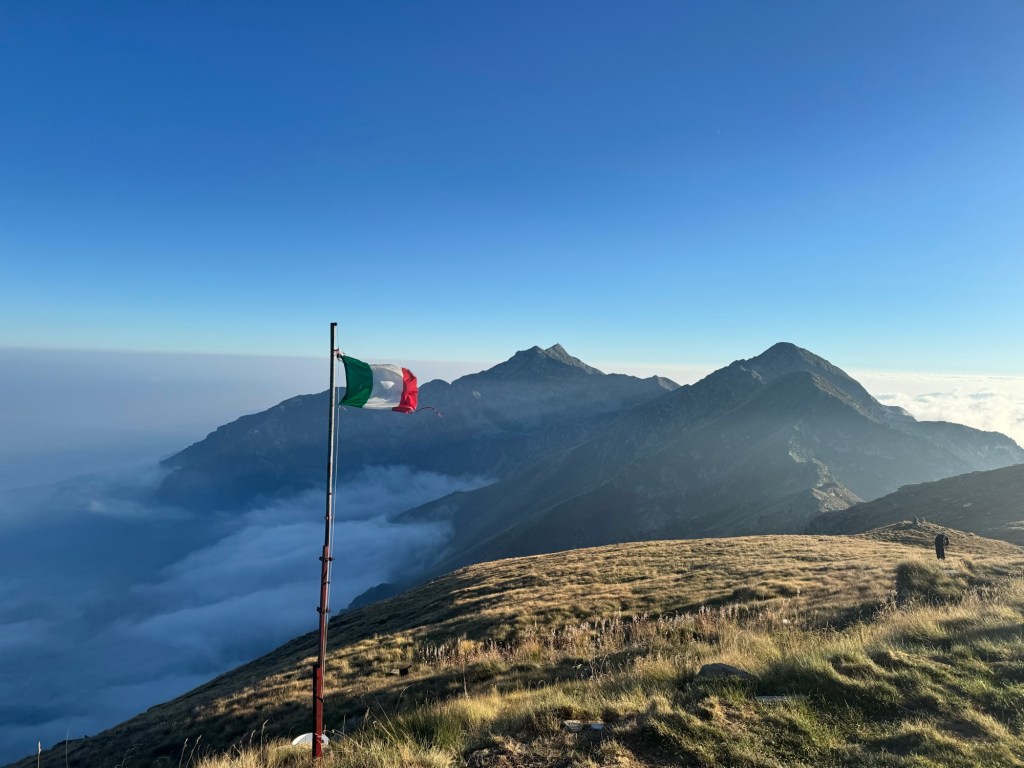
Each aid station is constantly preparing and cooking foods for runners, and whilst much of it is repetitive, and the standard offerings at aid stations consistent, I did find there was plenty of choice and every now and again you’d be surprised by something completely different. Many of the aid stations had menus explaining what was available. A menu during a race, brilliant. Thinking of the foods I saw and had, I could categorise them easily into a list of my favourite/top dishes and those that I started to hate the sight of…
Top Dishes
- Arancini – Rifugio Coda had this unique offering. The one and only time and I was never going to say no to an Arancini. It was warm and crispy with a cheesy rice filling, and I think some veg, maybe mushroom. Unexpected and delicious.
- Polenta and ragu – During the 4th, technical stage, a few aid stations I went to through the night had Polenta. I think Rifugio Barma was the first time I had it. The polenta was a welcome difference to pasta. Each place cooked and flavoured the polenta differently. It always felt unique.
- Polenta and sausage – on the final day at Ponteille I had Polenta with a side of spicy sausage meat. Here they had normal polenta and a beetroot based Polenta. Again, different flavours and worth the few minute wait for it to be cooked.
- Broth with shredded pork and chicken – At the first aid station on the final day, Rifugio Champillon, inside a stone hut with sofas and a burning fire, I took the broth option. A more meaty and different flavour broth than other aid stations. I topped this up with a combination of cold shredded pork and chicken to make another unique dish I’d not had anywhere else.
- Vegetable soup – Sounds basic, but on a few occasions there was a real, thick veggie soup full of real, fresh veggies. Not broth or bouillon. Actual soup. Nice and salty and just delicious.
- A few of the life bases had cooked/fried potatoes, sometimes with a meat like tuna mixed in. My kinda food. Only downside of the potatoes was that they never quite tasted cooked enough and were a bit hard.
- Nutella Crepe – in the cold of night, high on the mountain, at Lago Chiaro aid station I was shocked, surprised and excited when a volunteer offered to cook me a Crepe and gave me a choice of Nutella, jams or honey. Chocolate always wins for me. This I enjoyed a lot!
- Ham and Cheese Toasty – At the same aid station, just as I was about to leave the volunteers came out with a tray of warm ham and cheese toasties. I took one and immediately sat back down.
Lesser Enjoyed Dishes
As time ticked by, there were certain dishes I started to dislike. Mostly because of the flavour fatigue, or because I now had a taste for something like those on the top list!
- Noodle water and orzo – the least desirable. It is just dirty water, dish water to me. No idea what it actually is but some mildly flavoured water (I assume from cooking pasta) with some orzo pasta floating in it. Occasionally with cheese added. Just bland and tasteless. But the pasta and salt was desperately needed for subsistence, so it got consumed way more than I would have liked too.
- Bouillon– there is nothing quite as disheartening as being offered soup, and getting stock water instead. Again, salty and nutritious, just bland.
- Pasta and tomato sauce – its the staple, its basic, it is lovely, until it isn’t anymore. I think my main issues are (1) the volume of pasta and tomato sauce I had (2) sometimes the pasta was just so starchy and stodgy (often double cooked/re-heated) and the tomato sauce is just repetitive. Once, the tomato sauce was deliciously garlicy. That was the exception. As my throat became more swollen, pasta just seemed to get stuck and I was struggling to swallow it easily.
- Any selection of the aid station staples on repeat – cheese, crackers, dried meats – they are enjoyable and fun at first, but become less enjoyable when you have them hour on hour, day after day.
Sleep Management
Sleep Management is arguably the most important part of the preparation and execution. A race like TOR becomes less about physical capability and more about your mental attitude and how you deal with issues like sleep deprivation. There are so many ways to deal and approach sleep in an event of this scale, and you just need to plan what works for yourself and adapt it as you go. I went into the race with a plan for 10 hours sleep. I ended up with about 13 hours (or at least that is what I attempted) and a slightly tweaked version of my approach.
Speaking to Matt prior to the event, his approach could be described as more reactive, sleeping when he needed, mostly at Rifugios. I wanted to be more proactive, utilise the life bases and general down time when I’d be stopped anyway. I know personally that when I’m running on empty and getting sleepy on the trails it is not productive, movement is poor and short trail naps don’t sustain me. It is a balance though – run when you can, optimise time of day, sleep when you are tired etc., You really have to find what works for you. There is no right or wrong answer. My plan for about 10 hours was pretty basic with a few hours planned at each life base (not including the first one).
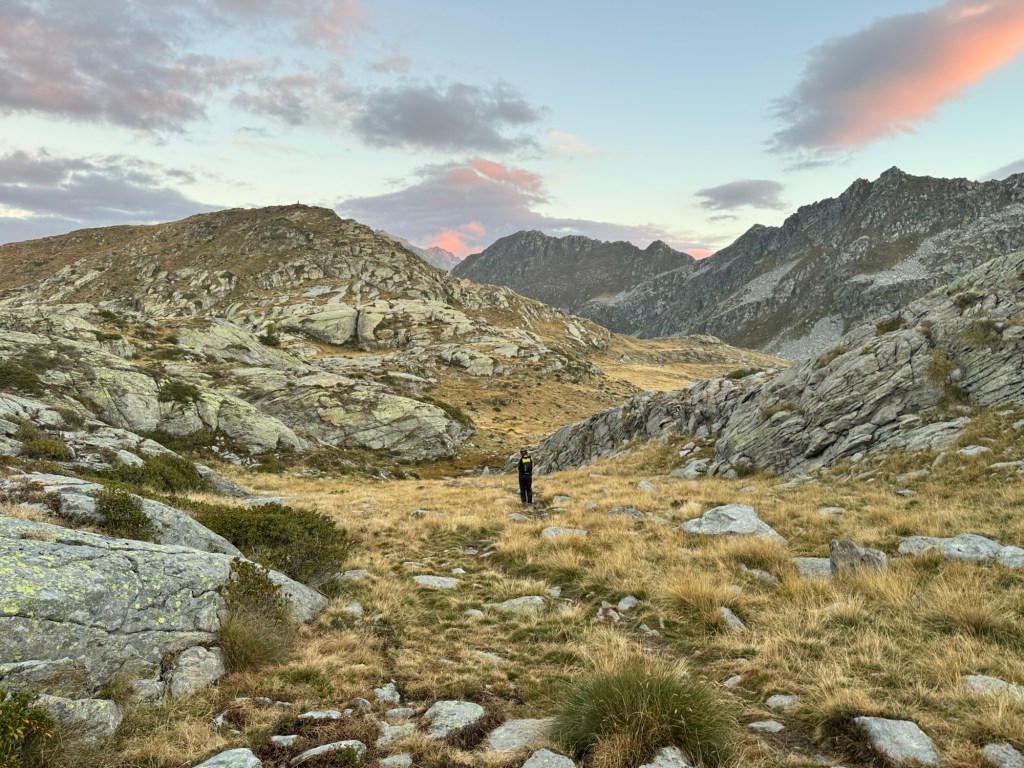
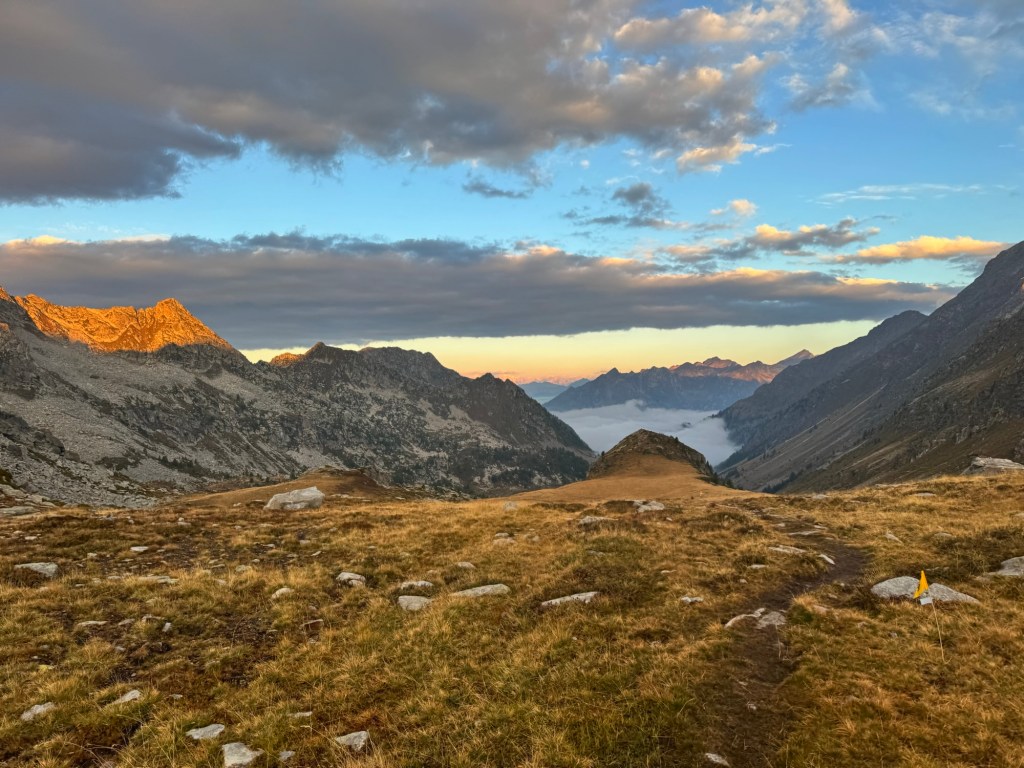
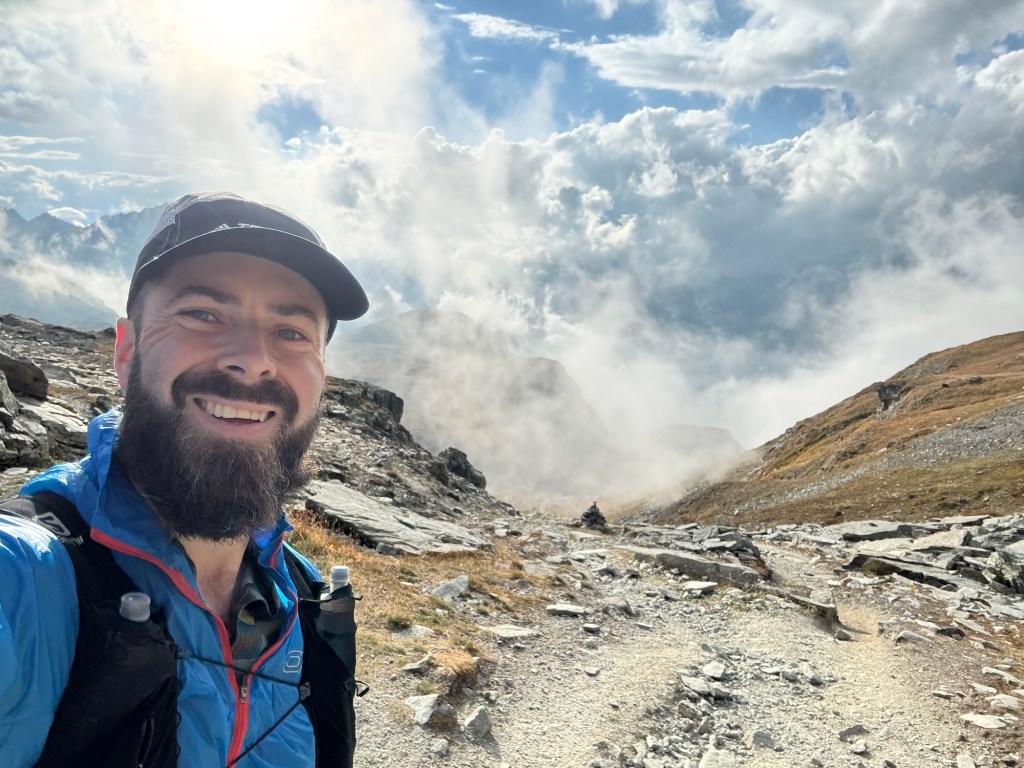
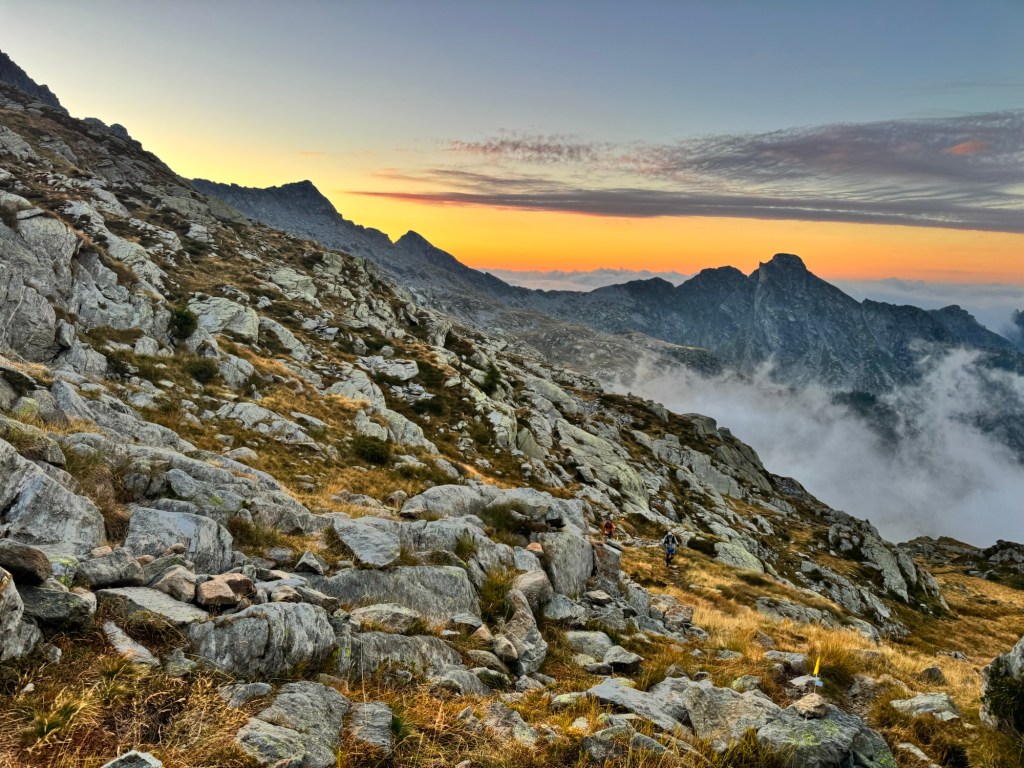
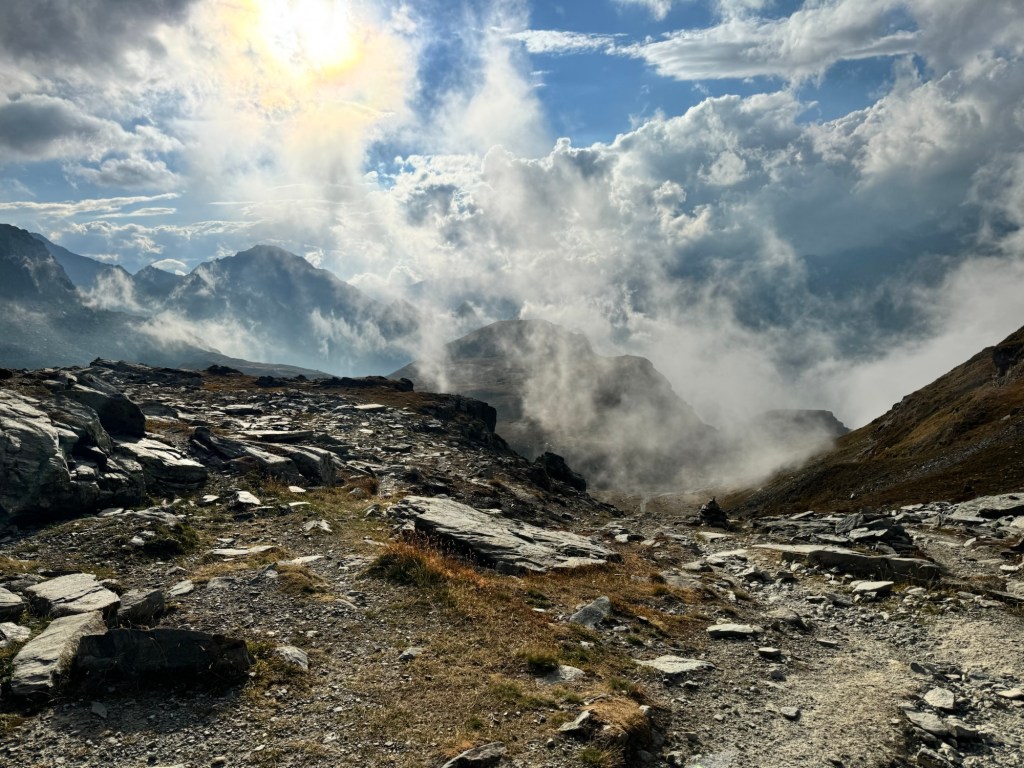
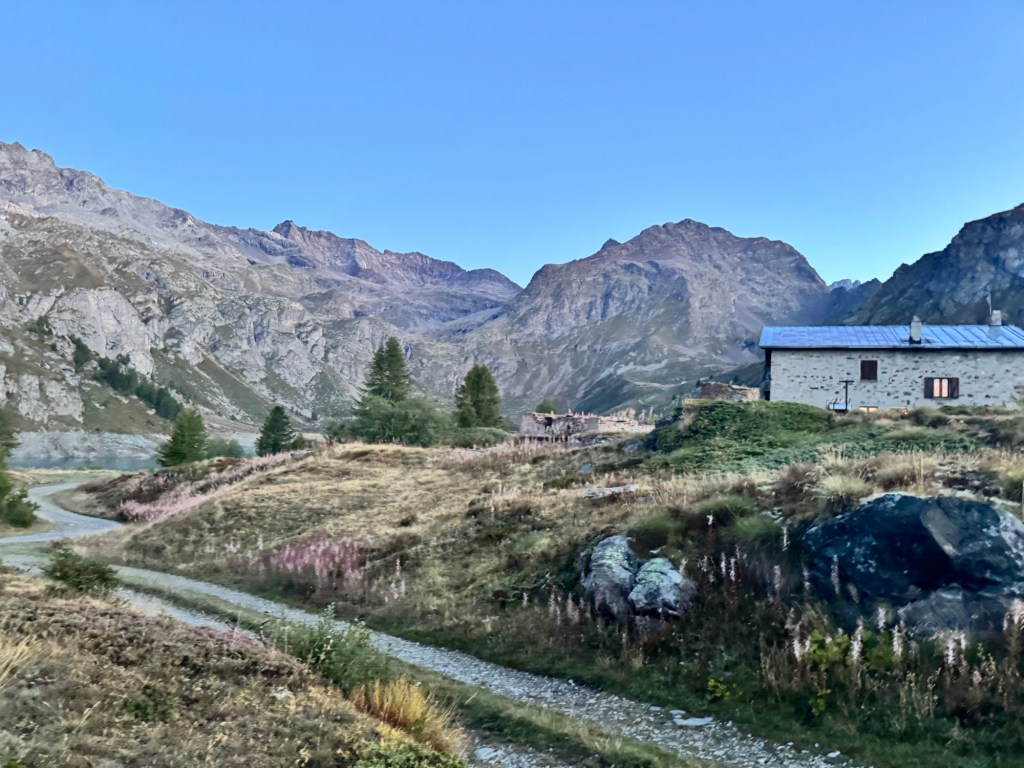
Early on, during the first night, I was chatting to a multi-time finisher, he was planning a big sleep at the first life base as he was feeling sick. We were discussing locations and options and he suggested I forgo sleep at Donnas (the third life base) as the life base is small, cramped and generally not good for sleeping. I’d planned to sleep 2 hours there, so adjusted my plan on the spot after hearing this – I now planned bring those 2 hours forward and to do 4 hours at Cogne instead and then top it up at the Rifugio on the way to Donnas. At Cogne I set the alarm for 4 hours as I lay on a camp bed in a crowded sports hall, but I gave up after 3 and left. I felt like I’d been awake the whole time, but time had also passed so quickly, so I must have slept. On the way to Donnas I stopped at Rifugio Dondena. In the moment I intended to keep going to an aid station closer to Donnas (the Rifugio was about 19km away), but inside it was warm and snug thanks to a burning stove. There was a proper bed (and pillow) available so I took an hour sleep here. The downside being I was allocated to a top bunk which was quite the challenge to get in and out of.
I then skipped Donnas (I’m glad of this, as it was indeed small, cramped and hot!) and grabbed another hour at Rifugio Coda a few hours later. I remember Matt saying it was good here, and it was. The downside here though was I was soaking wet from the long hot day and slept naked rather than in the wet clothes. Getting dressed into the wet clothes at the top of the mountain afterwards gave me a few problems, I was physically shaking with the cold – Volunteers tried to help by hanging my wet t-shirt above the fireplace to dry, but it needed far longer than I was prepared to stay for. So I just got dressed, left and got moving again to warm up.
I had a very good sleep at Gressoney and again at Valtounenche as planned. Then almost 3 hours at Ollomont, longer than planned but it was the last big stop and I was struggling physically so the rest was needed. At Valtounenche and Ollomont the sleep was also a little tactical – I used the time sleeping to pass the hours in the night. I was trying to minimise the night time running now and was more interested in running in the day light.
All in, quality wasn’t great but a substantial amount of time not only sleeping but more importantly being off my feet. It certainly helped. I spoke with many people who slept more and many who slept far less than I did. Yet we all finished around the same sort of time. So it really is a case of what works for you to keep you going. It does show though that there is time, plenty of time to rest and sleep over the 150 hour!
After waking from each sleep I would be groggy and confused for a little bit. I learnt quickly after the first sleep in Cogne to prepare/do everything I needed ready before I slept, so when I woke I just left, no more faffing about. Not even to get food or water, I recommend having all that prepared before you sleep. You can spend a few kms on the trails waking up and getting back into the groove of things.
The other notable downside to sleeping at Life bases is the volume of people and space. The camp beds/cots are not the most comfortable and you hear people going about their business, snoring loudly or like me, coughing their lungs up. I took ear plugs and wore a buff over my eyes which helped a bit. But generally there is a lot of noise that will disturb you. Some people’s etiquette is also a little poor, a few times I heard people having phone conversations or noisily preparing their bags. There are better locations for this stuff!
Physical Health
During the race I held up pretty good. Nothing major happened which caused me any issues or need to seek medical assistance, which is a good thing. There were a few things experienced as expected, like muscle fatigue, sore feet etc., and a few other unexpected things…
Tor Cough – there is a well known phenomenon called the Tor Cough. It is basically a nasty, chesty cough. It is relentless. I started coughing after the first night, come the third night it was the background to the peaceful mountains, all around you you could hear runners coughing, you couldn’t see them, but you know they were there. I guess combinations of the cold, mountain air and dusty trails hits hard.
Throat, nose and tongue – perhaps a consequence of the TOR cough, my throat was dry, raw and swollen a couple of days in. Add to this a dry, blistered, cracked and swollen tongue, it meant eating solids became difficult. Breathing was manageable though. Along with the cough, the nose was blocked and full of junk that constantly needed to be blown out. no doubt runners pick up colds and infections easily out there!
Ears – somewhat unsurprisingly, but odd at the time, my ears felt constantly under pressure like they needed popping. All related to the throat and nose I assume.
Feet – my biggest worry going into the race as someone whose feet blister easily. I have drastically improved my ability to tape and manage blisters throughout the year though. The strategy seemed to work and I only really suffered blisters towards the end, and I’m sure this was more so because of my altered gait and poor technique rather than anything else. I taped my feet at the start and had them professionally taped and treated 3 times – at Cogne, Gressoney and Ollomont. In between I added more tape of my own as needed.
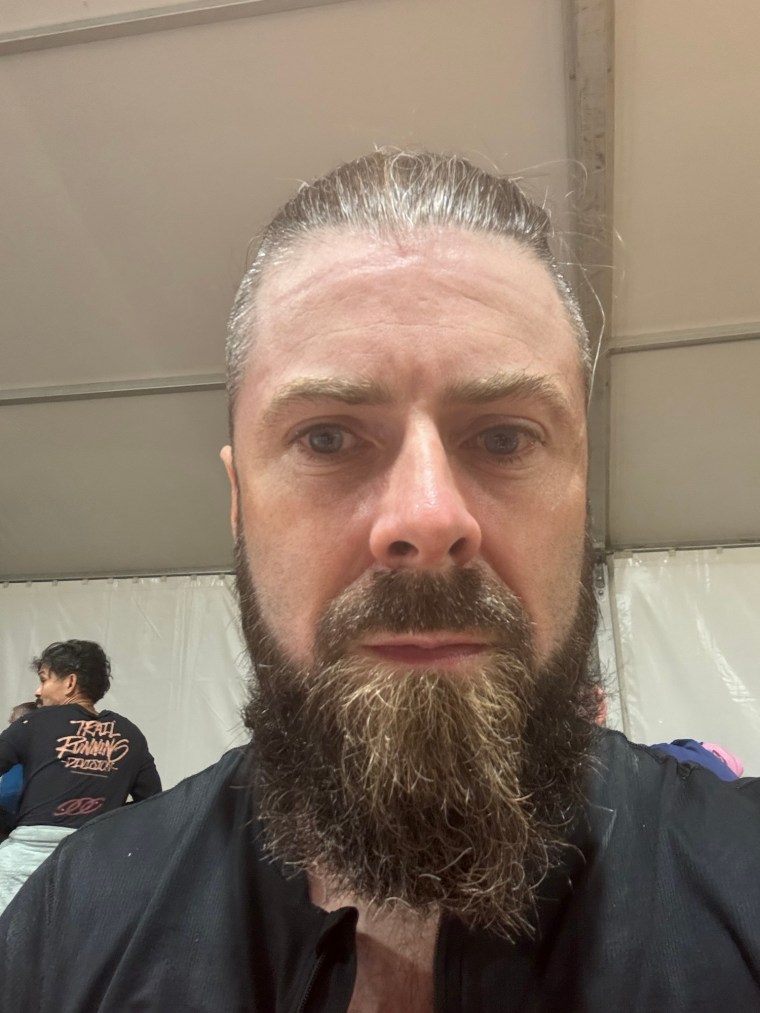
Quads – all was good until they both ‘pinged’ the left quad first and hours later the right quad. In between I overcompensated and caused damage to my right ankle and quad trying to make it easier to descend with my dodgy left quad. Its clear now, and even in the moment that it was more than just fatigue. A noticeable ping each time sent pain through my body. The Quads were so bad that I could barely bend my legs. There was pain twice with every step – pain as I lifted the leg and pain again as I planted it back down. There were moments where I questioned how sustainable it really was, but thankfully my stubbornness was more powerful. The massage in Ollomont seemed to help, but it was far from relaxing, much to the amusement of those rubbing my legs!
Chaffing – Back chafe was the issue, it makes sense that wearing the same sweaty backpack for so long would cause some issues. I hadn’t done anything pre-emptive for this. It was in Gressoney I think that I reacted and had some tape applied to my back which stopped the issue becoming any bigger. Chafe in general wasn’t an issue either. Earlier this year I switched to using just a basic nappy cream from Boots. £4 for 100mls. It is far more effective and preventing and soothing chafe than any of the sports specific products brands have come up with. Nappy rash is just chaffing. Since I’ve started using it I haven’t had any issue on any race. I applied it at the start and every life base and that was it. No more screaming in the shower!
The Gut – Skip reading now if you don’t want the graphic details. On the whole the gut was very good. There was no sickness. Whilst I’ve never been sick in a race, I thought 6 days of non stop running might be the limit. On the penultimate section, along the balcony, I had to stop a few times thinking I was going to vomit. What I really needed was to burp. For a few hours I felt this way and was struggling a little, occasionally I’d stop and let out a whimsical burp which would just about ease the tension. Thankfully I was never sick. The backside however had a different story. As early as the second day I was having some issues, but not the sort I’d experienced before. The short story is that farts could not be trusted. For a few days I had to stop constantly, whenever I could basically to release a dangerous fart. They’d be wet and explosive and nothing more. The wetness wasn’t even waste, I’m not sure what it was, not even a discharge. Just a bit wet. But it was frustrating, aid stations, random toilets in towns, squat drops (or whatever you call them) portaloos, forest and rocks, 6 or 7 times a day I’d need to stop and have a blow out. I was constantly on the look out for a place to stop, then with one fart it would be over. It was frustrating. Essentially, I was constipated. The miracle release came on Thursday(!!) morning, with the aid of an actual toilet high up at the Bivacco Vareton aid station, I had my relief. 5 days of waiting, it was endless, it was glorious. I smiled.
Mental Health
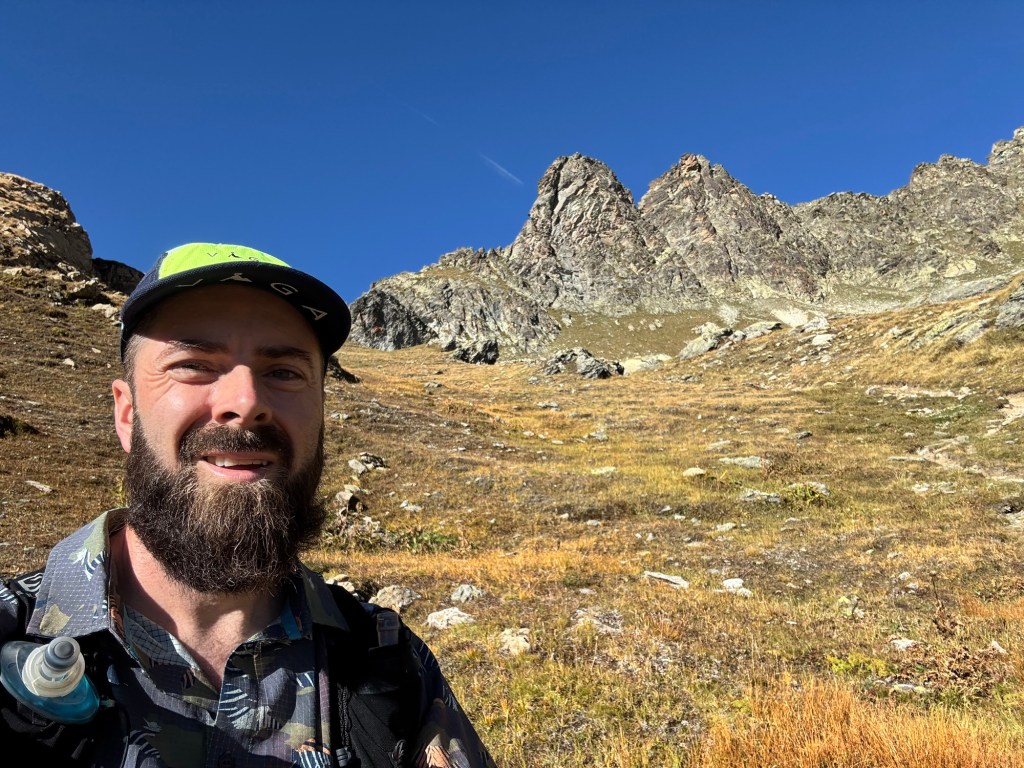
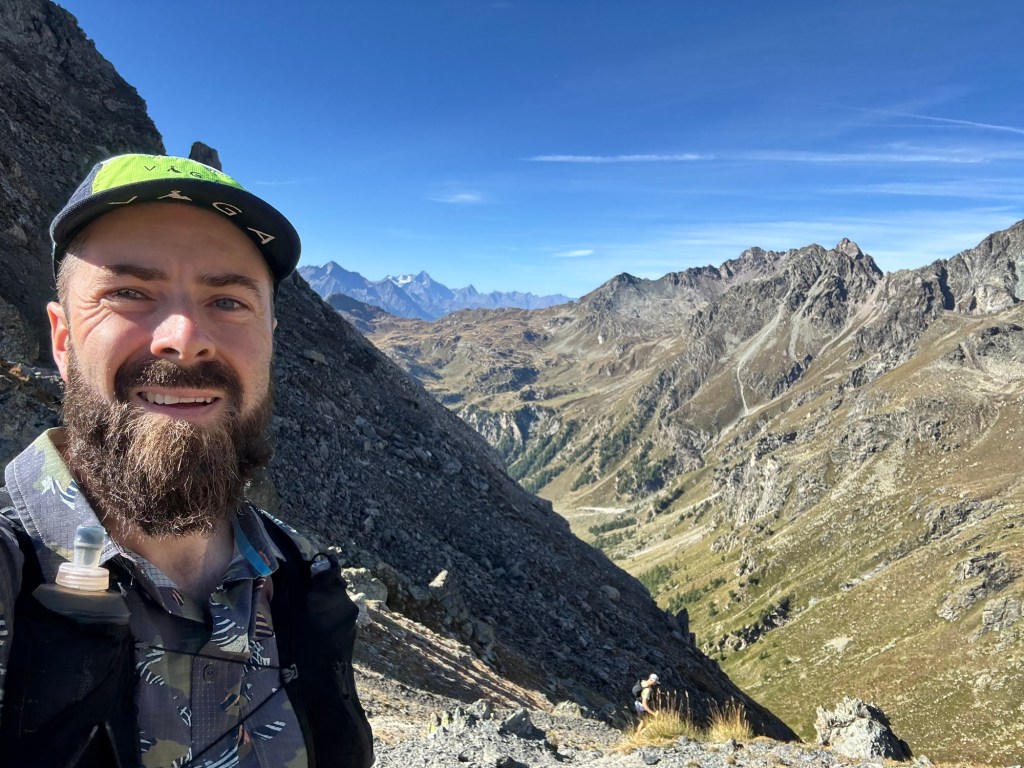
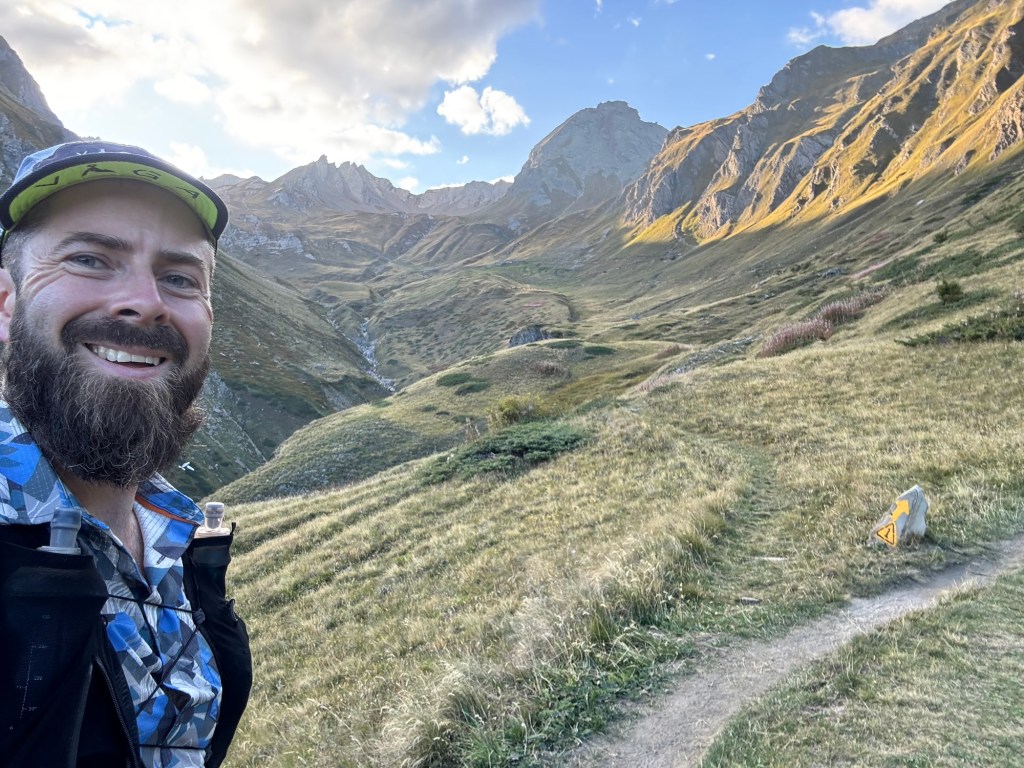
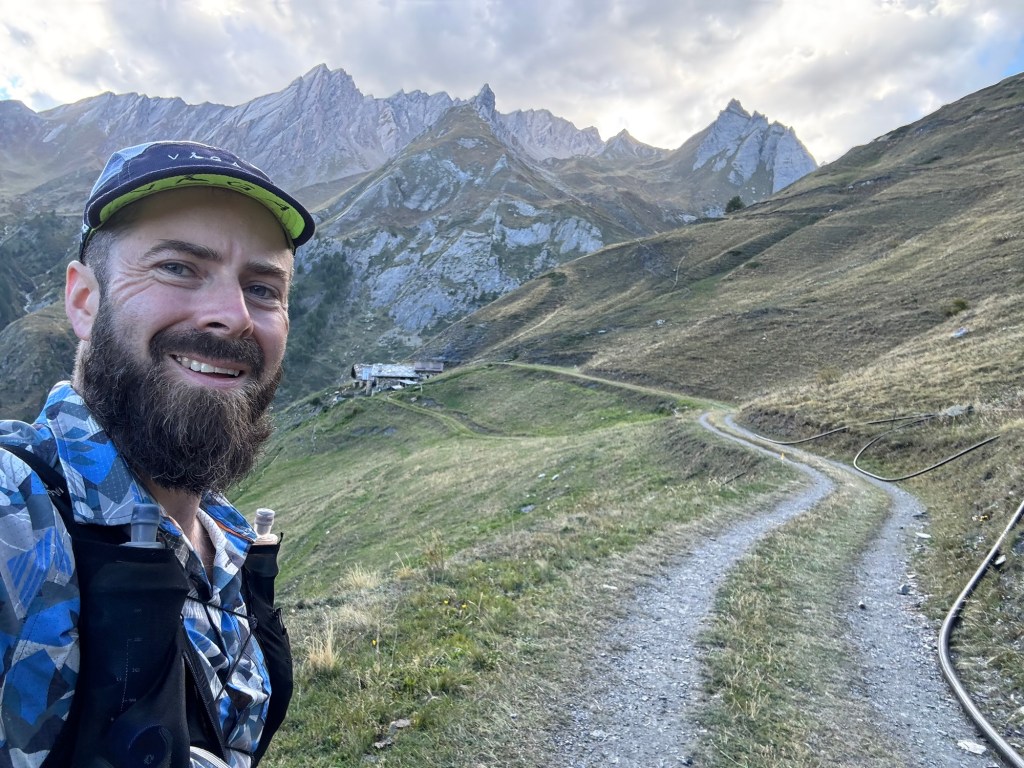
I’m no stranger to experience, tough, hard moments in ultras. I think it is part of the adventure. I was expecting TOR to be full of them, the time, duration, terrain etc would all make for plenty of opportunities for the darkness to settle in the mind. I think I was a little surprised that, for the most part my mental state was pretty good. I did enjoy the race and I was focused in the moment, rarely thinking too long about the end goal/full race. Perhaps I’d prepared myself well, perhaps the scenery and magical mountains kept me grounded. Don’t get me wrong, I’m sure I looked constantly grumpy, but rarely did my mind wander to the darker thoughts.
I think this is partly because you are on high alert and constantly focused – I do think the mental strain of such an event is huge, every minute of every day I felt I was on fully switched on. Concentration rarely went off. You’re focused on the task in hand, the terrain underfoot. Thinking ahead, planning, adapting, re-planning. It feels like you don’t have too much opportunity to really switch off, which is tiring, very tiring. Yet it all feels necessary, you have to be aware of your physical and mental state, your environment and surroundings, be able to listen and to react to vital signs from your body. There were occasions, particularly later in the race where I started to fantasise about breakfast / coffee at the hotel, where I started to repeatedly plan what I would do on Saturday (logistics of resting, collecting my drop bag, eating, packing and preparing to leave etc.,) which was a nice distraction.
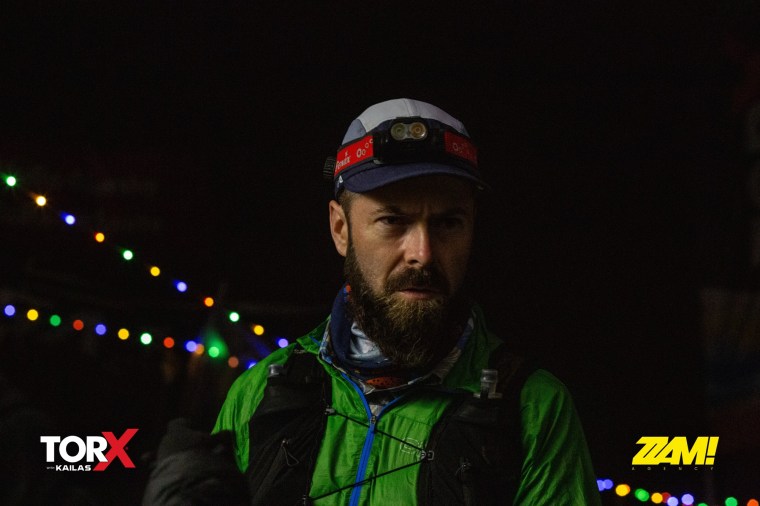
I did however get consumed by the darkness at one stage – at my lowest point in the race, heading towards Oyace on the huge downhill I found my devil. Struggling with two dead quads, I was plodding along best I could when all of a sudden I had a sort of weird out-of-body experienced – I head a voice. A deep sinister voice inside my head that didn’t belong to me. It said “what if you cant”. It scared the shit out of me. I told it to fuck off. I was talking to myself now. I’m not sure if there was any tiredness and hallucinations or if it was just the overwhelming pain and deep hole I found myself in, but I have never heard that voice before and, I never will again. The first and only time of self doubt I’ve encountered in a race. I felt weak. It felt like a catalyst for considering quitting. I fought hard to turn the thoughts around, convince myself I could. A day later, walking to Bosses I remembered this moment. It made me angry. I cried out loud as I shouted never again will you be heard, you’ll never have space in my mind again.
After the race both Paul and Gayle told me I met my dragon. A reference to the mystique of the TOR, a theory that as you set off on your journey, your inner dragon starts in the opposite direction. At some point you WILL meet on your journey, and then, you have to deal with your dragon. A reckoning, a crisis of the soul as Doug Mayer puts it in this article – https://www.runthealps.com/blog/meeting-the-dragon-italys-tor-des-geants-mythology/ and his book “The Last of The Giants”. I think this is a beautiful concept.
Other than the darkness, there were a few periods of just overwhelming emotion. Every time I called Natalia I just broke out in tears. Mostly for just seeing her on video or hearing her voice. Other times with relief, like calling her on the way to Gressoney after overcoming the more technical section and knowing that making it this far was good omen for finishing.
The last day was particularly emotional. Reaching Ollomont and knowing that there were no more life bases, that I would finish that day (pretty much), that I was on the final leg. It was all quite overwhelming and I’d frequently tear up when I was alone. The emotional journey is powerful!
The People
I’m purposely ignoring the friends and family and support I had from home, and want to talk about the people you meet out at the event. Before getting into it, a special shout out to Gayle. A lady I met briefly during UTMB in 2022 and whom Paul put me in touch with. Before the race we met up, shared stories and anxieties, watched the start of the TOR450, went to the pre-race briefing and pasta party with and generally kept each other company. It helped to have some company before the start. We were in separate waves, and didn’t get to meet during the race, but found out after the race that we finished about 20 mins (race time) apart. After the race we met up for food, reminisced about our adventures and went to the post-race ceremony together.
As for the race itself, Tor Des Geants is a very lonely race. You’re out there for days on end in some extreme environments. However, you do make acquaintances along the way – you talk to people, spend plenty of time in and around the same people. Amusingly though the first few days are quiet, you don’t talk much. I’d be around the same people but it wasn’t until about Wednesday that we’d open up and talk to one another, accepting the reality that we were in it together for the long haul, passing each other as our plans and approaches varied.
For every person you speak to who like you is a first time, you’d speak to 3 or 4 who were here on a repeat adventure – 3,4 or more times! It blows my mind how many people go back year on year. There is a lot of talk about how the race changes you, how you discover yourself. I had moments I could relate to but even now, weeks after finishing I wouldn’t say that it had such an impact on me personally. Perhaps because I’m still struggling with the aftermath and recovery, or perhaps for me it just wasn’t that deep.
I spent significant time with a few people including some of the technical area before Gressoney with Jawek from Poland, spoke with many English speakers from Canada, Iceland and the UK, constantly played leap from with Gareth and Ian, friends of Pat who I met at the start line, and for the last few days to Austrian/German guys, an Italian lady – the legendary Marcella Pont (more on her later) and a team of four from Japan (Team Japan!). The Austrian Germans were funny, at one point they told me of their theory, which was “wherever we stop, Dai will just turn up behind us”. I told them they were so sleep deprived, that I wasn’t real and that they were hallucinating a bearded Welshman everywhere.
Occasionally I spent time with some 450 Glacier runners. Wow. They are special. Barry from Netherlands was most friendly, offering advice plenty of chat. And at one point along with the Polish guy I spent time with an Asian runner who is a professor of chemical Engineering in Washington DC. I didn’t get his name as I just kept calling him Professor Glacier. He was the kindest warmest, smiliest person I met along the adventure. He had a real, incredible positive energy.
The company is important, probably essential throughout the race. But it is worth mentioning that the etiquette of some individuals is mad. Mostly people were calm and good, but when you see a massive human shit on the trail or at a col, it makes you question people’s behaviour! And the mess some people leave at the aid stations is disgusting.
The Aftermath
Immediately after crossing the finish line I was focused. Calling and speaking to Natalia, getting to the hotel, showering and sleeping. There was a plan of things to do in order to get to sleep, my primary goal. As I crossed the finish line, pushing through the streets with an aggressive stubbornness, I felt the first clear sign of the pain that would come – I almost fell down the finish line ramp. Why they insist on ramps at the finish I never know. My legs were weak and painful. It was a slow walk back to the hotel. Check in (I’d booked two nights before the race and two nights after at the same hotel) took slightly longer than I’d liked as the excited employee welcomed and congratulated me, then showed me the tracker and how they were tracking me and other guests in the hotel. I wasn’t interested in that moment, as nice as it was.
When I got to my room I showered and went straight to bed. I did sleep, but not easily or smoothly. I remember waking a lot and tossing and turning all night. In the morning, walking wasn’t too bad, as the day progressed though, the body started to react, swelling and pain became obvious and walking became harder.
Breakfast was how I fantasised. The machine coffee was delicious. Eggs on toast a lovely change (although the toast was hard to swallow). Amusingly at breakfast there was one of the Germans who I’d spent a lot of time seeing over the last few days. Thinking back to their theory, we both laughed when he saw me. That was amusing. After breakfast I went and collected my drop bag (thankfully there was a shuttle service from the finish line to the sports hall – very greatly appreciated) and I spent ages waiting for and getting a massage. I’m sure it helped. I had a long chat with the masseuses about the week and he gave plenty of advice on how to help recovery.
I spent much of the day trying to re-pack and get ready to leave the next day and just generally feeling spaced out. Later that evening I met up with Gayle and her partner, shared our experiences from the week and had a big juicy burger. The day went by so quick, but I felt a little recovered and far more relaxed now it was all over. It was however way to early to know what state I was really in, with the logistics of travelling home, I was still a bit wired and focused – recovery wouldn’t start until I was home.
The Ceremony
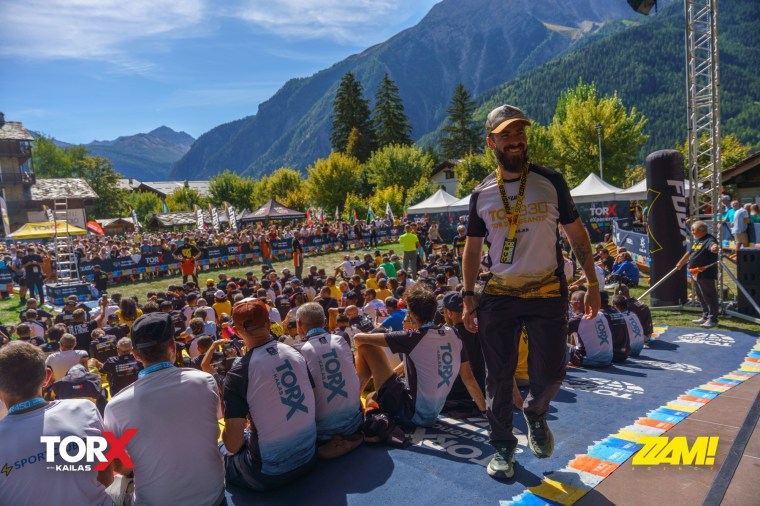
The Sunday after the race finishes, the Organisers arrange quite a ceremony. This isn’t something I’ve experienced at a race before. Normally you get the presentation of podium finishers, which often takes place when many runners are still out on the course. At TOR though, they do this on the Sunday and it takes hours. Besides celebrating all the podium and age group category winners in each race, they also celebrate all the finishers of TOR450 and TOR330 individually. It did take about 3 hours to get through all the finishers of these two races.
Held in a park, there is a big stage and in reverse finish order the finishers are called out one by one. You make your way through the crowd, up onto the stage and shake hands with representatives from the race, the town, the volunteers, the medics etc. and then sit in front of the stage. Here you cheer all the other finishers and then there is a group photo. It is quite the experience to hear your name called out and proceed onto the stage in front of everyone. A really unique experience.
I was with Gayle again at the ceremony and it was here we found out that we finished in 407 and 405th position. Our times a mere 20 minutes difference. So we got to follow each other onto the stage too. I also enjoyed how the announcer read my name out – “From Great Britain, and I’m guessing with a name like this, from Wales – Dai Davies”. it put a big smile on my face.
Another unexpected benefit of going to the ceremony was that, as we left the stage, we were given a finishers jumper. Another freebie!
Recovery
Matt had prepared me for the long journey of recovery after TOR. I was ready and knew it would be long and I that I would feel lost for a while. He’s not wrong, it is taking time!
Brain fog – for a week and a half I was soulless, disoriented, confused and lacking purpose. Everything was effort, nothing stimulated me. Concentration at work was hard and I’d say over the first week there was only one moment of focus when I decided to cut back a tree in the garden. That stimulated me with a goal for a few hours. It was about two weeks after the race that the fog started to lift and I felt a little normal again.
Sleep – Wow, I thought I’d sleep well afterwards as my body tried to catch up. Far from it. The sleep in the first week was terrible – Restless and worst of all, night sweats. I’d wake up sweating so much the bed would be soaked. After the first week sleep improved but not greatly, the sweats went away but lucid dreams replaced them. Most nights I’d dream I was on the trails. They weren’t enjoyable dreams. One of the dreams was like a game where I was walking along the trail collecting shiny objects that lit up the path I need to climb.
Ankle – my biggest concern after finishing was the pain in my right ankle, I found it hard to bare any weight on it. After a week the swelling went down. I did have an x-ray on the right ankle a few days after getting back to London. It was just so swollen and the skin was on fire, thankfully though there was no break. It was suggested there might be ligament damage. After about 8 or 9 days the intense burning subsided and the only pain was when I applied pressure to the ankle. It is still sore now, but less so and doesn’t cause any issues when walking.
Feet – the swelling going down after about a week was a huge help. Clearly there is nerve damage, to be expected, as my feet and toes were still very numb and tingly until about 2 weeks later. They slapped an awful lot of ground during TOR!
Quads – by far my worse issue. After about 9 days the intense pain stopped in my right quad, not in the left however, that still hurts and is compressed, elevated and iced daily. Its clear this isn’t muscle fatigue but damage. Perhaps minor tears or strains, how I kept going I do not know. After 2 weeks I still struggled down the stairs and walk slower than I ever have as there is pain when bending and extending my legs. This is what is stopping me from getting out there for walks and runs! Almost a month later, post recover, the right quad is showing signs of improvement, but the left is still troublesome. More rest is on the cards.
Head cold – thankfully the throat, tongue and TOR Cough improved after a couple of days. Over a week later though I still had headaches and pressure in my ears and jaw. I definitely caught a cold/infection during the race which I struggled to get rid of. It took about 2 weeks for the pathetic cough to ease and the blocked sinuses to be released. I’m happy in the ignorance of not knowing what I really caught out in the mountains!
The TOR Moments
There is another concept of the types of moments you experience in adventures of this magnitude that you don’t in other races. I’m not talking about the hallucinations and things you’re unsure if they are real or not, but those core memories, those things that could be considered special and possibly even bordering self-discovery of some sort. I mentioned the emotional side of the race earlier. Besides those things listed earlier, each one of these almost brought me to a complete stop as emotion overwhelmed me.
After leaving Gressoney, there was a long road section leaving town. Just as I arrived at the start of the climb there was a family coming the other way. Mum, Dad and a little toddler between them. Her arms outstretched, one in each parents hand high above her head. She was so small, probably not yet able to talk. Her parents weren’t really interested in me, probably seen enough runners by this point. The little girl however reacted. She shook off her parents hands, stopped where she was and just started clapping. She’d clearly picked up from everything happening around her and associated me and my race number to clapping. It felt so special, the awareness of this small child and the beautiful, unprompted gesture just hit me.
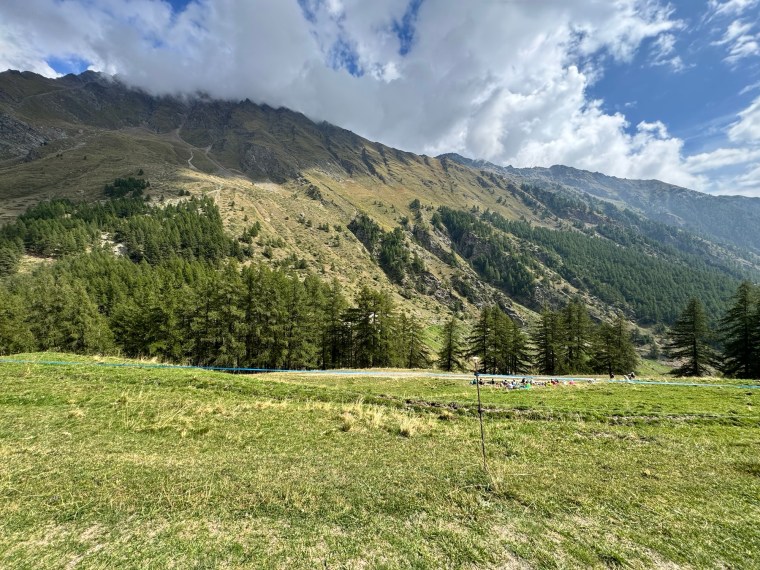
On the final day of the race, coming down from the first climb from Col de Champillon, there is a huge 900m descent off the mountain. It took me a while. The sun was shinning and it was a glorious day. As I arrived at the bottom of the mountain, you join a dirt track and road that leads up to the next aid station at Ponteille. Here there was a large group of mostly women of varying ages. I’d guess most were around 50 – 60. They were sitting on the grassy side of the hill cheering runners. They had binoculars and were watching everyone descend whilst enjoying each other’s company. As I got close one woman took charge and shushed the crowd. She asked me “What is your name and where are you from”. She then translated to the group and they all erupted with Shouts of “Dai” and “Wales”. It was brilliant. As I continued passed I felt like a hero. I could hear them doing the same to each runner before and after me.
For me though, probably my most special moment was meeting Marcella Pont and sharing some time on the trail with her. She arrived into Ponteille shortly after me and left before me. Along the nice, walkable section to Bosses I slowly caught up with her. Before we arrived at Saint Rhemy we started chatting. Nothing much, just the usual small talk. Shortly afterwards there was a lady waiting on the trail. Clearly a friend, they embraced and I could feel the emotions of them both. The friend (I never caught her name!) started taking pictures and I tried to move out of the way and give her space. She excitedly told me no, get in the photo and we start chatting. She said to me “Marcella Pont”, “you know this name?” I didn’t. She told me again “Marcella Pont, “Remember that name”. I could sense there was something special. The friend was clearly the most supportive friend you could imagine. Marcella was being humble, a little embarrassed even by her friend. She continued, “ten times”, “Ten time finisher”. My jaw dropped. I looked at Marcella and she simply said “I have problems”. We burst out laughing. Turns out I was sharing a bit of the trail with royalty. A queen of the TOR. Her friend went off ahead, ready to welcome her into Bosses. I got to chat with Marcella a little more and this was going to be the tenth time she’d completed the TOR330. Nothing would stop her now. She shared some insights to her different experiences, how she walks the route and isn’t a runner and I could just get this sense of how strong this woman was. Coming into bosses it was like a celebrity was arriving, the crowd that had gathered for her was like a finish line of it’s own and they went wild cheering her in. It was a really special moment for me to spend some time with Marcella. And her friend is right, I’ll remember that name! I cried every time I recalled that story.
Passing Thoughts
I do get why people go back, there is a draw and an intrigue about the race and your experience really will be different each time (think weather conditions, sleep strategy, preparedness). Especially if you adapt your plan, e.g. going slower and sleeping more earlier on will completely flip your experience of trails covered in daylight and night time! Even now though, some time later, I feel very much that I am in the ‘one and done’ category (I know as runners we’ve all said this many times before!). Don’t get me wrong, I did enjoy it, it really was an adventure of a lifetime, but I’m, really not sure I want to put myself through that stress and torture again!
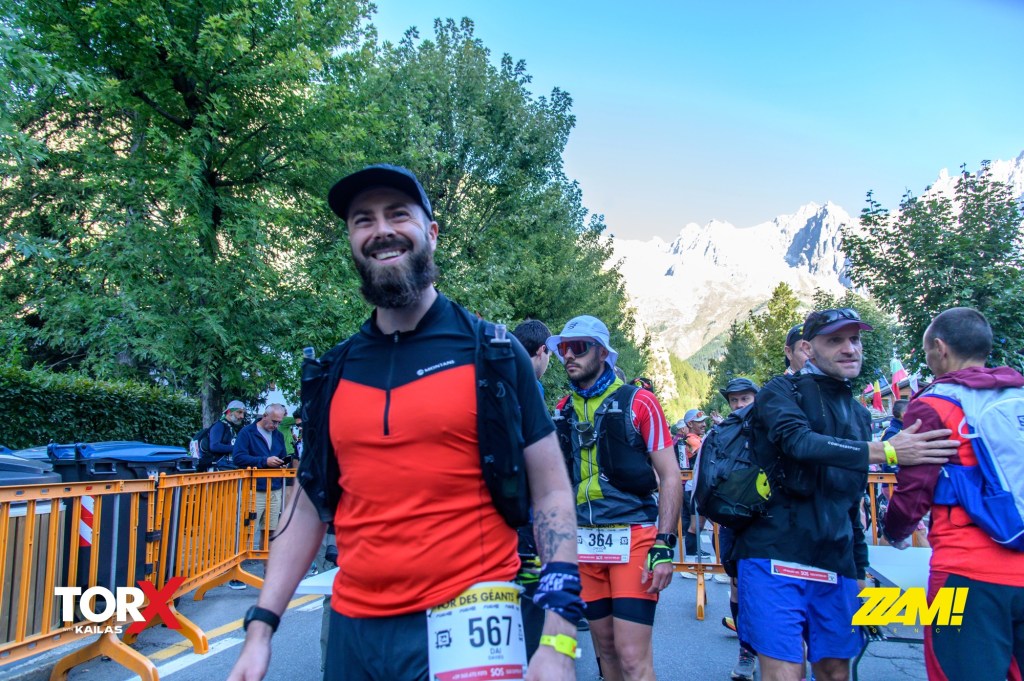
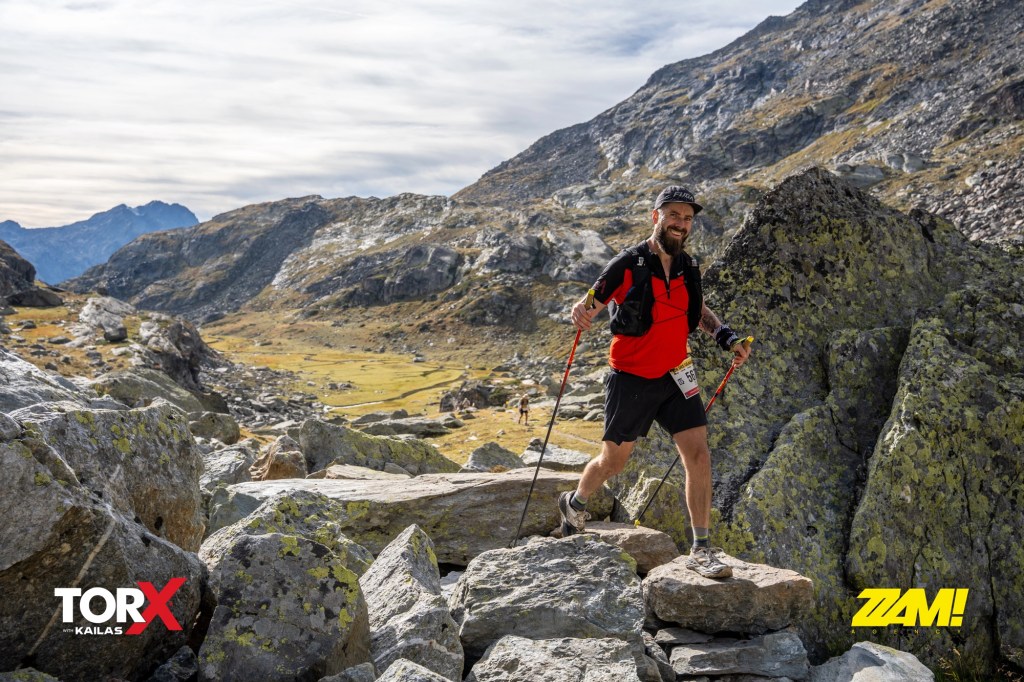
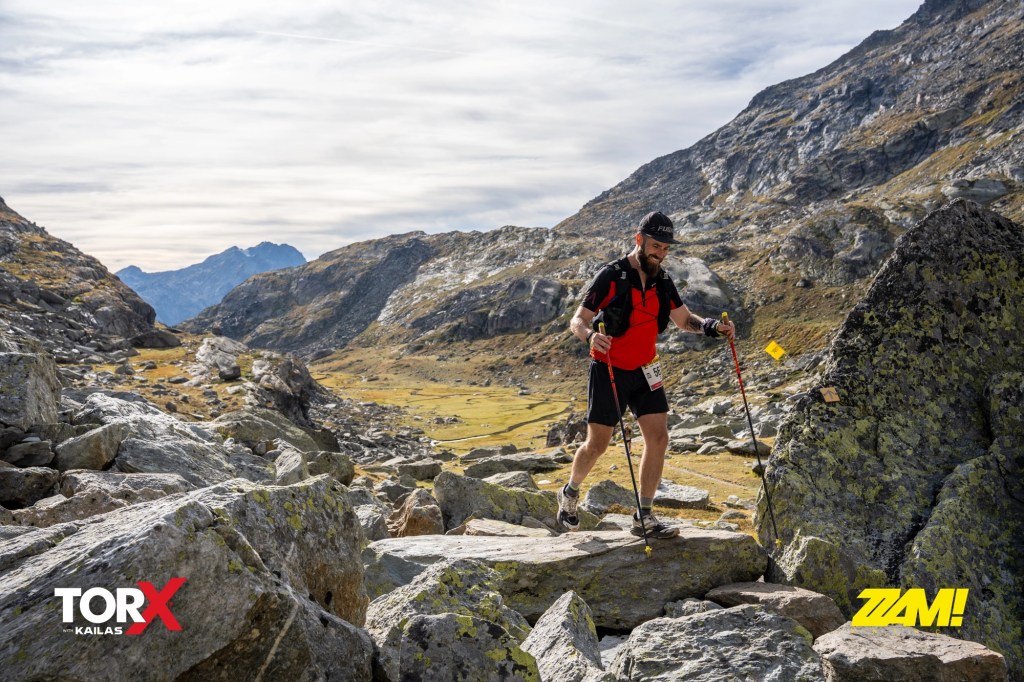
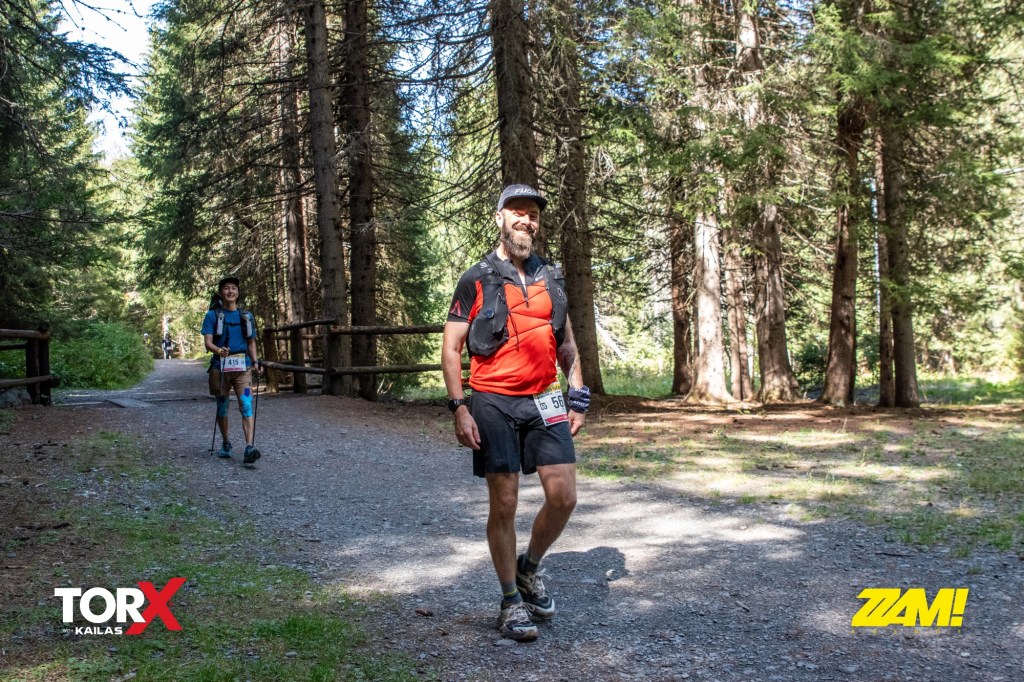
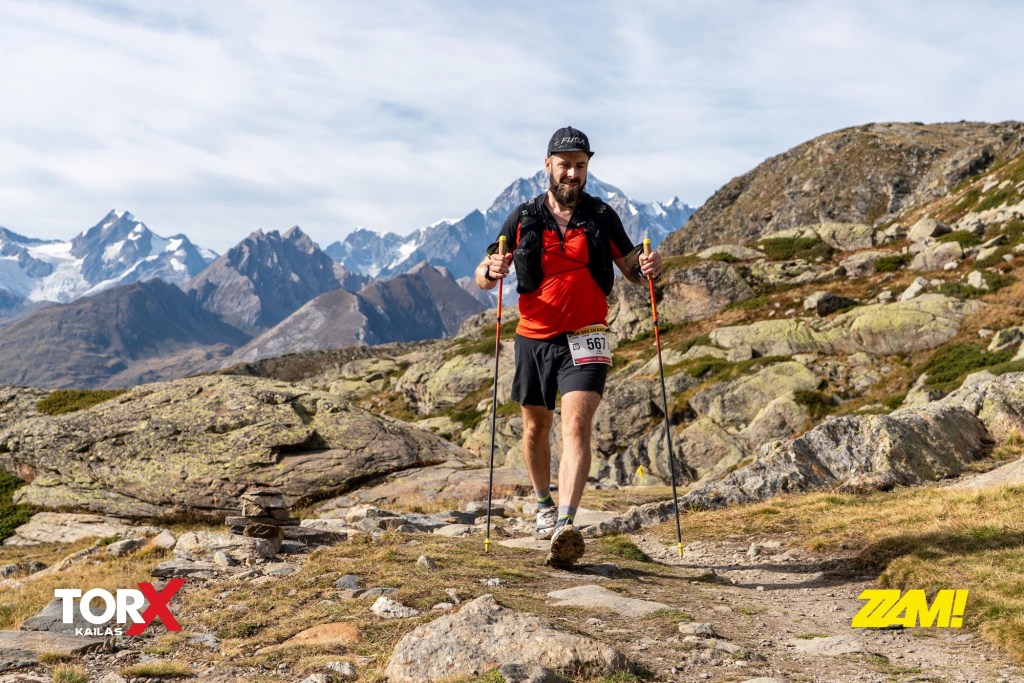
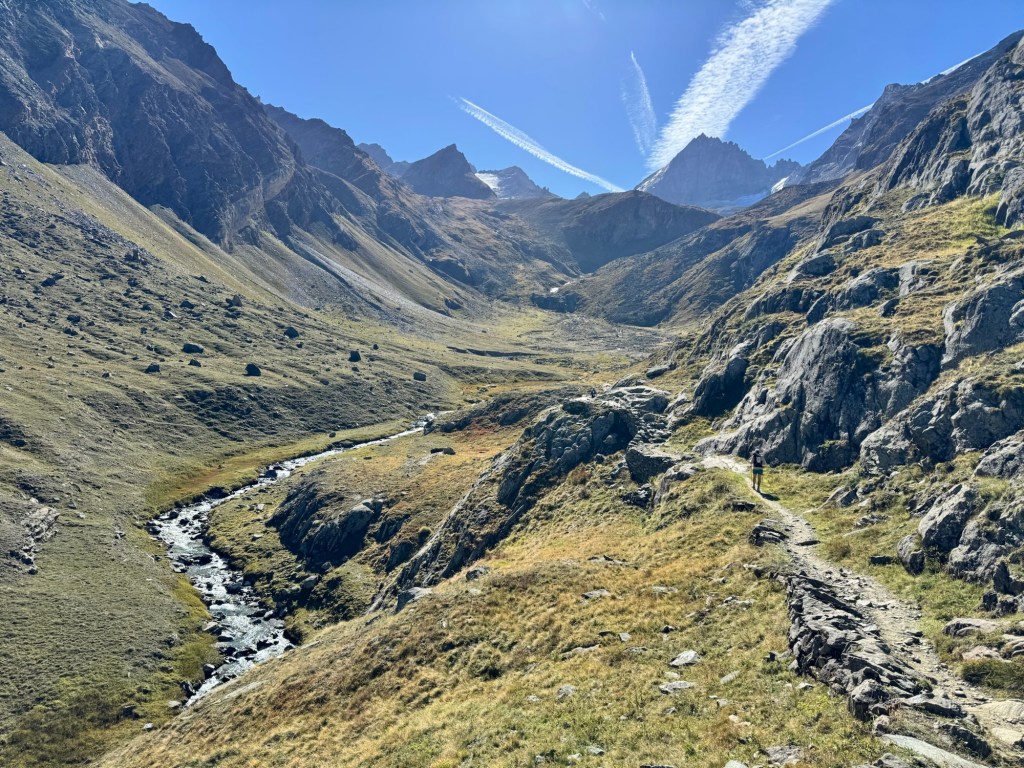
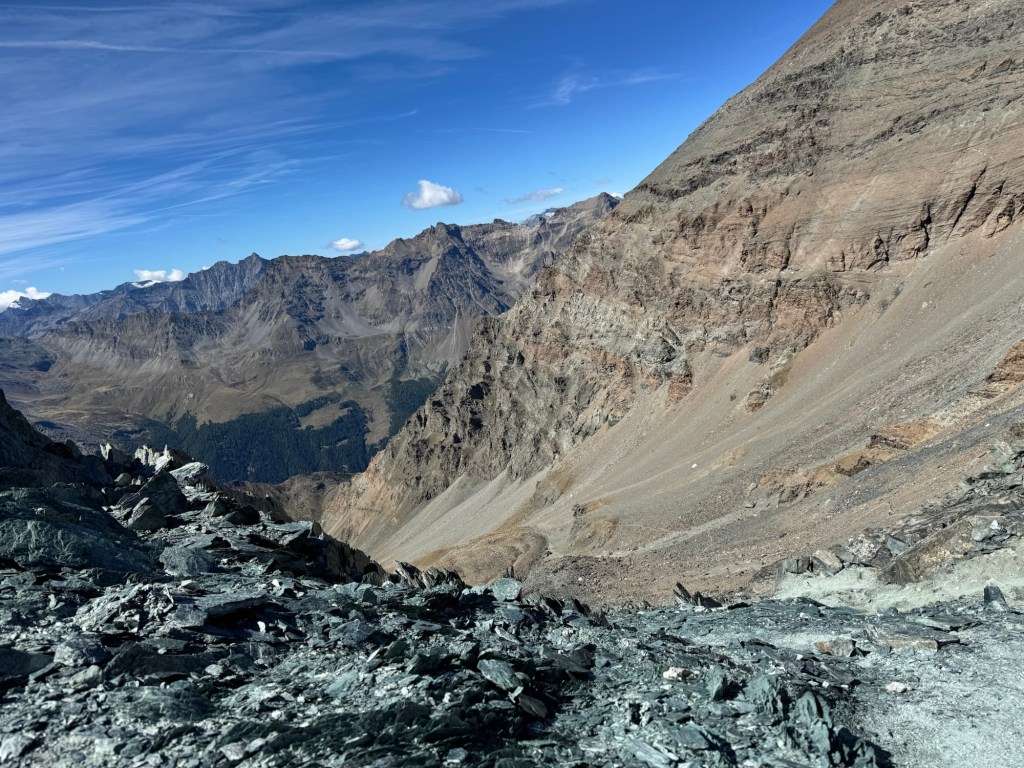
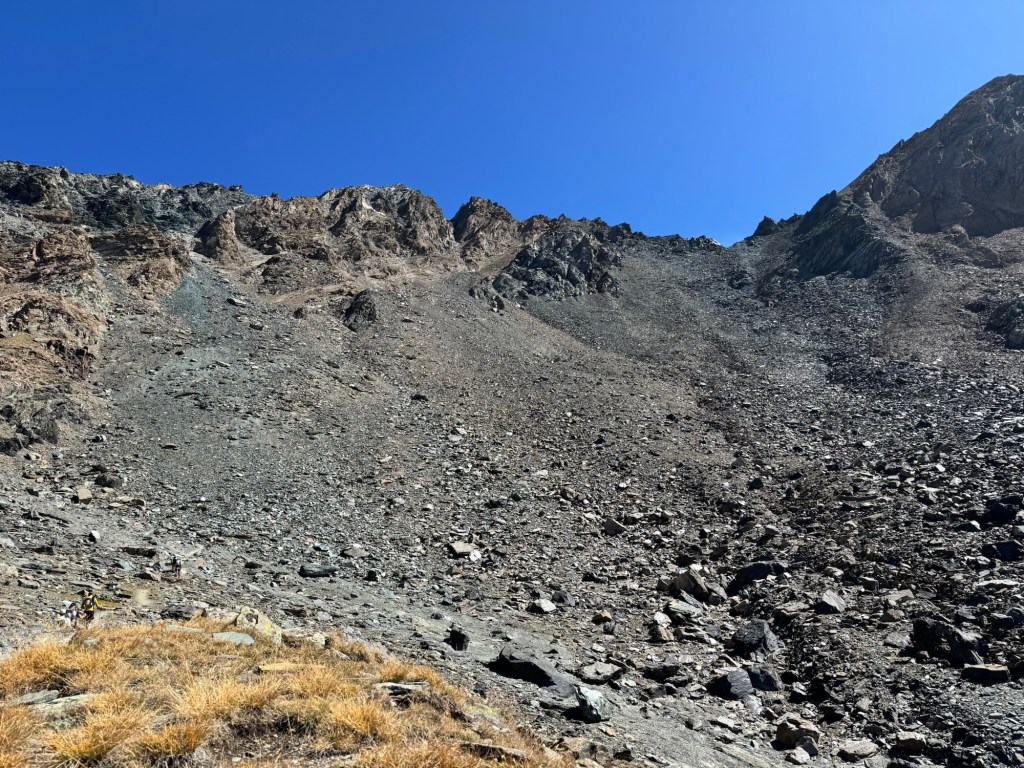
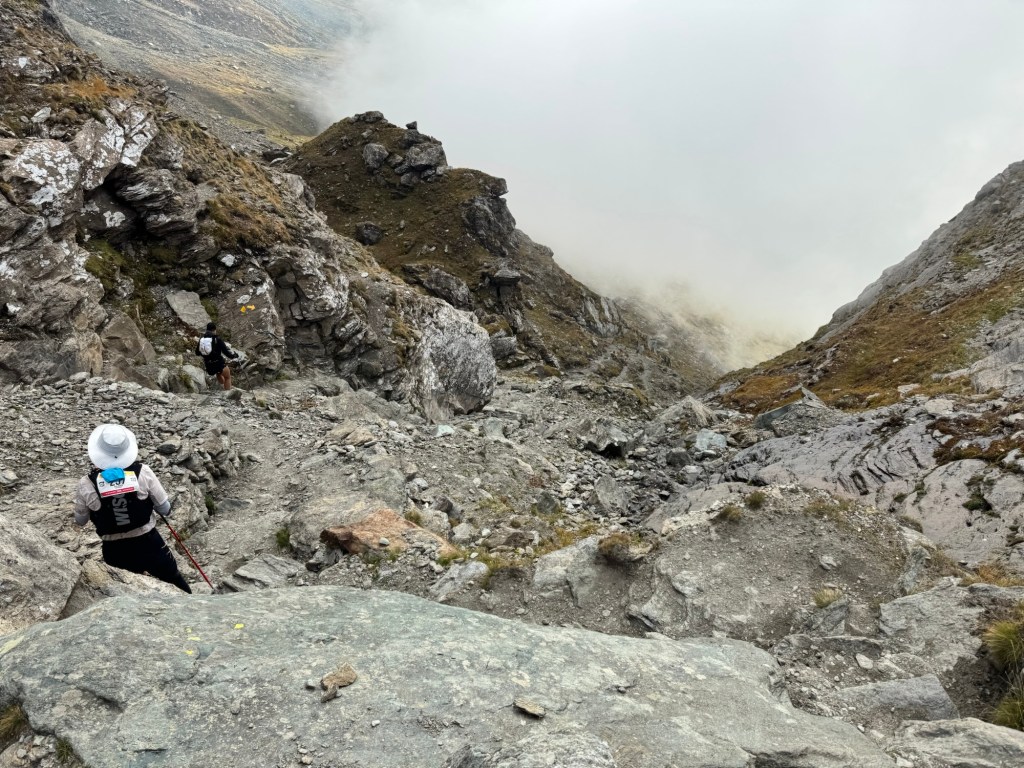
The Aosta Valley and surrounding mountains are wild. Far more technical and demanding that I imagined. There are a lot of very technical sections, a lot of sections where ropes and chains are necessary, where sometimes your hands and arms get a good workout too. The terrain is very rocky, the climbs and descents are very steep. It is a very, very hard race. I think that surprised me a little (and I don’t think I was being naïve). I think people talk so positively about the race (and rightly so) that the difficulty and toughness of it is kind of brushed over. You ask people who’ve done it, and you will get these incredible recollections and stories. Like I’ve written here, amazing reviews on the organisation, the people, the adventure and the “TOR Moments”. They almost forget to say “oh yeah, and its hard, very fucking hard, the terrain will destroy you”.
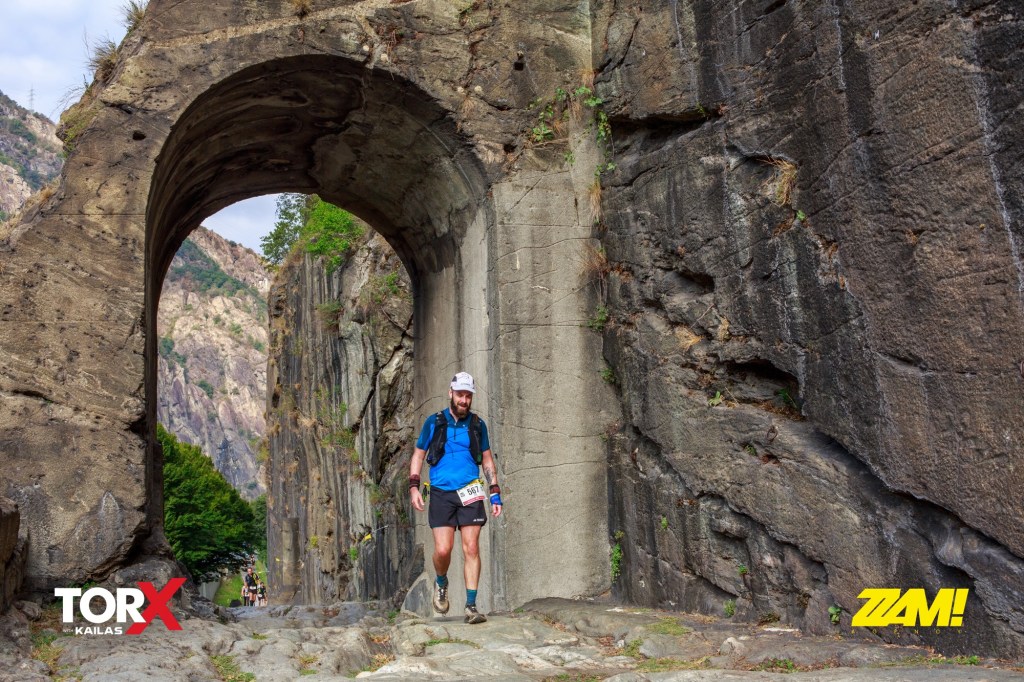
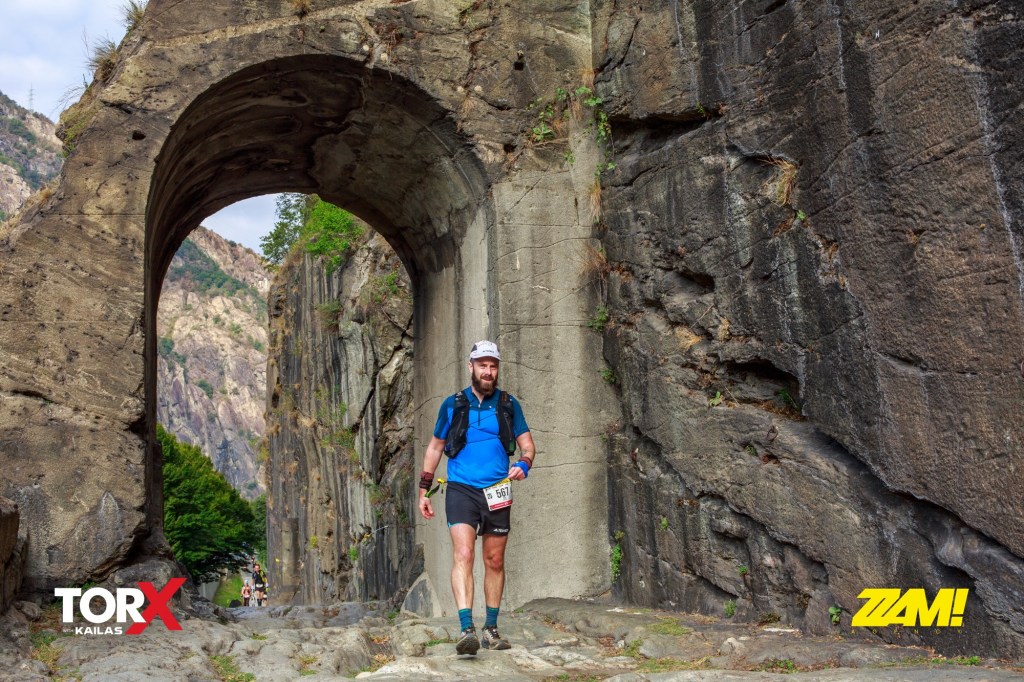
Besides the general terrain, the climbs and descents in TOR are hard. My breathing was completely out of whack and I was huffing and puffing on most of the climbs. In many 100km – 100mile mountain events you’ll get a few larger climbs say of 800m or so, and maybe one of 1,000m or more. In TOR, there are so many climbs that are close to 1,000m, quite a few over 1,300m and the descents are similar. It is tiring. Day after day you just climb and descend.
Recovery is hard, possibly harder than the race itself. The race had an end, a definitive time allowance. Sometimes it feels like recovery might not have an end. The first two weeks were tough, for me and my loved ones. Perhaps another aim/goal to focus on will help me 😉
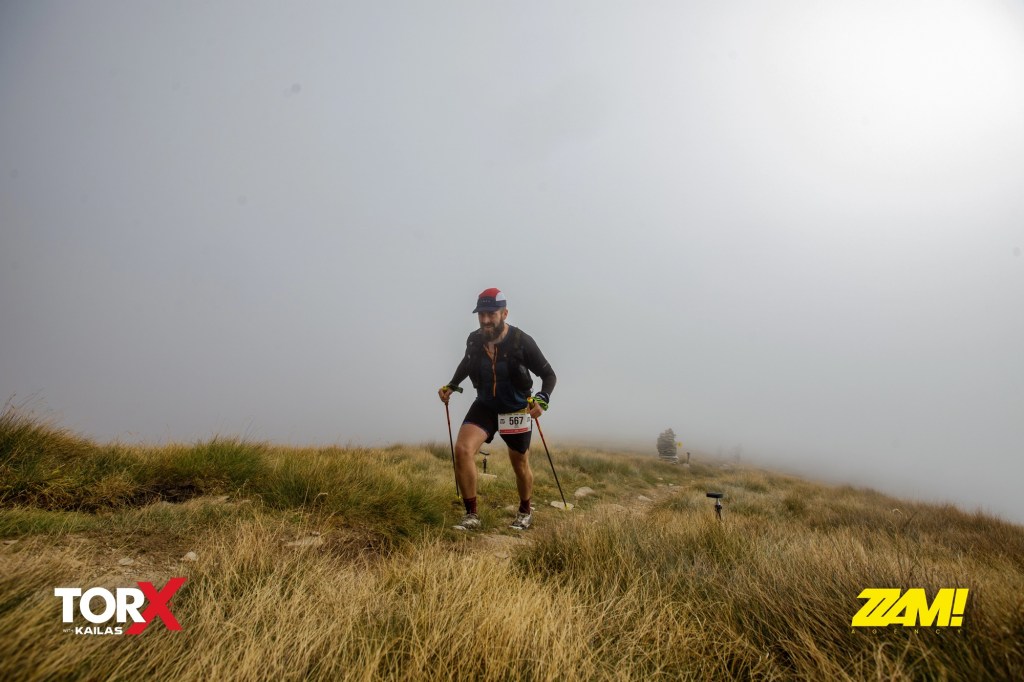
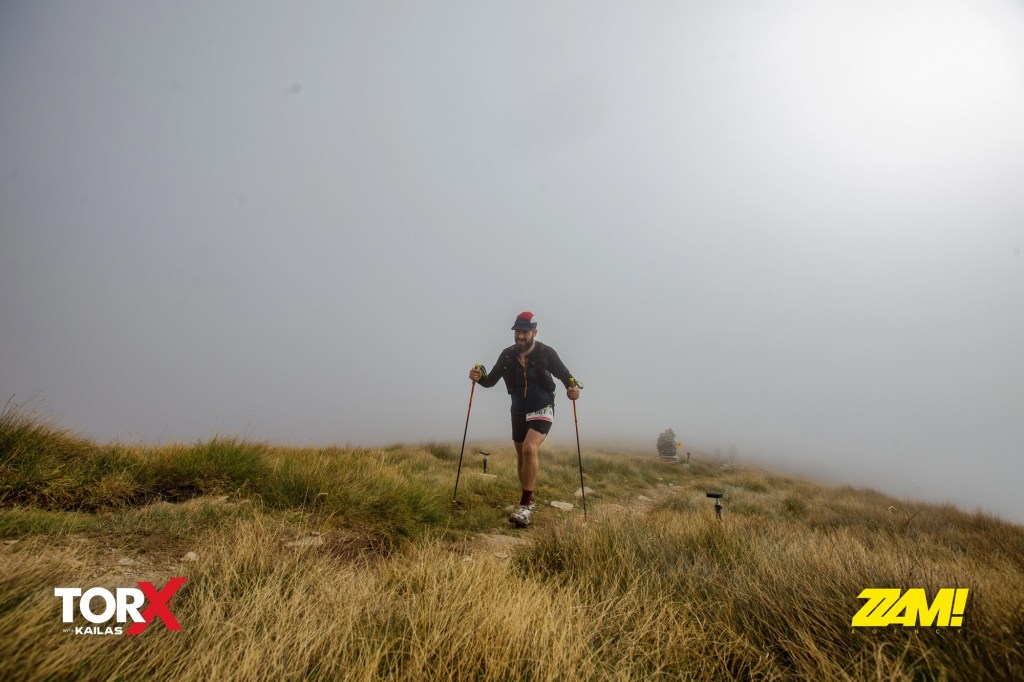
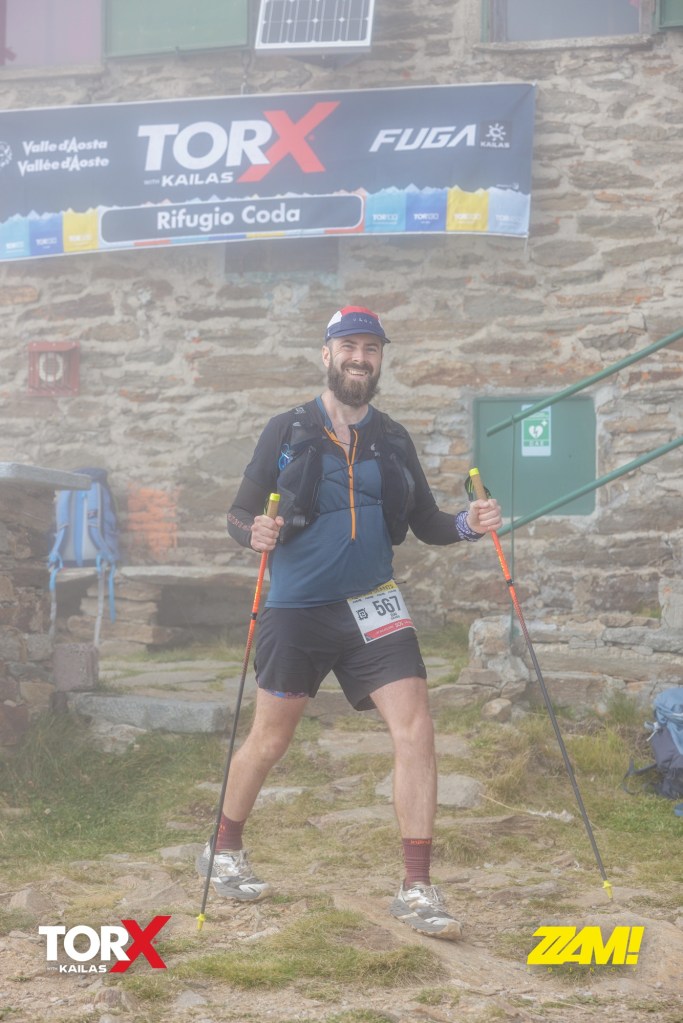
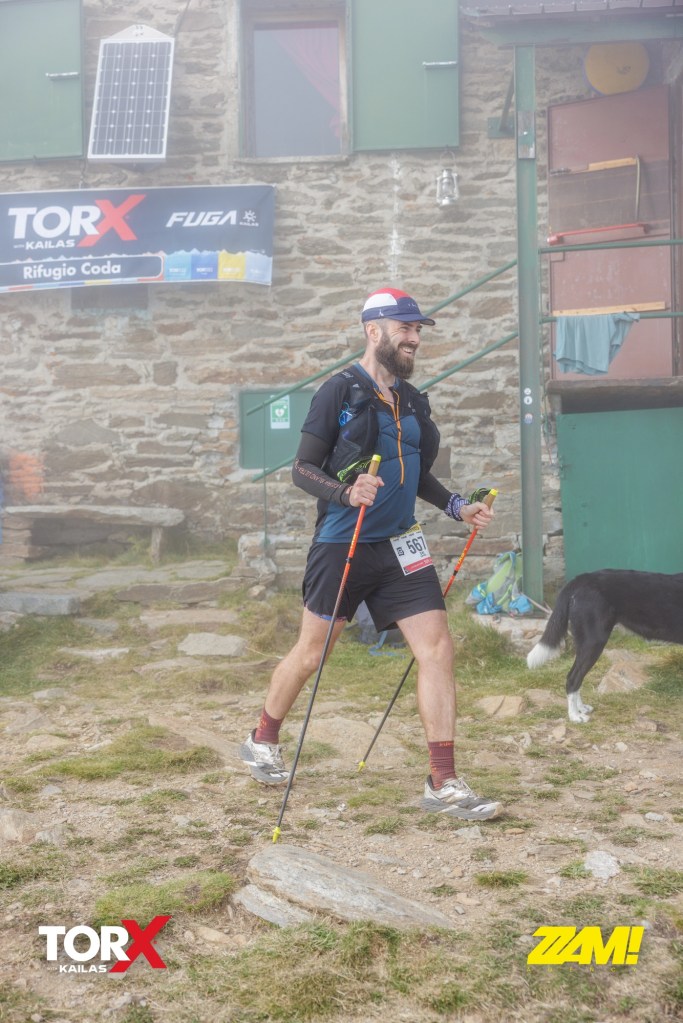
It is difficult to get my head around what I did, What was achieved. 6 days, 137+ hours, 350km, 25,000m of elevation. Those are big numbers. I’d previously done 100 miles, 10,000m and 46 hours as my longest endurance stint. That is a significant increase. In the moment it didn’t feel like 6 days, and I’m still not sure it does feel like I was out there that long. Sometimes when I look back I surprise myself when I say things like “oh shit, that was the first day” or “on the fourth day this happened…”. It really is a long way, a long time and a big achievement to finish, and I need to remember that. It’s not like any other event I’ve done. I have nothing to compare it with.
You WILL meet your Dragon. The concept Doug Mayeur presents suddenly feels so true and the best description I’ve heard of the adventure. You will encounter versions of yourself, challenges you need to overcome and a darkness you may not have experienced before. This is inevitable.
I’m in awe of the other runners out there. Like the TOR450 Tor des Glacier runners and those elites who can traverse the course and terrain in lightening quick speeds. The winner of TOR330 took a little over 60 hours, 60 hours to cover the course. That is just insane!
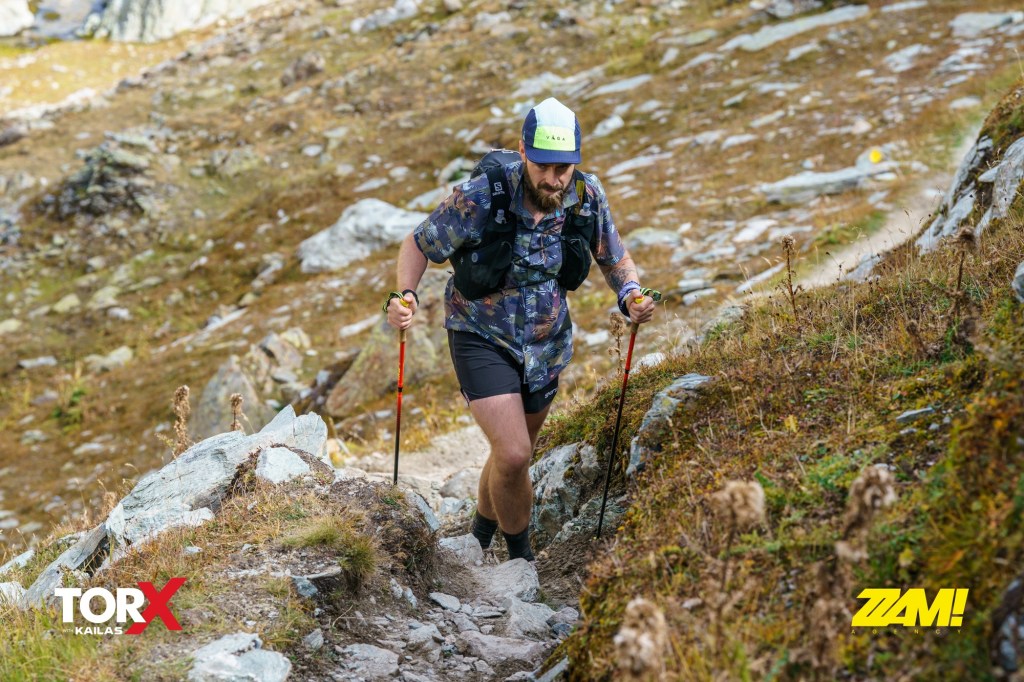
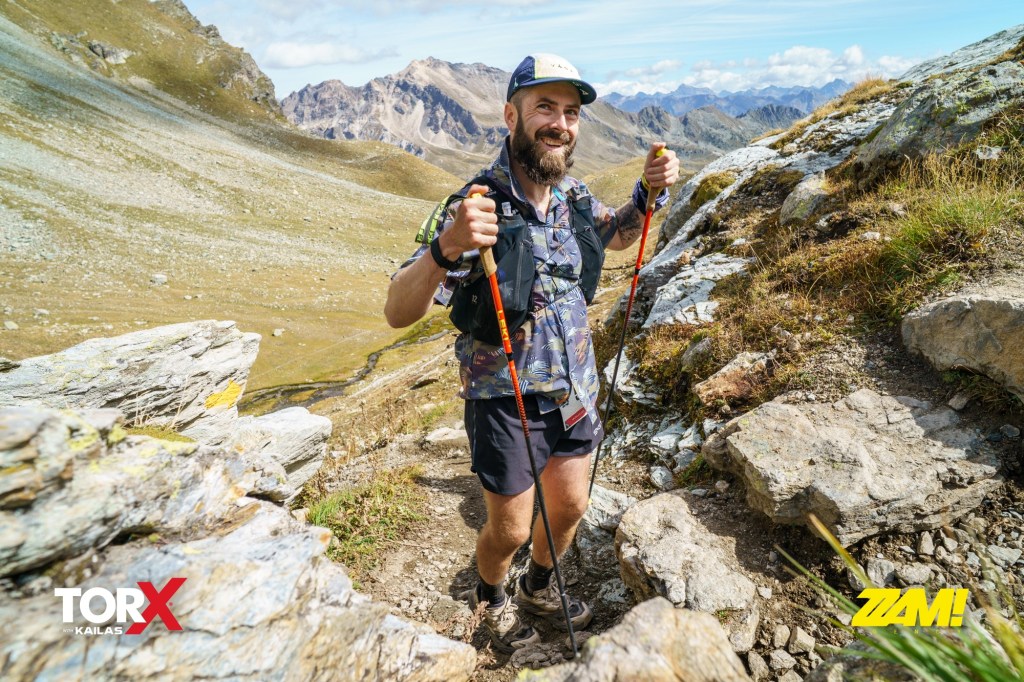
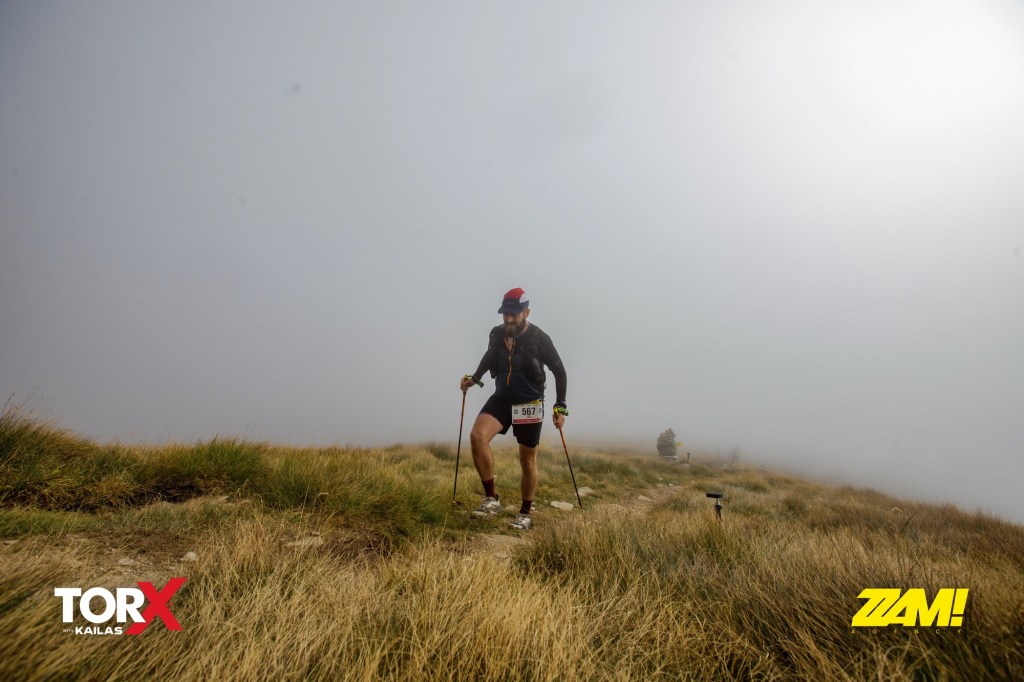
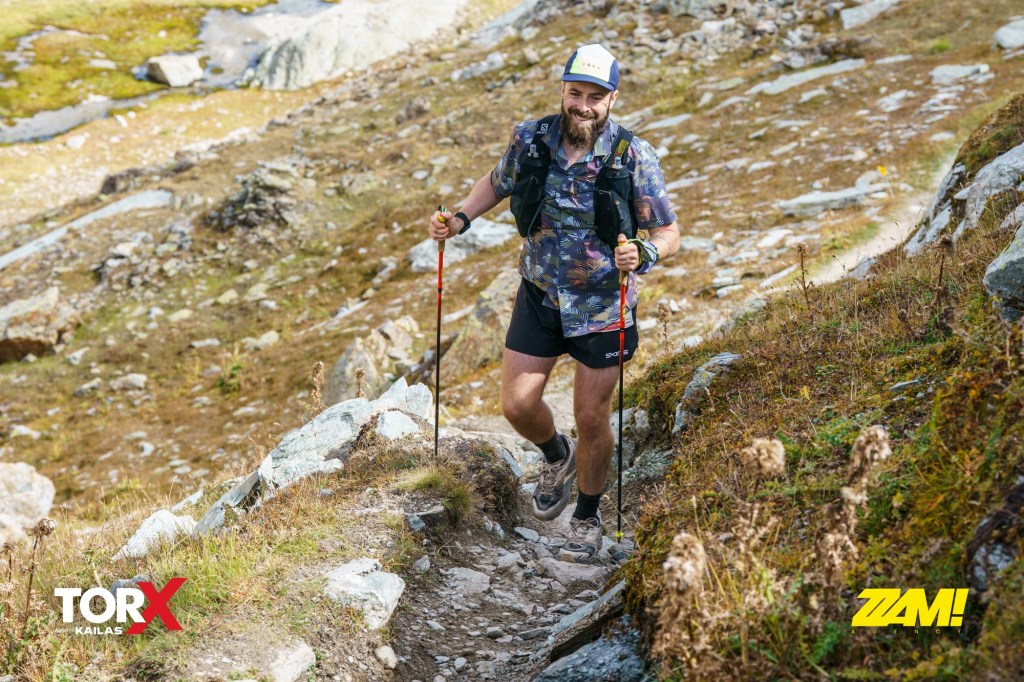
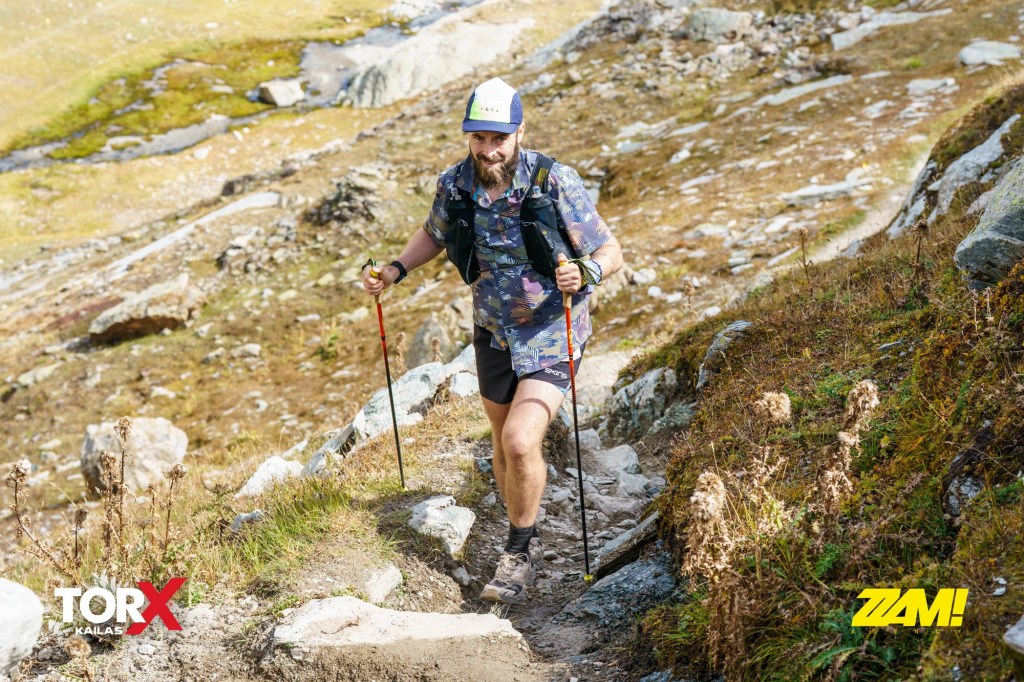
The organisation is incredible. Its an event of huge magnitude. The Logistics alone are crazy. And for individuals it is ridiculously good value. Yes it isn’t cheap, it costs 1,000EUR for the TOR330. But for that you get 7 days of support on a fully marked course – countless aid stations, life bases, warm meals, medical support, mountain rescue support and general support from thousands of volunteers. You get ridiculous quality ‘extras’ like the 3-course pasta party before the race, shuttle services to and from the bag drop. Then there is all the free kit and goodies – the yellow duffle bag, an expensive 13litre branded race pack, t shirt and finishers jumper from the main sponsor. The medal and ceremony, free pictures throughout the race. I could go on, but it is clear this is not an event /organisation in it for the profit!